Japanese · Authentic-ish Japanese
Okonomiyaki
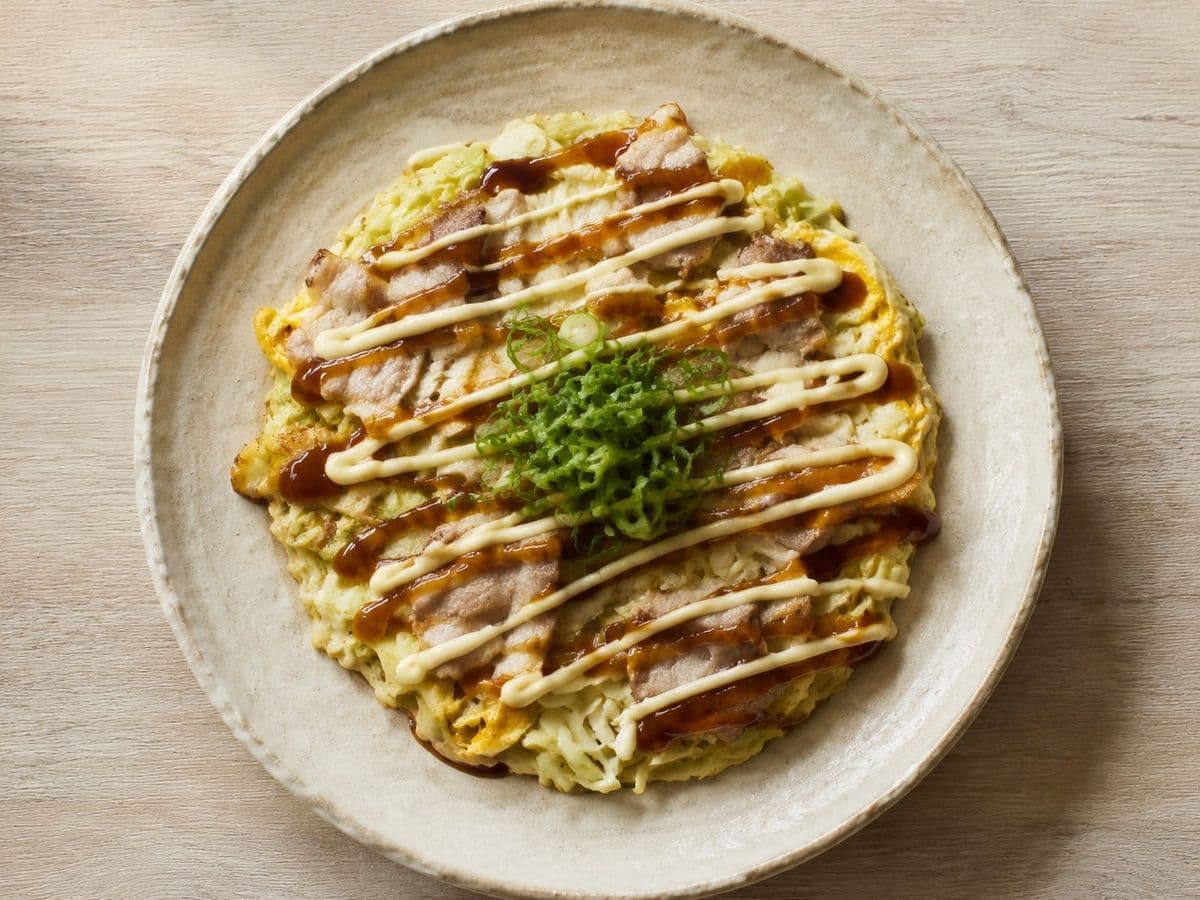
364 kcal a serving, against 636 for the traditional version. That is 272 kcal off, or 43%, with 22.2g of protein. Serves 4. .
What the traditional version is
Okonomiyaki batter is made with flour, dashi, eggs and a mountain of shredded cabbage, sometimes with a handful of yam. It gets filled out with spring onion and topped with generous ribbons of streaky pork belly. It's fried in oil until golden on both sides, then slathered in okonomiyaki sauce and Japanese mayonnaise, scattered with spring onion and katsuobushi. Every mouthful's rich, bouncy and a bit over the top.
What changed, and what each change costs
Switch pork belly for lean pork loin
Pork belly's pure luxury and fat, and that's the first thing to face the axe. Pork loin's not got the same luscious streaks, but it does bring the protein without sending your arteries running for cover.
What it costs you. Lose the soft, melting mouthfuls of fat that pork belly gives. What you get is pork, not the savoury equivalent of fudge.
Halve the flour, double the cabbage
Most recipes use batter as the main event. If you just use enough flour to glue the cabbage together and let the veg star, you keep the spirit but shed a load of carbs.
What it costs you. Pancake layers lose that fluffy centre. It's closer to a cabbage fritter, but you still get the same flavours fighting for space.
Use half-fat mayo, drizzle don't slather
Japanese mayonnaise is delicious, but it's basically fat in a squeezy bottle. Half-fat mayo isn't the same, but if you pipe it on in stripes, your brain fills in the gaps and your arteries breathe out.
What it costs you. Less creamy richness. The sacrifice hurts, but it's a fair trade for a meal you can finish without needing a nap.
Minimise frying oil, non-stick pan only
A good non-stick pan means you can get away with a tiny slick of oil, just to stop the pancake sticking. It's not as golden, but your kitchen doesn't smell like a deep-fat fryer.
What it costs you. Slightly less crisp and not quite as indulgent. You miss a bit of the crust, but it's still recognisably okonomiyaki.
Sauce cut by half
Okonomiyaki sauce is just sugar and Worcestershire in disguise. Cutting the pile in half is an easy win, and there's still enough for the taste.
What it costs you. Those who love their sauce in flood conditions will notice. If you want more, that's your call, but don't pretend it's for health.
What goes in it
The ingredients, without the quantities. The weights are what the figures below are computed from, and they are in the book.
- Plain flour
- Dashi stock
- 2 medium eggs
- Shredded white cabbage
- Sliced spring onions
- Vegetable oil for frying
- Thinly sliced lean pork loin
- Okonomiyaki sauce
- Half-fat mayonnaise
- Katsuobushi
How it starts
- First, prep everything.
- Mix the flour, dashi and eggs to make a loose batter.
- Heat a non-stick frying pan on medium.
The rest of the method, and every weight, is in Authentic-ish Japanese.
The numbers
| Per serving | Traditional | Lightened |
|---|---|---|
| Calories | 636 | 364 |
| Protein | 22.3g | 22.2g |
| Fat | 38.8g | 15.9g |
| Saturated fat | 8.3g | 3.2g |
| Carbohydrate | 49g | 33.6g |
| Protein per 100 kcal | 3.5g | 6.1g |
Every figure is computed from the recipe's own weighed ingredient list against public food composition databases. The appendix in Authentic-ish Japanese prints the exact database row used for each ingredient, so any number here can be checked. How every number is computed sets out the method.
Allergens. gluten, eggs, fish, soybeans, mustard.
The method is in the book
Okonomiyaki this way is still a decent feed. You miss the melting bits of pork fat and the unashamed mess of sauce and mayo, but it's still recognisable. If the cabbage isn't properly shredded, you'll notice it's more salad-in-batter than pancake, but if you get it right, it's probably the most veg you'll eat all week. I'm not pretending it's as good as the original, but it doesn't leave you needing a lie-down halfway through. If you want the real thing, you know where the chippy is.
The quantities and the method for this dish are in Authentic-ish Japanese, along with 48 more. Buy the paperback
More from Authentic-ish Japanese
- Chicken Katsu, 502 kcal a serving, 41% off
- Tonkatsu, 430 kcal a serving, 51% off
- Ebi Fry, 332 kcal a serving, 27% off
- Tempura Moriawase, 245 kcal a serving, 50% off
- Korokke, 281 kcal a serving, 54% off
- Karaage, 291 kcal a serving, 51% off
Every Japanese dish and its calories · Every dish in the series