Japanese · Authentic-ish Japanese
Tempura Moriawase
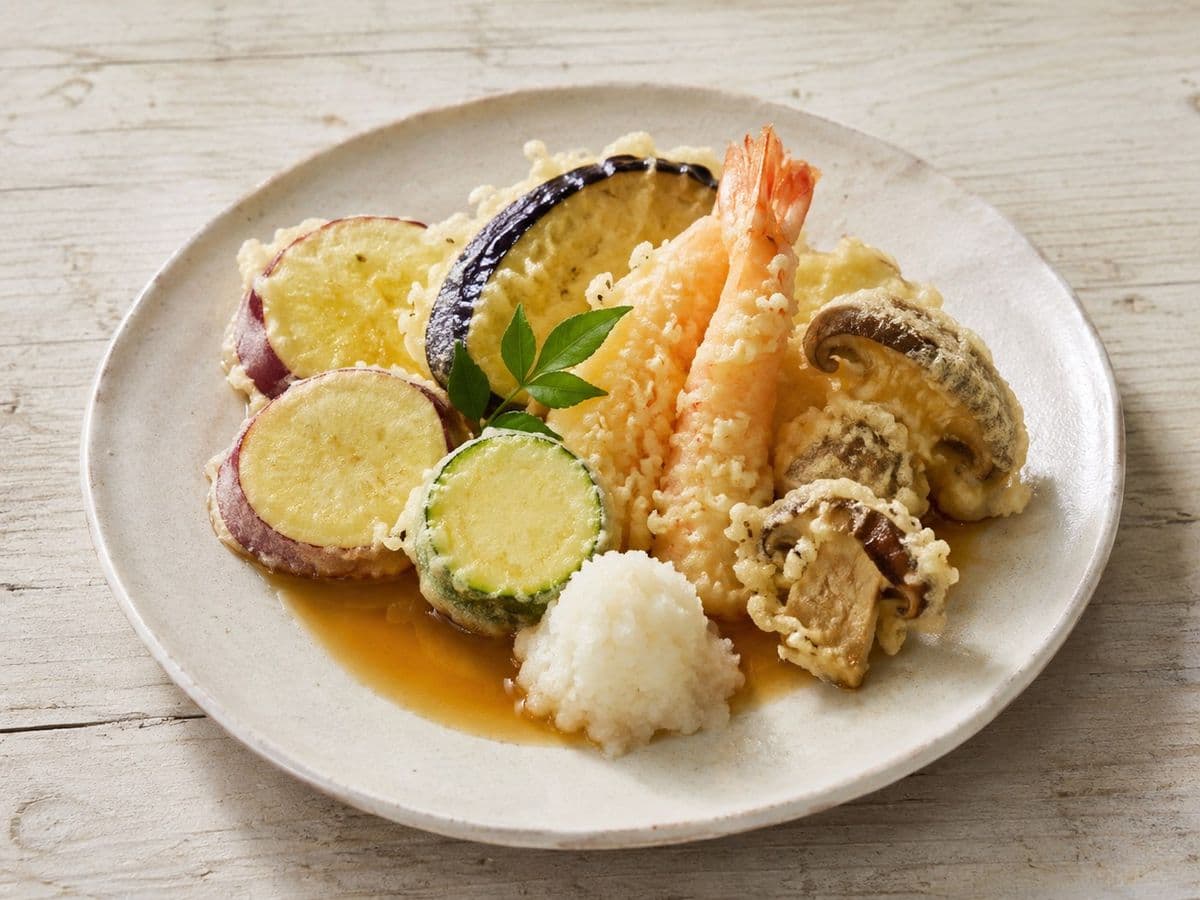
245 kcal a serving, against 488 for the traditional version. That is 243 kcal off, or 50%, with 22.2g of protein. Serves 4. .
What the traditional version is
The classic tempura batter is a cold mix of plain flour, cornflour, egg and icy water, barely stirred so it stays lumpy. You dip raw prawns and a spread of veg - aubergine, sweet potato, maybe a strip of pepper or a chunk of mushroom - then straight into hot oil. Each piece comes out pale, lacy and almost greaseless if you're lucky. A soy dipping sauce on the side and grated daikon to keep it honest.
What changed, and what each change costs
Oven-roasting instead of deep-frying
The honest way to lose the oil is to lose the oil. Crank up the oven and lay the battered pieces on a hot tray brushed with a minimum of vegetable oil. You'll miss the bubbling bath, but you won't spend the whole night scrubbing grease off your hob.
What it costs you. This is the first and biggest sacrifice. The oven gives a decent crunch if you move fast, but it can't match that ethereal, puffy shell you get in oil. The crust's a bit tougher, and some coating sticks to the tray. Still, the taste of the veg and prawns is the same, and you can eat two helpings without your heart racing.
Extra egg white and less flour in the batter
More egg white means more lift. Dropping the flour makes the coating lighter and lets the prawns' flavour come through instead of blanketing it with a doughy jacket. Egg white also boosts the protein a bit.
What it costs you. That airy effect is a win, but the coating is a touch chewier and less shatteringly crisp. It's a fair trade for a less stodgy bite, though.
Proportionally more prawns
Upping the prawns tips the balance towards protein, so it's not just a tray of battered sweet potato for dinner.
What it costs you. You get less veg per person, so if you're here for the aubergine, tough luck. It's the only way to make this more than a starchy snack.
Skip the daikon and use spring onion
Daikon isn't exactly on every shelf in Britain, and it's really just grated on for freshness. Sliced spring onion does the trick and bumps up the green notes.
What it costs you. You won't get that mild, watery crunch. If you like the original daikon, use it instead.
Dipping sauce uses reduced-salt soy
A quick win for anyone watching salt. The taste is fine once you've got the spring onion in the mix.
What it costs you. It's not quite as savoury, but the prawns can stand up for themselves.
What goes in it
The ingredients, without the quantities. The weights are what the figures below are computed from, and they are in the book.
- Large raw prawns
- Aubergine
- Sweet potato
- Courgette
- Chestnut mushrooms
- Plain flour
- Cornflour
- From about 2 and a half eggs
- Ice-cold water
- Vegetable oil for brushing the tray
- Reduced-salt soy sauce
- Sliced spring onion for garnish
How it starts
- Heat your oven to 240C (220C fan) and put a large baking tray in to get screaming hot.
- Prep your prawns if you haven't already.
- Whisk the egg whites with the icy water just until combined.
The rest of the method, and every weight, is in Authentic-ish Japanese.
The numbers
| Per serving | Traditional | Lightened |
|---|---|---|
| Calories | 488 | 245 |
| Protein | 18.9g | 22.2g |
| Fat | 30.5g | 6.7g |
| Saturated fat | 4.2g | 0.9g |
| Carbohydrate | 34.8g | 23.9g |
| Protein per 100 kcal | 3.9g | 9.1g |
Every figure is computed from the recipe's own weighed ingredient list against public food composition databases. The appendix in Authentic-ish Japanese prints the exact database row used for each ingredient, so any number here can be checked. How every number is computed sets out the method.
Allergens. gluten, crustaceans, eggs, soybeans.
The method is in the book
Let's not lie, the original is better. Deep-fried tempura has a crispness and lightness that the oven just can't match, and that's the dish's whole point. Still, this cheat gets you a crisp shell and juicy prawn without the oil bath, and you can put away a pile with only a light pang of regret for what might have been. If you're desperate for tempura without the mess or the fat, this'll do for a weeknight. For an occasion, break out the oil and take your chances with the splatter.
The quantities and the method for this dish are in Authentic-ish Japanese, along with 48 more. Buy the paperback
More from Authentic-ish Japanese
- Chicken Katsu, 502 kcal a serving, 41% off
- Tonkatsu, 430 kcal a serving, 51% off
- Ebi Fry, 332 kcal a serving, 27% off
- Korokke, 281 kcal a serving, 54% off
- Karaage, 291 kcal a serving, 51% off
- Okonomiyaki, 364 kcal a serving, 43% off
Every Japanese dish and its calories · Every dish in the series