Japanese · Authentic-ish Japanese
Ramen, Tonkotsu
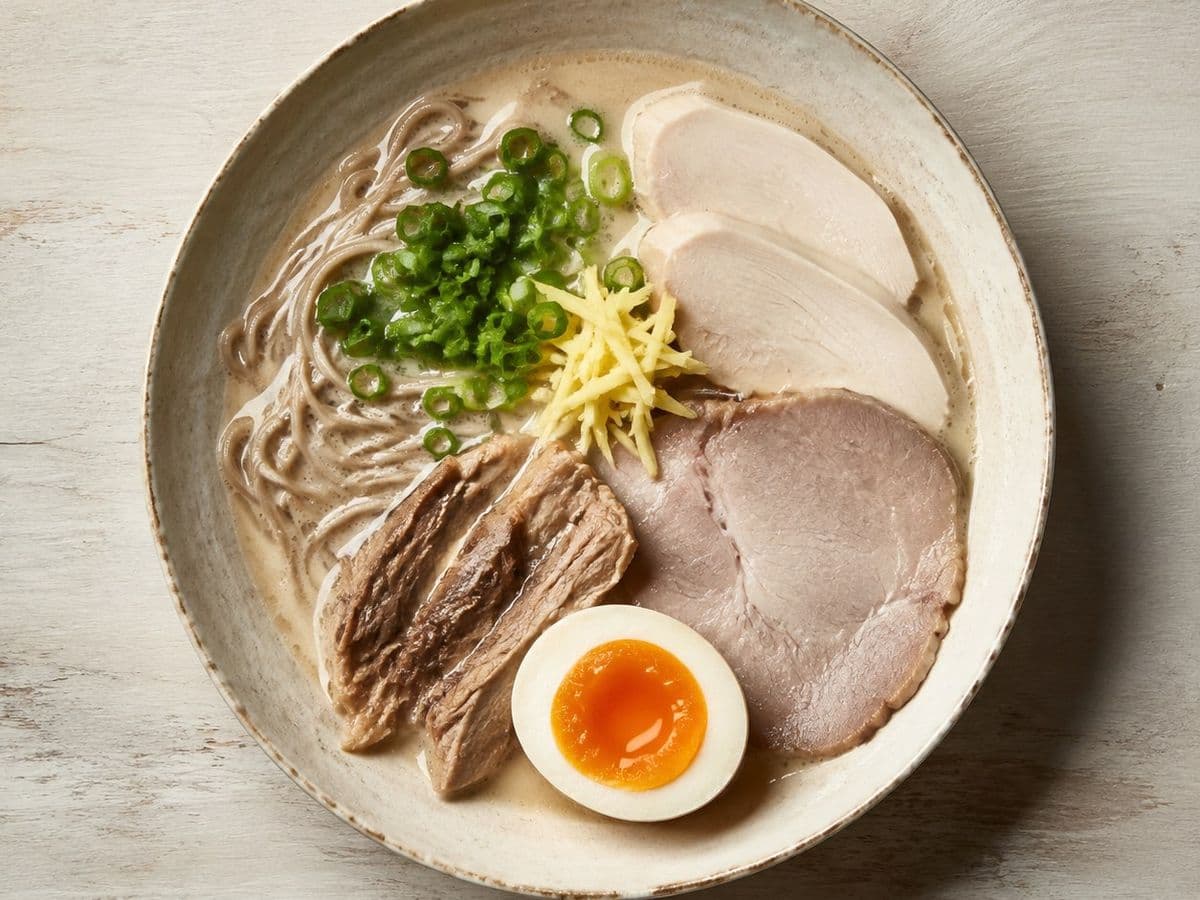
651 kcal a serving, against 1141 for the traditional version. That is 490 kcal off, or 43%, with 61.8g of protein. Serves 4. .
What the traditional version is
Pork bones are boiled at a furious simmer for at least 12 hours, releasing all the fat and marrow to form a rich, creamy broth. Slices of slow-braised pork belly (chashu) top thin wheat noodles, along with a marinated soft egg, nori, and a scattering of spring onions.
What changed, and what each change costs
Lean pork loin swaps for pork belly chashu
Pork loin is the first place I'd go for a lean, protein-rich cut - it's not marbled, but it soaks up the marinade well. You avoid the soft wobble of belly fat and double the protein in each slice.
What it costs you. Belly is melting, almost sticky, and that disappears with loin. The replacement is closer to Sunday roast than ramen shop, but it's tender enough if you don't hammer it with heat.
Pork bones swapped for chicken breast and a token bit of pork shoulder
If you cut the pork bones and all that marrow, you drop the fat hard. Chicken breast is flavour-neutral but brings extra protein to the pot. Pork shoulder is there to pretend nothing's changed.
What it costs you. There's no way round it: you lose the creamy mouthfeel. The broth is clear, not milky. It's a good soup, but it's not tonkotsu.
Oil slashed, no added pork fat
The traditional version gets a ladle of pork fat at the end. Leave it out and your arteries sigh in relief.
What it costs you. You give up the glossy coat on your lips and that lovely porky haze in the air. No one's Instagramming this bowl.
Noodles swapped for dried soba
Traditional ramen noodles are all white flour. Soba brings in more protein and fibre, and the nutty taste isn't a total mismatch.
What it costs you. It isn't ramen, it's buckwheat noodles in a porky broth. The texture is springy but not chewy. Your inner noodle geek may riot.
Egg stays (protein and tradition win)
The ramen egg is half the fun and not remotely extravagant on the fat front. Besides, you need some joy.
What it costs you. None - unless you count the lack of pork fat to reinforce its jammy centre.
Nori and toppings left as-is
Nori, spring onions and ginger are already light. If you want to cut calories, take out the bowl.
What it costs you. You keep the soul, even as you miss the heart attack.
What goes in it
The ingredients, without the quantities. The weights are what the figures below are computed from, and they are in the book.
- Lean pork loin
- Pork shoulder
- Chicken breast
- Vegetable oil
- Light soy sauce
- Sake
- Mirin
- Garlic
- Spring onions
- Fresh ginger
- Dried soba noodles
- 4 soft-boiled eggs
- Dried nori
- Salt
How it starts
- Start the day before if you can.
- In a large pot, heat the 5g of oil and sear the pork loin on all sides until golden and fragrant.
- Toss the garlic, ginger, and the green bits from the spring onions into the pan; fry a minute until they stop smelling raw.
The rest of the method, and every weight, is in Authentic-ish Japanese.
The numbers
| Per serving | Traditional | Lightened |
|---|---|---|
| Calories | 1141 | 651 |
| Protein | 69.9g | 61.8g |
| Fat | 55.6g | 13.8g |
| Saturated fat | 16.5g | 3.9g |
| Carbohydrate | 84g | 69.4g |
| Protein per 100 kcal | 6.1g | 9.5g |
Every figure is computed from the recipe's own weighed ingredient list against public food composition databases. The appendix in Authentic-ish Japanese prints the exact database row used for each ingredient, so any number here can be checked. How every number is computed sets out the method.
Allergens. gluten, eggs, soybeans.
The method is in the book
This is not real tonkotsu. It's a good bowl of noodles, it's got proper pork flavours, and the egg is still the highlight. But once you kill the pork fat, you lose what makes tonkotsu. well, tonkotsu. The broth is clear, not creamy, the chashu isn't melting, and there's no slick of pork oil to coat your soul. On the other hand, you can eat a whole bowl and actually get up again after. If you want a genuine ramen experience, have the real thing about once a year and enjoy it. The rest of the time, this'll do.
The quantities and the method for this dish are in Authentic-ish Japanese, along with 48 more. Buy the paperback
More from Authentic-ish Japanese
- Ramen, Shoyu, 698 kcal a serving, 28% off
- Ramen, Miso, 622 kcal a serving, 23% off
- Tsukemen, 786 kcal a serving, 33% off
- Yakisoba, 409 kcal a serving, 31% off
- Zaru Soba, 287 kcal a serving, 14% off
- Kitsune Udon, 422 kcal a serving, 24% off
Every Japanese dish and its calories · Every dish in the series