Japanese · Authentic-ish Japanese
Ramen, Shoyu
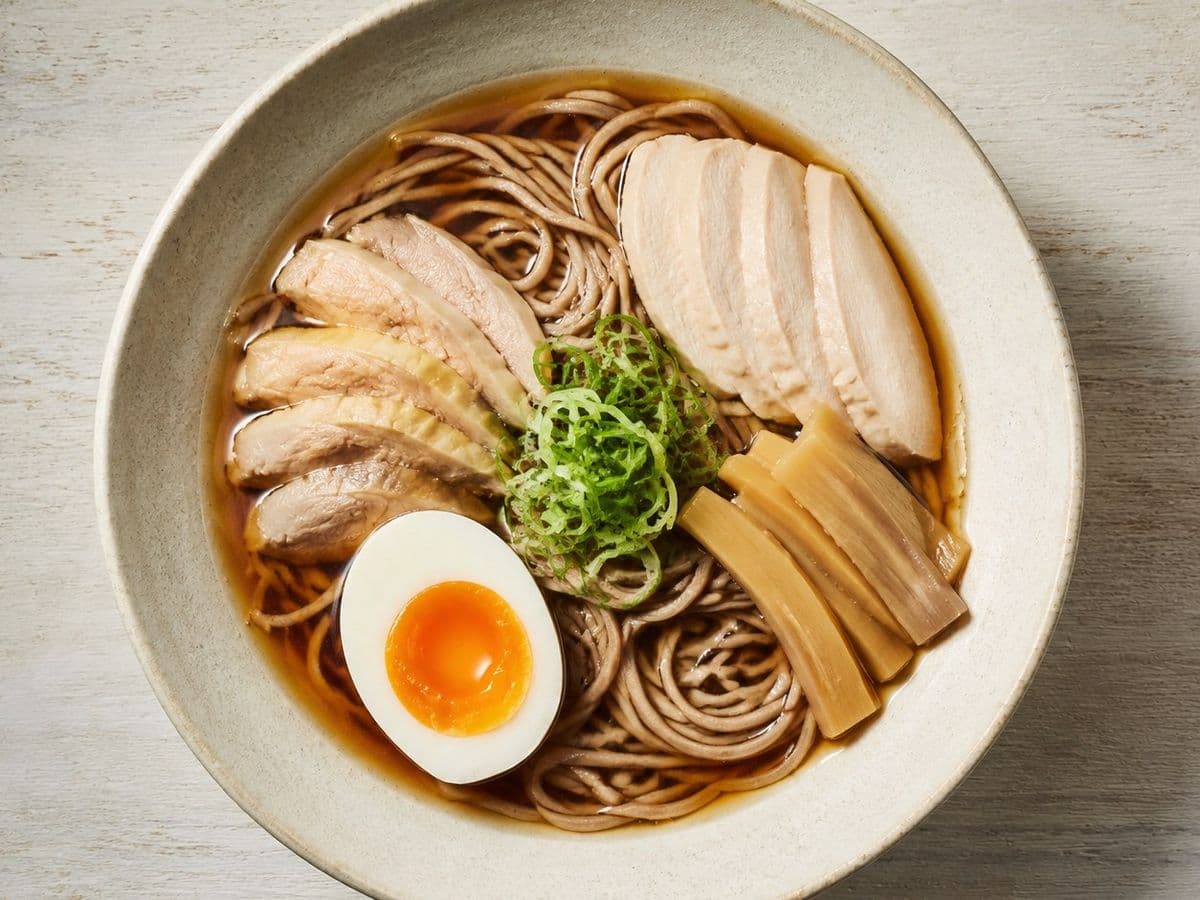
698 kcal a serving, against 966 for the traditional version. That is 268 kcal off, or 28%, with 67.4g of protein. Serves 4. .
What the traditional version is
Shoyu ramen starts with a layered broth: chicken bones (sometimes pork), kombu, dried shiitake, and aromatics.
What changed, and what each change costs
Pork belly replaced with chicken breast fillets
Chicken breast brings a tonne of protein, about a tenth the fat, and poaches up tender if you don't thrash it.
What it costs you. You lose the silkiness and melt of pork belly. Slices of chicken are protein-forward and resolutely lean. It's a trade, but you won't need a lie down after lunch.
Aromatic oil cut by three-quarters
That glossy slick on top is more tradition than necessity. Halving (and more) the oil slashes the fat, and you still get a bit of sheen.
What it costs you. Your lips won't feel basted and you miss some fragrance, but the broth is still the main event. If you find yourself missing oil, add a few drops, not a ladle.
Egg marinated for less time, not overnight
A shorter marination means the egg keeps more protein and picks up enough colour and flavour without getting too salty.
What it costs you. Not quite as deeply seasoned, but the yolk still runs and it tastes like egg, not just soy. If that's not enough for you, double the marinade, but you've been warned.
Menma reduced, spring onion increased
Bamboo shoots are mostly for texture and a bit of salt - doubling up on spring onion keeps the crunch and pumps up the fibre.
What it costs you. Less salty chew, more green crunch. Can't say bamboo shoots are the first thing anyone comes for.
Noodles swapped for less and soba
Soba (buckwheat noodles) are leaner and bring more protein per bite, even if purists will have their head in their hands. Less noodle keeps starch down.
What it costs you. It's not as springy, and the buckwheat flavour is more upfront than proper ramen wheat, but it's a fair swap if you want more than a garnish of noodle.
Broth kept, but chicken thighs only, no bones
Keeping the broth base means you don't lose the umami punch.
What it costs you. The broth is a bit lighter, with less mouth-coating richness, but it isn't dishwater - the soy, shiitake and kombu keep it honest.
What goes in it
The ingredients, without the quantities. The weights are what the figures below are computed from, and they are in the book.
- Chicken thighs
- Chicken breast fillets
- Dried kombu
- Dried shiitake mushrooms
- Garlic cloves
- Fresh ginger
- Light soy sauce
- Mirin
- Dried soba noodles
- 4 medium eggs
- Vegetable oil
- Spring onion
- Menma
- Nori sheets
How it starts
- Put the chicken thighs, kombu, shiitake, garlic and ginger in a big pot.
- After the simmer, fish out the solids and chuck them.
- Drop the chicken breasts into the barely bubbling broth.
The rest of the method, and every weight, is in Authentic-ish Japanese.
The numbers
| Per serving | Traditional | Lightened |
|---|---|---|
| Calories | 966 | 698 |
| Protein | 57.1g | 67.4g |
| Fat | 35.4g | 16.3g |
| Saturated fat | 9.6g | 4.1g |
| Carbohydrate | 100.9g | 72.1g |
| Protein per 100 kcal | 5.9g | 9.6g |
Every figure is computed from the recipe's own weighed ingredient list against public food composition databases. The appendix in Authentic-ish Japanese prints the exact database row used for each ingredient, so any number here can be checked. How every number is computed sets out the method.
Allergens. gluten, eggs, soybeans.
The method is in the book
Shoyu ramen gets away with being lighter. Swap pork belly for poached chicken and lose three-quarters of the oil, and nobody's crying out for lard. The broth is still savoury, the toppings are fresh and protein-dense, and the buckwheat noodles do an admirable job of soaking up the soy. Purists will wince at soba, but the result is a bowl you can eat on a Tuesday afternoon and not regret at 4pm. It isn't a direct clone of the tonkotsu house special, it's a lighter, cleaner ramen that's honest about what it's doing. If you dream about pork fat, book a trip to Fukuoka.
The quantities and the method for this dish are in Authentic-ish Japanese, along with 48 more. Buy the paperback
More from Authentic-ish Japanese
- Ramen, Tonkotsu, 651 kcal a serving, 43% off
- Ramen, Miso, 622 kcal a serving, 23% off
- Tsukemen, 786 kcal a serving, 33% off
- Yakisoba, 409 kcal a serving, 31% off
- Zaru Soba, 287 kcal a serving, 14% off
- Kitsune Udon, 422 kcal a serving, 24% off
Every Japanese dish and its calories · Every dish in the series