Japanese · Authentic-ish Japanese
Tsukemen
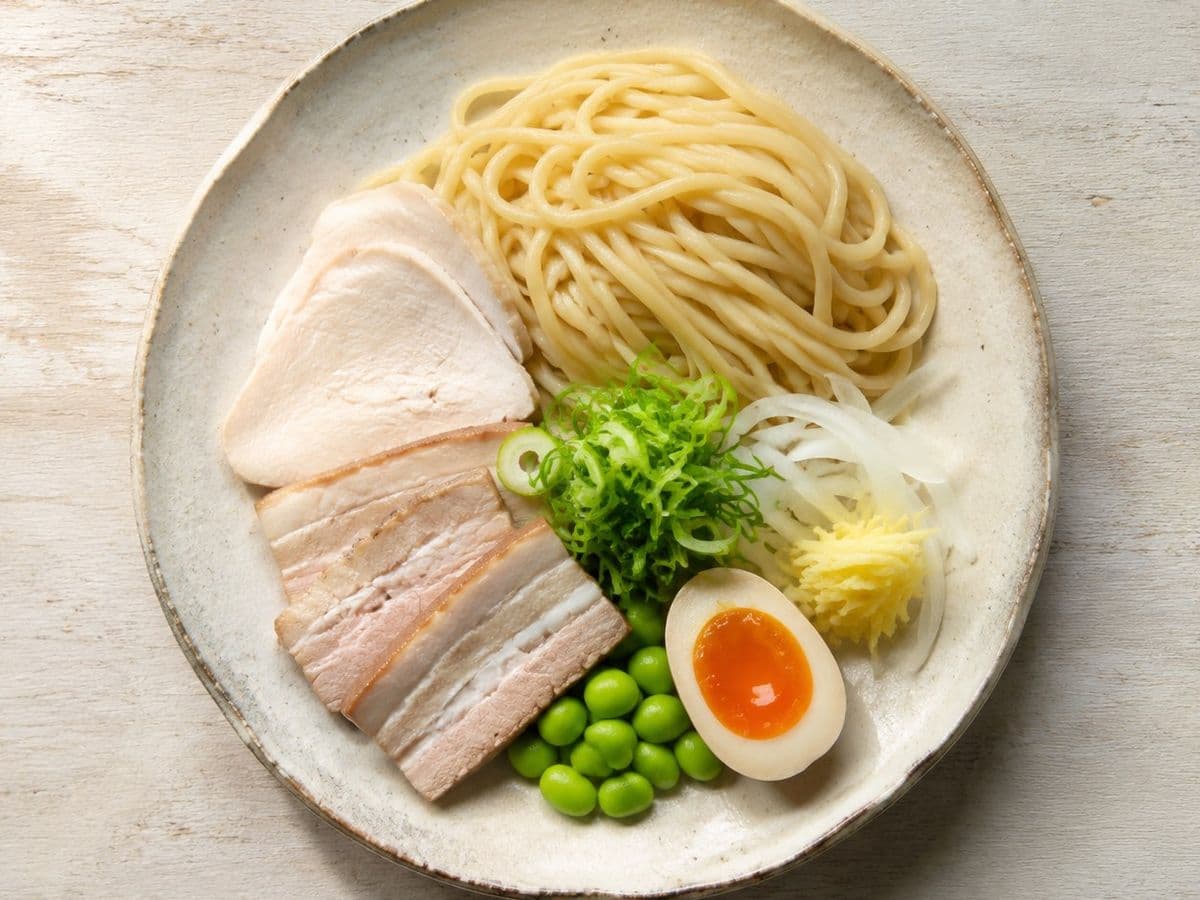
786 kcal a serving, against 1180 for the traditional version. That is 394 kcal off, or 33%, with 60.7g of protein. Serves 4. .
What the traditional version is
Classic tsukemen starts with pork bones boiled for hours, chicken carcasses, katsuobushi, niboshi, kombu, and aromatics, all strained into a broth that's reduced till it's almost sticky. Soy sauce, mirin, and more salt go in at the end. Thick wheat noodles (often hand-pulled) are cooked, chilled, and piled next to the bowl. Toppings: slices of pork belly, marinated egg, seaweed. You dunk and slurp until regret sets in.
What changed, and what each change costs
Swap pork belly and chicken thigh for chicken breast and a smaller portion of pork belly
Chicken breast adds plenty of protein without the fat blanket, and a little pork belly keeps you from missing the point entirely.
What it costs you. You lose that broth cling and some of the mellow, lip-sticking mouthfeel. There's still plenty going on, but it's less of a fat-powered sledgehammer.
Dilute the broth instead of reducing it as much
Tsukemen broth is supposed to coat like paint, but all that reduction means double the fat and salt. Diluting means you can actually drink it - you'll still get the hit, just less of the hangover.
What it costs you. It isn't quite as lush, it's more like dipping into a strong ramen than a gravy. If you want to go back to the sticky stuff, do it on a day when your blood pressure's feeling lucky.
Cut noodle portion by a third, add edamame for fibre and protein
Ramen noodles do one job, and that's starch. Edamame bring a bright note, a handful of extra protein, and you'll stay fuller for longer.
What it costs you. The texture's not the same, obviously. But once you start dunking and scooping, you'll barely notice till you fish out the last bits.
Eggs switched to one per person and only soft-boiled, not marinated
Soft-boiled eggs are already rich. Marinating them just brings salt and a dark edge that this broth doesn't need. Simple is good.
What it costs you. You lose that mahogany shell and the soy hit. The yolk's still custardy, which is the main event.
Keep katsuobushi, kombu, and most aromatics
If I touch the katsuobushi or kombu, it stops being tsukemen and starts being mildly upsetting noodle soup.
What it costs you. Not up for discussion, unless you hate umami, in which case, this was never your recipe.
What goes in it
The ingredients, without the quantities. The weights are what the figures below are computed from, and they are in the book.
- Pork belly
- Chicken breast
- Katsuobushi
- Dried kombu
- Light soy sauce
- Mirin
- Onion
- Garlic cloves
- Fresh ginger
- Podded edamame
- Thick wheat noodles
- 4 medium eggs
- Dried nori sheets
- Spring onions
How it starts
- First, make the broth.
- Remove the chicken breast after 20 minutes - you don't want sawdust - let it cool a bit, then slice thinly for topping later.
- Add the katsuobushi to the pot, turn off the heat, and steep for 10 minutes.
The rest of the method, and every weight, is in Authentic-ish Japanese.
The numbers
| Per serving | Traditional | Lightened |
|---|---|---|
| Calories | 1180 | 786 |
| Protein | 67.2g | 60.7g |
| Fat | 44.2g | 19.5g |
| Saturated fat | 13.8g | 5.3g |
| Carbohydrate | 123.9g | 89g |
| Protein per 100 kcal | 5.7g | 7.7g |
Every figure is computed from the recipe's own weighed ingredient list against public food composition databases. The appendix in Authentic-ish Japanese prints the exact database row used for each ingredient, so any number here can be checked. How every number is computed sets out the method.
Allergens. gluten, eggs, fish, soybeans.
The method is in the book
This isn't a gluey, stick-to-your-lips tsukemen shop in Ikebukuro, but you get the big dipping fun, the deep, punchy broth, and enough protein that you won't be looking for a biscuit an hour later. The broth's lighter, sure, and won't come back to haunt you all afternoon. If you miss the sticky richness, it's only a matter of boiling it longer and adding more pork fat - your call. The best bit: you can finish the soup at the end and not feel like you need to lie down. If that's not a win, I don't know what is.
The quantities and the method for this dish are in Authentic-ish Japanese, along with 48 more. Buy the paperback
More from Authentic-ish Japanese
- Ramen, Tonkotsu, 651 kcal a serving, 43% off
- Ramen, Shoyu, 698 kcal a serving, 28% off
- Ramen, Miso, 622 kcal a serving, 23% off
- Yakisoba, 409 kcal a serving, 31% off
- Zaru Soba, 287 kcal a serving, 14% off
- Kitsune Udon, 422 kcal a serving, 24% off
Every Japanese dish and its calories · Every dish in the series