Japanese · Authentic-ish Japanese
Takoyaki
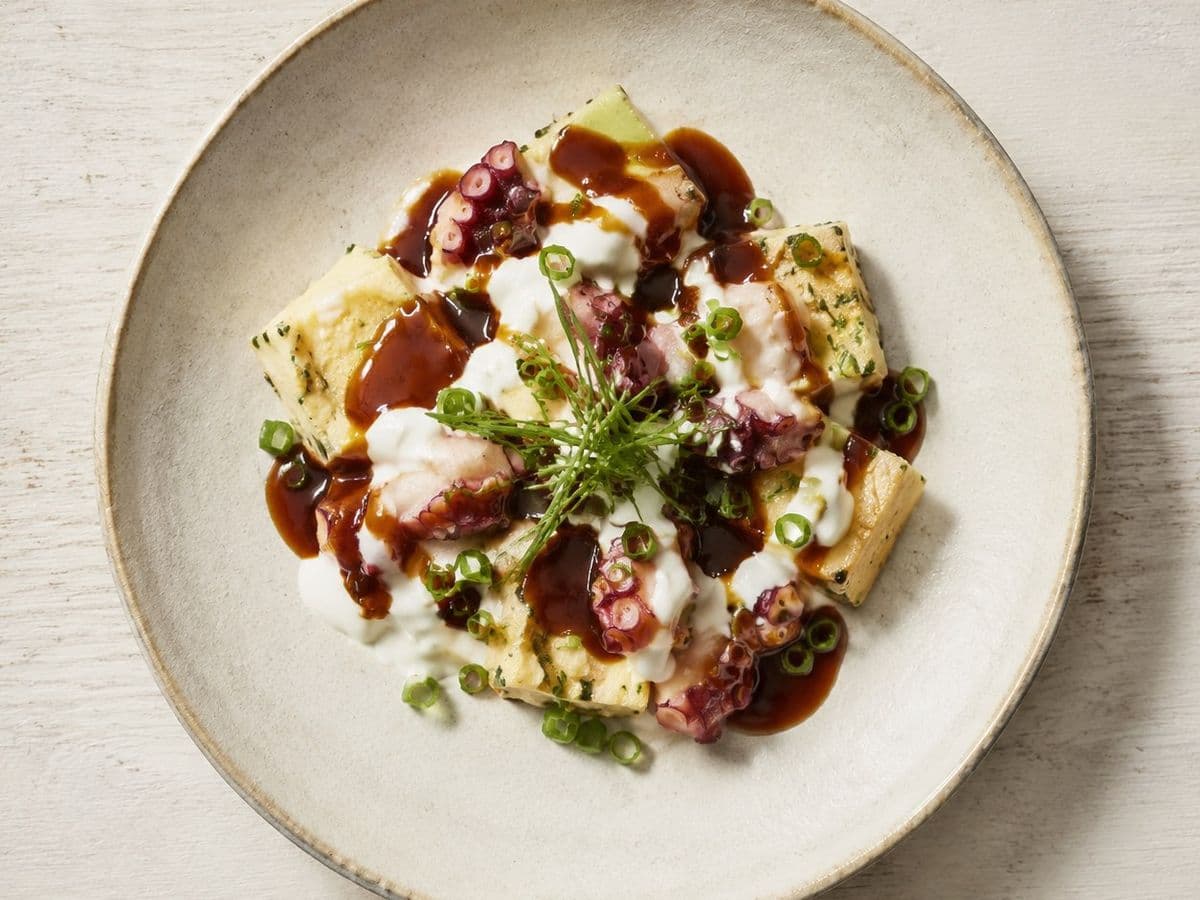
230 kcal a serving, against 367 for the traditional version. That is 137 kcal off, or 37%, with 21.6g of protein. Serves 6. .
What the traditional version is
The proper way is to make a savoury batter with flour, dashi, egg and baking powder, poured into a heavily-oiled takoyaki pan. Each pocket gets a chunk of boiled octopus, some sliced spring onion, red pickled ginger and a fistful of tenkasu (crunchy fried batter bits). As the batter sets, you flip each ball to get them round and crisp all over.
What changed, and what each change costs
Swap half the flour for firm tofu, blitzed smooth
Somebody out there loves carb swaps, but the truth is, tofu makes the batter lighter and adds a little protein. The balls stay moist inside without anywhere near as much starch.
What it costs you. The crumb isn't quite as chewy, and you lose that exact pancake flavour. You get softer centres rather than a proper spring.
Cut oil for the pan by two-thirds
Takoyaki pans are usually slick with oil so nothing sticks, but most of it pools at the bottom and never makes it to your plate. Wipe each divot with a little oil on kitchen paper instead. You'll need a properly non-stick pan and a steady hand to avoid welded batter.
What it costs you. You don't get the old-school edge crust. A few may stick, so don't expect perfect spheres unless you're a takoyaki wizard.
Double the octopus per ball
Normally you find a tiny sad bit of octopus hiding in a batter sphere the size of a golf ball. Instead, slot in double and let the seafood be the point of the dish for once.
What it costs you. It's not cheap, and the texture is more assertive - chewy, even - but this time you actually taste the octopus. Veggie friends, I can't help you.
Use fat-free Greek yoghurt and a dab of mustard for 'mayonnaise'
Japanese mayo is half egg, half oil, all joy. Swapping in Greek yoghurt bruised with English mustard gives sharpness and body for a fraction of the fat and about a third of the calories.
What it costs you. It's not proper Kewpie and it never will be. You'll miss the silkiness and that sweet tang you only get from the bottle. If you want the real stuff, just use less.
Sauce halved and nori, katsuobushi unchanged
The sauce is where the sugar and salt are hiding, but halve it and nobody really notices once you've got octopus in every bite. The rest is there for flavour and pride.
What it costs you. You might want to bring a bit more for dipping, but the top stays sticky and glossy.
What goes in it
The ingredients, without the quantities. The weights are what the figures below are computed from, and they are in the book.
- Plain flour
- Firm tofu
- Dashi stock
- 2 medium eggs
- Baking powder
- Cooked octopus
- Spring onions
- Pickled red ginger
- Vegetable oil for pan
- Okonomiyaki sauce
- Fat-free Greek yoghurt
- Prepared English mustard
- Katsuobushi
- Dried nori
How it starts
- Whisk the tofu with eggs, dashi and baking powder until smooth, then stir in the flour to get a thin batter.
- Heat your takoyaki pan over medium-high until hot.
- Pour batter into the pan, filling each hole almost to the top.
The rest of the method, and every weight, is in Authentic-ish Japanese.
The numbers
| Per serving | Traditional | Lightened |
|---|---|---|
| Calories | 367 | 230 |
| Protein | 12.7g | 21.6g |
| Fat | 22.3g | 8.5g |
| Saturated fat | 3.6g | 1.6g |
| Carbohydrate | 28.1g | 17g |
| Protein per 100 kcal | 3.4g | 9.4g |
Every figure is computed from the recipe's own weighed ingredient list against public food composition databases. The appendix in Authentic-ish Japanese prints the exact database row used for each ingredient, so any number here can be checked. How every number is computed sets out the method.
Allergens. eggs, fish, gluten, milk, molluscs, mustard, soybeans.
The method is in the book
This one's a trade. You get more octopus per bite, less oil, and you'll actually taste the seafood for once. The batter's a bit lighter, but loses some of that dense pancake feel, and the mayo swap won't fool anyone with a Japanese passport. Your hands stay less greasy and you can eat two servings before feeling like you've swallowed a bottle of chip oil. It's not the festival stand, but you won't miss the queue or the guilt. Bring beer, not dignity.
The quantities and the method for this dish are in Authentic-ish Japanese, along with 48 more. Buy the paperback
More from Authentic-ish Japanese
- Chicken Katsu, 502 kcal a serving, 41% off
- Tonkatsu, 430 kcal a serving, 51% off
- Ebi Fry, 332 kcal a serving, 27% off
- Tempura Moriawase, 245 kcal a serving, 50% off
- Korokke, 281 kcal a serving, 54% off
- Karaage, 291 kcal a serving, 51% off
Every Japanese dish and its calories · Every dish in the series