Thai · Authentic-ish Thai
Pad Thai
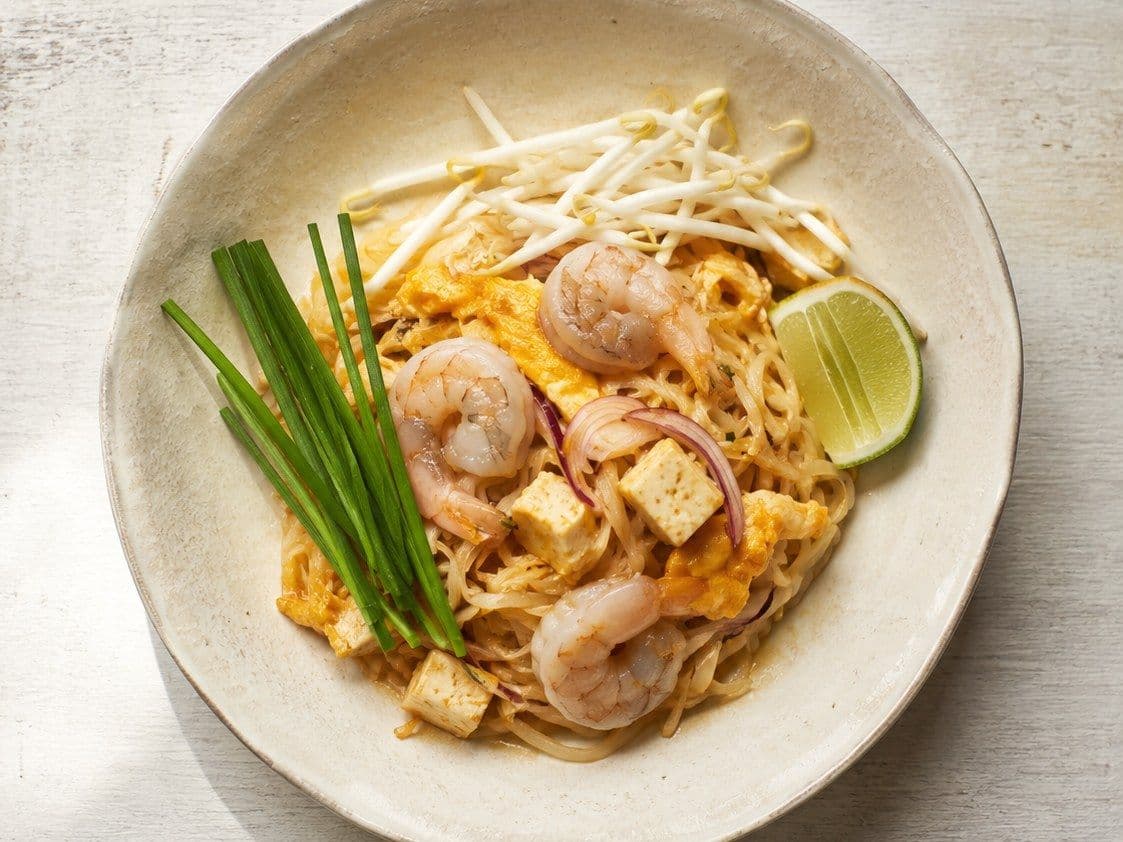
642 kcal a serving, against 728 for the traditional version. That is 86 kcal off, or 12%, with 38.3g of protein. Serves 4. 35 minutes.
What the traditional version is
Soaked rice noodles stir-fried in pork lard with garlic, shallots, dried prawns, firm tofu, bean sprouts and eggs. Prawns go in if there's money in your pocket. Sauce is tamarind, palm sugar and fish sauce, poured over and cooked down till it's sticky. Garnished with peanuts, lime, fresh beansprouts and sometimes chives.
What changed, and what each change costs
60g of pork lard or veg oil down to 20g vegetable oil
Oil is the single biggest hitter on the list by miles. You could halve the oil and most people wouldn't even notice - go further and you end up with something closer to a noodle salad, but at least the noodles aren't swimming.
What it costs you. You don't get that glistening, rich finish, and the egg cooks like a normal omelette rather than going golden and chewy in the fat. That's the swap that hurts most.
60g palm sugar down to 30g caster sugar
Half the sugar, normal sugar instead of palm. The sauce keeps its backbone but won't glue your teeth together. Go further and it's just tart.
What it costs you. Loses some depth and stickiness. Palm sugar has a proper caramel note and the texture changes. You can't fake that with half as much caster sugar.
Double the tofu (100g up to 200g)
Tofu is the first protein that gets picked at and left behind, but it's an easy way to boost actual food value without throwing the dish out of balance.
What it costs you. Nobody ever dreams of more tofu in their pad Thai, but if you fry it off hard first, it's absolutely fine and soaks up the sauce. Eat with everything else and it's not at all sad.
Prawns up from 200g to 320g
More prawns just look generous and mean more protein per mouthful. They're the only pricy bit on the plate, but if you're only eating this once a week, you can take the hit.
What it costs you. If you're skint, you'll miss the prawns. Otherwise, no loss at all.
Eggs stay the same at 2
You could bump up egg to push protein, but too much makes it more like a breakfast fry-up. I left it.
What it costs you. If you're looking to break records on protein, it isn't pad Thai anymore, it's just fried noodles with stuff.
Peanuts down from 40g to 20g
Peanuts are the third source of hidden fat. You only need enough for a crunchy kick. Otherwise it's just a nut bowl in disguise.
What it costs you. If you miss the extra crunch and richness, add some more next time, but the plate doesn't feel mean.
What goes in it
The ingredients, without the quantities. The weights are what the figures below are computed from, and they are in the book.
- Dried rice noodles
- Vegetable oil
- Raw prawns
- Firm tofu
- Egg
- Shallots
- Garlic
- Tamarind
- Caster sugar
- Fish sauce
- Beansprouts
- Peanuts
- Limes
- Chives
How it starts
- Soak the rice noodles in hot water till soft, about 15 minutes.
- Mix the tamarind, sugar and fish sauce with a splash of water and stir till dissolved.
- Heat half the oil in a big non-stick frying pan or, if you're an optimist, a wok.
The rest of the method, and every weight, is in Authentic-ish Thai.
The numbers
| Per serving | Traditional | Lightened |
|---|---|---|
| Calories | 728 | 642 |
| Protein | 29.3g | 38.3g |
| Fat | 25.4g | 15.3g |
| Saturated fat | 3.9g | 2.6g |
| Carbohydrate | 96.8g | 89.2g |
| Protein per 100 kcal | 4g | 6g |
Every figure is computed from the recipe's own weighed ingredient list against public food composition databases. The appendix in Authentic-ish Thai prints the exact database row used for each ingredient, so any number here can be checked. How every number is computed sets out the method.
Allergens. crustaceans, eggs, fish, gluten, peanuts, soybeans.
The method is in the book
There's no getting round the fact that frying in less oil means a different mouthfeel. The noodles don't go silky and the egg doesn't set the same way. But if you want pad Thai on a Tuesday night without feeling like a python resting on a goat, this works. The sauce stays sharp and bright, the peanuts still crunch, and you get a proper portion of protein without hunting for it. Is it as good as the best pad Thai in Thailand? No, but nor is mine. I'll tell you one thing though: you won't need a nap afterwards.
The quantities and the method for this dish are in Authentic-ish Thai, along with 48 more. Buy the paperback
More from Authentic-ish Thai
- Pad See Ew, 274 kcal a serving, 60% off
- Drunken Noodles, 598 kcal a serving, 18% off
- Rad Na, 472 kcal a serving, 26% off
- Noodles in Gravy, 504 kcal a serving, 27% off
- Boat Noodles, 425 kcal a serving, 38% off
- Spicy Stir-fried Rice Noodles, 526 kcal a serving, 8% off