Thai · Authentic-ish Thai
Pad See Ew
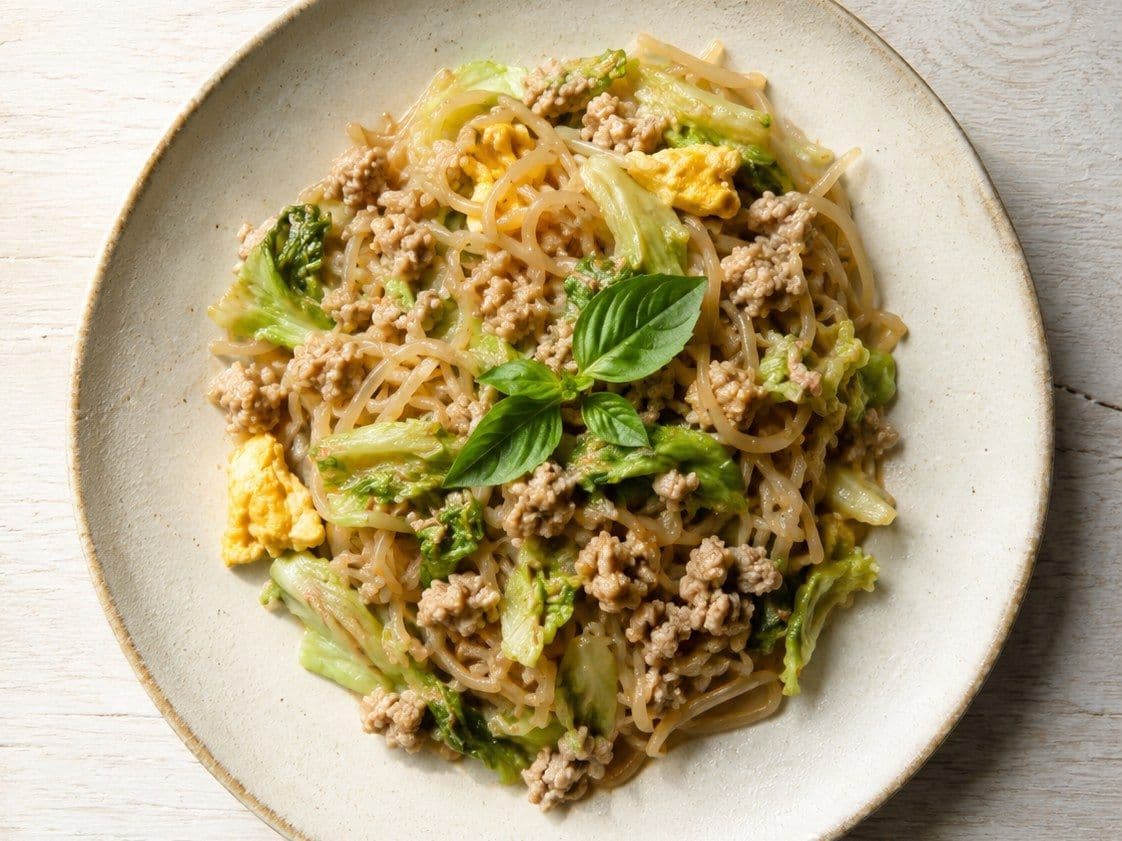
274 kcal a serving, against 679 for the traditional version. That is 405 kcal off, or 60%, with 23.2g of protein. Serves 4. 35 minutes.
What the traditional version is
Wide, fresh rice noodles flash-fried in hot pork lard with slices of fatty pork or sometimes chicken.
What changed, and what each change costs
Switch pork shoulder with turkey mince (250g pork shoulder -> 300g turkey mince)
Fatty pork is the headline act, but turkey mince brings far more protein and barely any fat.
What it costs you. Sorry, but the porky depth is gone. The sauce covers for it, but you'll know it's missing the original's richness. If you've ever tried turkey bolognese, you know the score. On the plus side, nobody's picking out gristly chunks.
Bin the lard, use 2 tablespoons (28g) vegetable oil
There's no way round it - lard makes things taste brilliant and keeps the noodles glossy. Vegetable oil is neutral and keeps everything from welding itself to the wok, but you won't get that smoky, porky finish.
What it costs you. You'll cop some noodle clumping and the subtle roastiness is just absent. It is not a tragedy. It is just a bit more weeknight than midnight curbside.
Up the egg from 2 to 3 eggs (120g to 180g)
The egg gives you richness and a soft scramble through the noodles. Since I've chucked the pork fat, the extra egg works hard for its money, giving you more satiety and a proper protein bump.
What it costs you. It turns a touch more omelette-like, but I won't apologise for that. The texture's great and you get real substance in every bite.
Increase the greens: up the gai lan from 180g to 250g
If you're not relying on lard for heft, pile in more Chinese broccoli. More stems, more bite, and it takes the place of the noodles you'll have to swap next.
What it costs you. The bowl's fresher, crunchier and a little less starchy. You won't get that heavy post-noodle wallop, but you'll have room for pudding.
Swap 400g fresh rice noodles for 300g shirataki noodles
Shirataki noodles have next to no energy but let you keep the bouncy texture - or a passable imitation. Don't expect the same starchy chew, but you'll still get a tangle you can chase round the plate.
What it costs you. This one's not fooling anyone. The chew is second, not first, and they don't quite soak up the sauce. But you don't get that sticky aftermath either.
What goes in it
The ingredients, without the quantities. The weights are what the figures below are computed from, and they are in the book.
- Shirataki noodles
- Turkey mince
- Vegetable oil
- Light soy sauce
- Dark soy sauce
- Caster sugar
- Fish sauce
- 3 medium eggs
- Chinese broccoli
- Garlic
How it starts
- Rinse your shirataki noodles under cold running water and set aside to drain properly.
- Heat half the oil in a large non-stick wok or deep frying pan over high heat.
- Add the rest of the oil to the wok.
The rest of the method, and every weight, is in Authentic-ish Thai.
The numbers
| Per serving | Traditional | Lightened |
|---|---|---|
| Calories | 679 | 274 |
| Protein | 22.9g | 23.2g |
| Fat | 24.8g | 17.3g |
| Saturated fat | 8.9g | 3.9g |
| Carbohydrate | 86.5g | 6.1g |
| Protein per 100 kcal | 3.4g | 8.5g |
Every figure is computed from the recipe's own weighed ingredient list against public food composition databases. The appendix in Authentic-ish Thai prints the exact database row used for each ingredient, so any number here can be checked. How every number is computed sets out the method.
Allergens. gluten, eggs, fish, soybeans.
The method is in the book
What you gain is a dish that actually leaves you able to stand up afterwards, with a proper wallop of protein and just enough chew to satisfy. What you lose is the "pad see ew" that exists only in backstreet Bangkok, with pork fat and wok smoke. It's not the same, but it's not a sad substitute either. If you want a dinner that fits weekday life, here it is - messy wok clean-up included.
The quantities and the method for this dish are in Authentic-ish Thai, along with 48 more. Buy the paperback
More from Authentic-ish Thai
- Pad Thai, 642 kcal a serving, 12% off
- Drunken Noodles, 598 kcal a serving, 18% off
- Rad Na, 472 kcal a serving, 26% off
- Noodles in Gravy, 504 kcal a serving, 27% off
- Boat Noodles, 425 kcal a serving, 38% off
- Spicy Stir-fried Rice Noodles, 526 kcal a serving, 8% off