Thai · Authentic-ish Thai
Spicy Stir-fried Rice Noodles
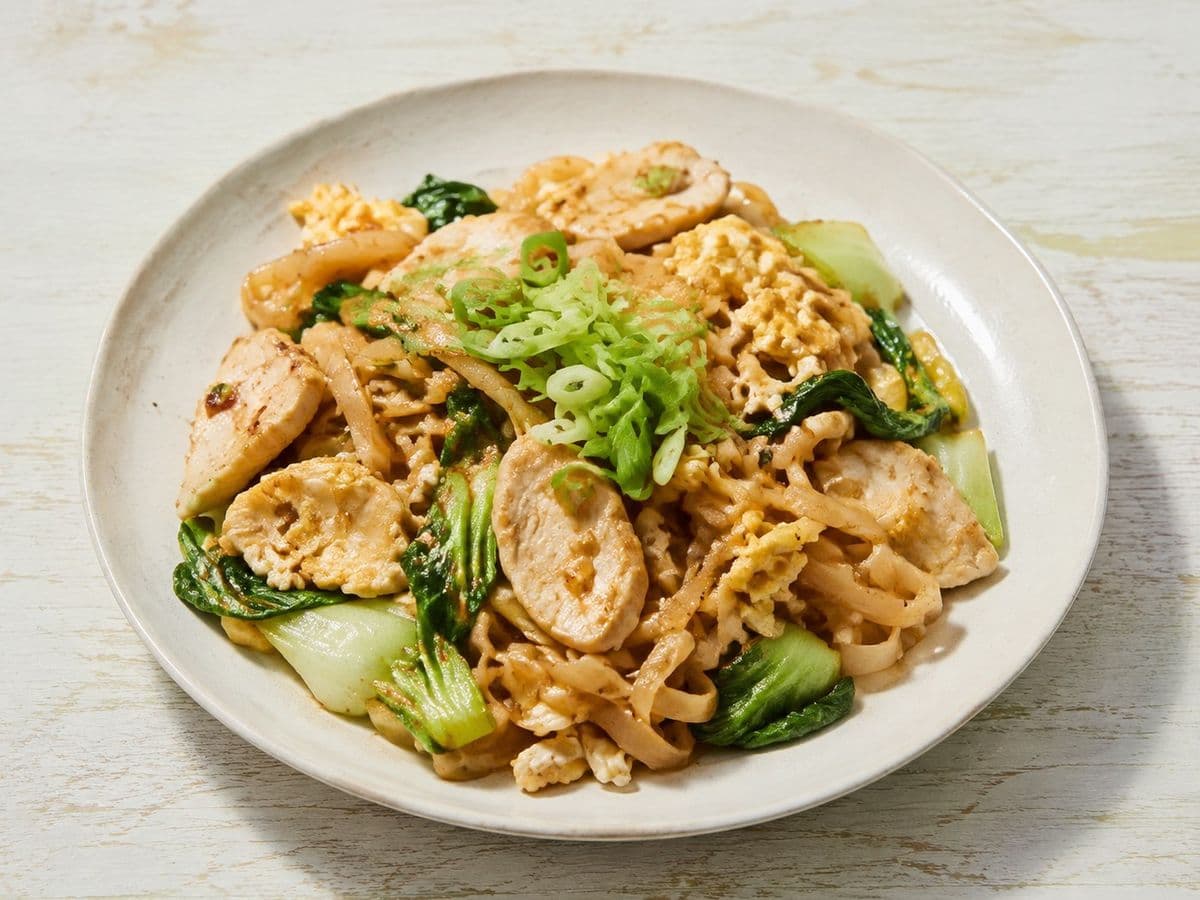
526 kcal a serving, against 570 for the traditional version. That is 44 kcal off, or 8%, with 25g of protein. Serves 4. 35 minutes.
What the traditional version is
Wide rice noodles stir-fried in plenty of pork lard. The sauce is tamarind-heavy, sweet with palm sugar, salty from fish sauce and fiercely hot from green and red chillies. Add thin-sliced pork, a handful of Chinese broccoli and just enough egg to coat the noodles. It's glossy, heady, unashamedly rich and best eaten with a cold beer on a plastic stool.
What changed, and what each change costs
40g pork lard swapped for 20g vegetable oil
There's no polite way to say it: the fat is what gives you that proper restaurant wok-gloss and smoky aroma. Swap it for a spoonful of vegetable oil and the noodles slip a bit less, but you duck a big chunk of the grease.
What it costs you. The smoky, animal-fat fragrance doesn't stick around. Stir-frying is a bit less theatrical and you'll need to watch the heat so the noodles don't glue themselves to the pan. On the bright side, you can eat a second plate without feeling like you need a lie-down.
180g pork loin boosted to 240g chicken breast, sliced thin
Chicken breast's got more protein and less fat for the same weight, and stays moist if you don't overcook it. It won't have that same pork sweetness, but with all the sauce you're not missing much.
What it costs you. It is not pork. It is chicken, but unless you're especially sentimental about pigs, it's a win for your protein and a loss for the lard-lovers.
36g palm sugar down to 18g
Halving the sugar sharpens everything up. The sweet-sour tamarind sauce turns more sour, less sticky. Your teeth will thank you, though your inner Thai grandma will probably sigh.
What it costs you. That caramel edge is gone. The sauce is punchier, the noodles less glossy, and you actually taste the tamarind instead of a sugar rush. You've swapped comfort for attitude.
More pak choi and a bump of spring onion
The noodles are the first to shout, but bulking out the veg gives you more volume, more crunch and fewer calories. And it looks greener on the plate.
What it costs you. You'll be chewing longer and reaching for water after all those chillies. No real downside here unless you're anti-greens.
Egg stands
The egg's fine as it is - it's there for richness, not bulk. Cut it and the dish feels spartan; add more and it turns into a noodle omelette. So no heroics here.
What it costs you. No change, no complaints.
What goes in it
The ingredients, without the quantities. The weights are what the figures below are computed from, and they are in the book.
- Wide dried rice noodles
- Skinless chicken breast
- Vegetable oil
- 2 medium eggs
- Garlic
- 3 fresh green chillies
- 3 fresh red chillies
- Pak choi
- Tamarind paste
- Fish sauce
- Palm sugar
- Spring onions
How it starts
- Start by soaking the noodles in hot water for 15 minutes, or until they're pliable but not mushy.
- Heat half the oil in a large frying pan or wok on high.
- Wipe any browned bits from the pan, then add the rest of the oil.
The rest of the method, and every weight, is in Authentic-ish Thai.
The numbers
| Per serving | Traditional | Lightened |
|---|---|---|
| Calories | 570 | 526 |
| Protein | 21.1g | 25g |
| Fat | 15.2g | 10.1g |
| Saturated fat | 5.5g | 2.1g |
| Carbohydrate | 84.6g | 80.8g |
| Protein per 100 kcal | 3.7g | 4.8g |
Every figure is computed from the recipe's own weighed ingredient list against public food composition databases. The appendix in Authentic-ish Thai prints the exact database row used for each ingredient, so any number here can be checked. How every number is computed sets out the method.
Allergens. gluten, eggs, fish.
The method is in the book
Cutting the lard and sugar does exactly what you'd expect: the result's lighter but nowhere near as sticky or smoky. The sweet-sour sauce is louder, the heat's up, and you'll finish a bowl without urgently hunting for a sofa. It's not a match for the street version after a night out, but it's not pretending to be. For lunch on a Tuesday, it'll do you proud.
The quantities and the method for this dish are in Authentic-ish Thai, along with 48 more. Buy the paperback
More from Authentic-ish Thai
- Pad Thai, 642 kcal a serving, 12% off
- Pad See Ew, 274 kcal a serving, 60% off
- Drunken Noodles, 598 kcal a serving, 18% off
- Rad Na, 472 kcal a serving, 26% off
- Noodles in Gravy, 504 kcal a serving, 27% off
- Boat Noodles, 425 kcal a serving, 38% off