Thai · Authentic-ish Thai
Stir-fried Glass Noodles
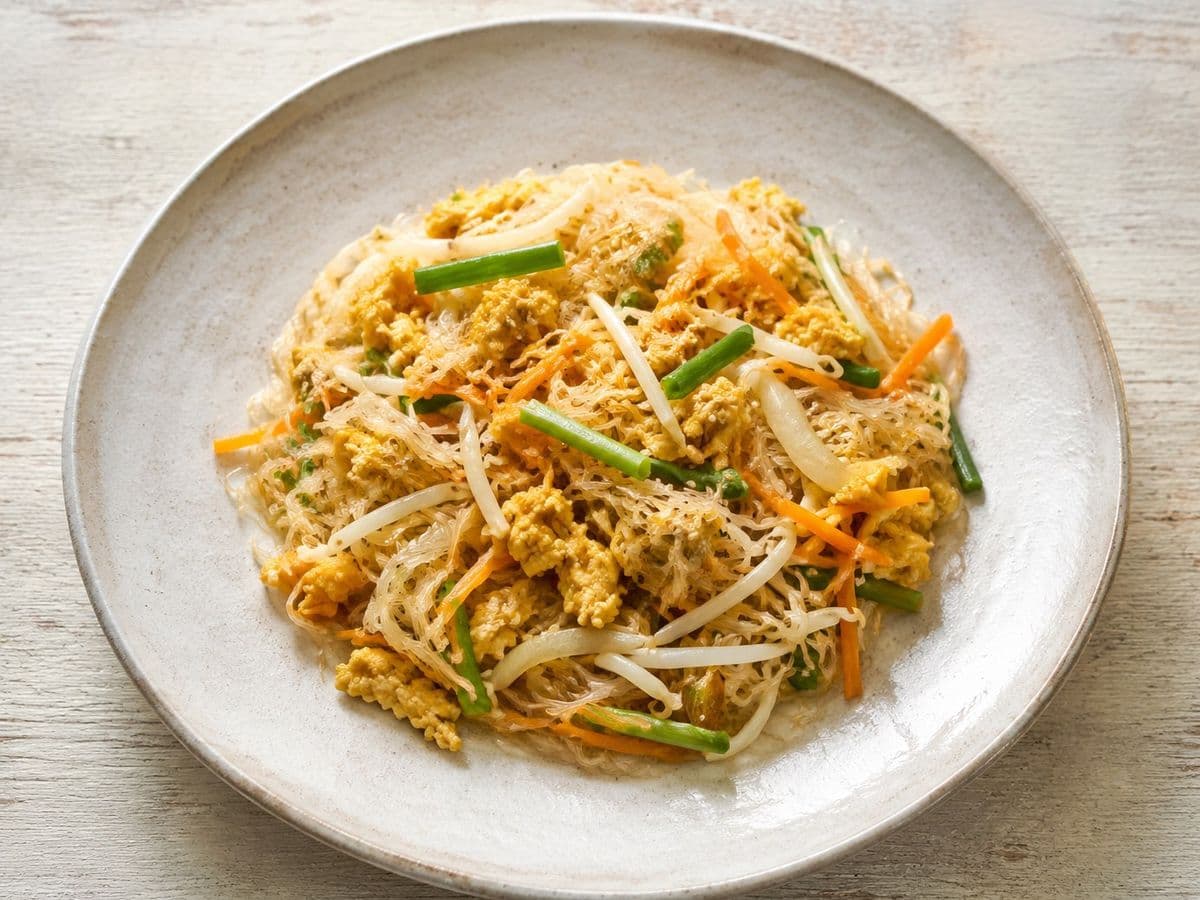
267 kcal a serving, against 362 for the traditional version. That is 95 kcal off, or 26%, with 8.7g of protein. Serves 4. 35 minutes.
What the traditional version is
Glass noodles soaked and drained, stir-fried in a wok with plenty of vegetable oil. Add in sliced onion, carrot, beansprouts and spring onion. Crack eggs into the wok, scramble, then toss everything together with soy sauce, a pinch of sugar and a squirt of fish sauce. Finished with a shower of coriander and white pepper. Everything's a bit glossy, nothing sticks, and the egg's almost creamy where it meets the noodles.
What changed, and what each change costs
Cut vegetable oil from 60g to 8g
The oil makes everything glide in the wok. Without it, the noodles want to clump and the egg threatens to stick. But unless you like feeling your lips coated in oil, you won't miss the grease.
What it costs you. Lose the oil, lose the gloss. The egg goes from a silky wrap to a firmer, drier scramble that stands out less. You might get a gluey strand here or there, but no one's calling it greasy.
Switch to a non-stick frying pan
A proper wok and oil are best, but a non-stick frying pan keeps you from chiselling noodles off the bottom.
What it costs you. You don't get that smoky hit from high heat and wok oil. There's a bit less drama, but more washing-up time saved.
Up the soy sauce and beansprouts, trim sugar
Extra soy sauce brings back moisture, and bumping up the beansprouts keeps the plate full without starch or fat. Cutting back the sugar means you don't get that faint caramel note, but you save more than just a few calories.
What it costs you. The noodles taste saltier and sharper. It's not balanced the same way, but you won't need a glass of water after each bite.
Up the eggs by 1 for more protein
The eggs do double duty: they thicken the dish and add a heap of protein. Bring it up to 3 eggs and you won't feel like you're just eating veg and noodle.
What it costs you. It's eggier, but not in a bad way. You notice the extra bite in each twirl. No one wishes for the old ratio unless they're after maximum noodle.
What goes in it
The ingredients, without the quantities. The weights are what the figures below are computed from, and they are in the book.
- Dried glass noodles
- Vegetable oil
- 3 medium eggs
- Onion
- Carrot
- Beansprouts
- Spring onions
- Light soy sauce
- Fish sauce
- Caster sugar
- Fresh coriander
- Black pepper
How it starts
- Soak your glass noodles in just-boiled water for 10 minutes.
- Crack your eggs into a bowl and beat them with a fork.
- Heat your non-stick frying pan over a medium-high flame.
The rest of the method, and every weight, is in Authentic-ish Thai.
The numbers
| Per serving | Traditional | Lightened |
|---|---|---|
| Calories | 362 | 267 |
| Protein | 6.2g | 8.7g |
| Fat | 18.1g | 6.5g |
| Saturated fat | 2.9g | 1.7g |
| Carbohydrate | 43.8g | 43.5g |
| Protein per 100 kcal | 1.7g | 3.3g |
Every figure is computed from the recipe's own weighed ingredient list against public food composition databases. The appendix in Authentic-ish Thai prints the exact database row used for each ingredient, so any number here can be checked. How every number is computed sets out the method.
Allergens. gluten, eggs, soybeans, fish.
The method is in the book
The magic of the wok is the first thing out the window here. No getting round it: the low-oil version is drier, less shiny, and the egg isn't as silky. But you save a ridiculous amount of oil, get more actual egg on your fork, and it's still satisfying in that way only fried noodles are. It won't win a street food award, but it'll win on a Tuesday night when you just want dinner sorted.
The quantities and the method for this dish are in Authentic-ish Thai, along with 48 more. Buy the paperback
More from Authentic-ish Thai
- Pad Thai, 642 kcal a serving, 12% off
- Pad See Ew, 274 kcal a serving, 60% off
- Drunken Noodles, 598 kcal a serving, 18% off
- Rad Na, 472 kcal a serving, 26% off
- Noodles in Gravy, 504 kcal a serving, 27% off
- Boat Noodles, 425 kcal a serving, 38% off