German · Authentic-ish German
Kasekuchen
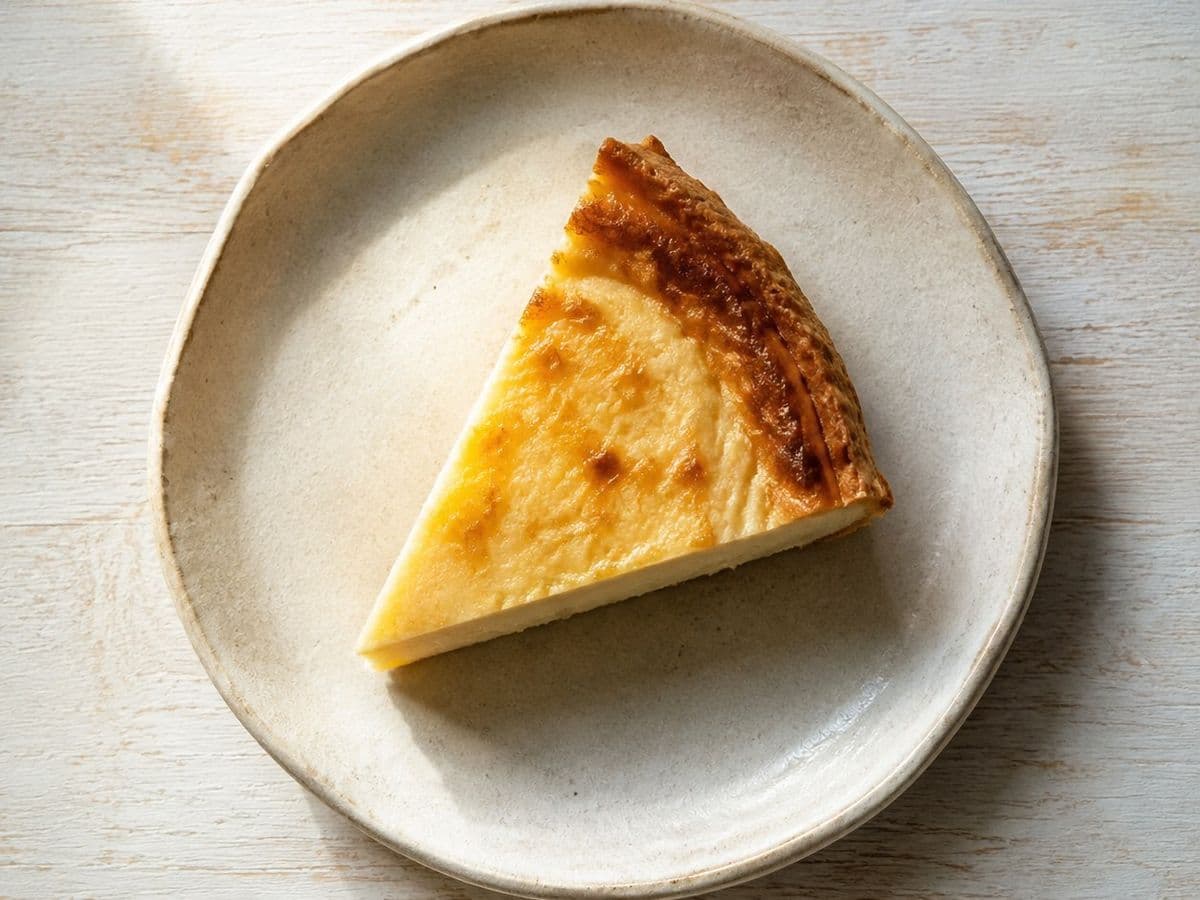
130 kcal a serving, against 340 for the traditional version. That is 210 kcal off, or 62%, with 15.7g of protein. Serves 10. 1 hour 30 minutes.
What the traditional version is
A classic German baked cheesecake, where the filling is almost all quark, eggs, sugar and a splash of cream, baked inside a plain shortcrust pastry shell. Sometimes there's a handful of raisins, sometimes not, and lemon zest is never optional. The result is a tall, pale-gold cake that manages to be rich, tangy, and light at the same time.
What changed, and what each change costs
200g of plain flour and 80g of butter for 0g
The pastry base is already on the thin side, but it's full of stodge and fat. Scrapping it does mean spooning the final cake out of the tin rather than cutting neat slices, but you save a huge stack of calories and a fair bit of saturated fat.
What it costs you. You don't get the textural contrast or the clean wedge you expect from a cheesecake. Structurally it will sag a bit, and you'll need to serve it with a spoon. Honestly, it's not as smart, but most of the flavour is still there.
180g sugar down to 90g
Kasekuchen should be tangy, so it can take a pretty brutal sugar cut. You still need some to stop it tasting like breakfast. I find 90g is about the minimum before it tastes like a low effort mousse.
What it costs you. It's noticeably less sweet. If you serve it to someone expecting dessert, warn them. Don't try to pass it off on small children unless you hate being liked.
lose the cream (120g) and add 150g extra quark
Double cream is there for richness and texture. Quark is heroically lean and high in protein. By bumping up the quark and cutting the cream, you get a firmer, lighter result with a hit more protein per forkful.
What it costs you. What you save in richness, you pay for in texture. The filling is less creamy, a bit more like a set yoghurt. The world won't end, but it's not the classic mouthfeel.
50g raisins for 0g
They don't add protein and they push the sugar back up. You can always add a few on top if you're feeling honest. Most bakeries in Germany leave them out and so do I.
What it costs you. Strictly for raisin enthusiasts. If you want them, add them back.
What goes in it
The ingredients, without the quantities. The weights are what the figures below are computed from, and they are in the book.
- Quark
- Egg
- Caster sugar
- Lemon juice
How it starts
- Heat the oven to 160C fan.
- Line a 23cm springform tin with baking paper.
- Beat the eggs with the sugar until the mix is pale and light.
The rest of the method, and every weight, is in Authentic-ish German.
The numbers
| Per serving | Traditional | Lightened |
|---|---|---|
| Calories | 340 | 130 |
| Protein | 16.1g | 15.7g |
| Fat | 12.9g | 1.9g |
| Saturated fat | 7.5g | 0.6g |
| Carbohydrate | 40.9g | 12.9g |
| Protein per 100 kcal | 4.7g | 12g |
Every figure is computed from the recipe's own weighed ingredient list against public food composition databases. The appendix in Authentic-ish German prints the exact database row used for each ingredient, so any number here can be checked. How every number is computed sets out the method.
Allergens. eggs, milk.
The method is in the book
You lose the pastry, a chunk of sugar, and all the cream, so it's not going to fool anyone who judges cheesecake by richness. But you keep the bounce, the tang, and almost all the comfort. If you want the classic sticky, buttery bottom, this won't deliver. If you just care about ending a meal with something sweet and German, it's still miles ahead of rice cakes.
The quantities and the method for this dish are in Authentic-ish German, along with 54 more. Buy the paperback
More from Authentic-ish German
- Apfelstrudel, 320 kcal a serving, 40% off
- Schwarzwalder Kirschtorte, 315 kcal a serving, 45% off
- Streuselkuchen, 289 kcal a serving, 29% off
- Bienenstich, 269 kcal a serving, 39% off
- Rote Grutze, 187 kcal a serving, 53% off
- Quarkkeulchen, 259 kcal a serving, 26% off
Every German dish and its calories · Every dish in the series