German · Authentic-ish German
Quarkkeulchen
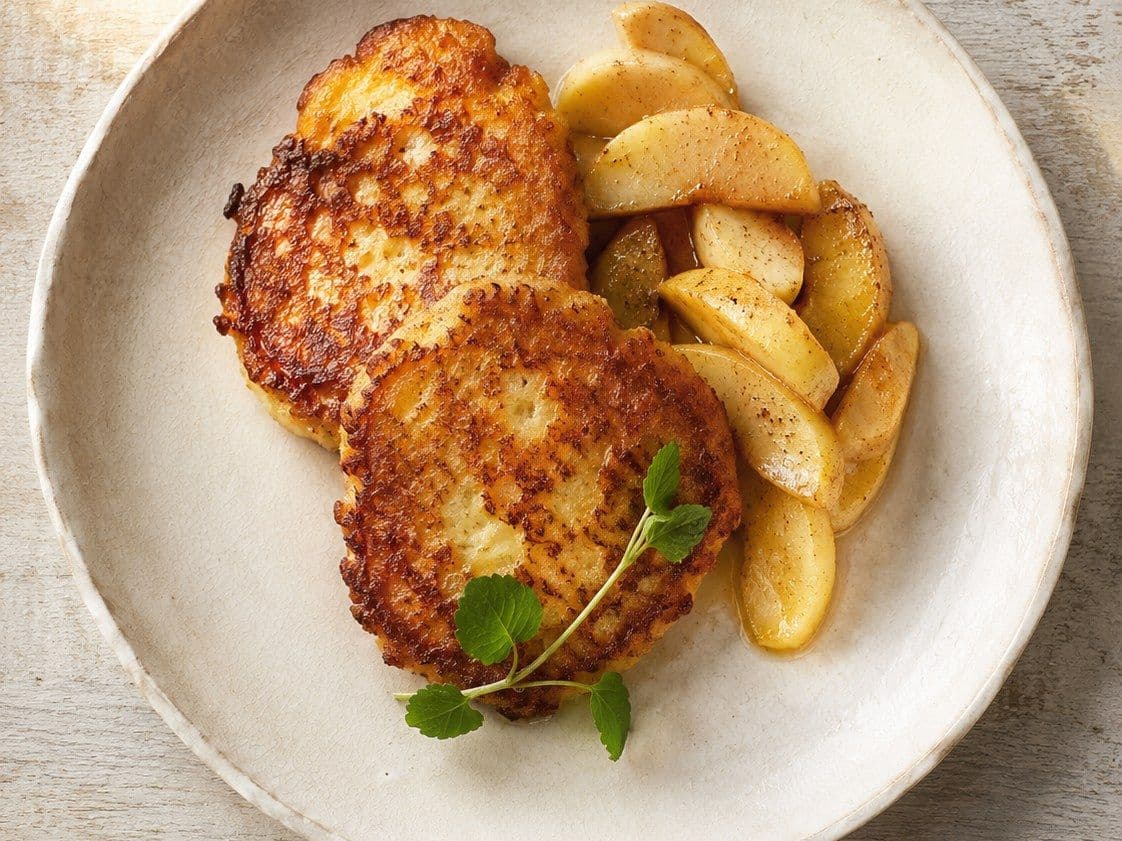
259 kcal a serving, against 349 for the traditional version. That is 90 kcal off, or 26%, with 17.1g of protein. Serves 6. 1 hour.
What the traditional version is
Quarkkeulchen are Saxon potato and quark fritters, sweetened and fried in butter until crisp and golden. Mashed potato is mixed with quark, egg and a bit of flour, formed into small patties and pan-fried in a generous amount of butter. They're eaten hot with a thick dusting of cinnamon sugar, sometimes with stewed apple on the side.
What changed, and what each change costs
60g butter for 10g olive oil
The first obvious step is ditching most of the butter. Shallow-frying in butter gives a rich crust, but it sinks the balance. Baking on a tray with a tiny slick of olive oil gets the base golden and prevents sticking without drowning everything in fat.
What it costs you. Loses the very best crust. You'll get some browning on the bottom, but you'll miss the deep golden splotches and the buttery aroma. No one is claiming a baked Quarkkeulchen is as good as one bathed in foaming butter - it just isn't.
100g plain flour down to 60g
Quark adds protein and keeps everything snappy, so you can cut down the flour a bit and still shape decent patties. That saves a chunk of starch and bumps the protein-to-carb ratio slightly.
What it costs you. Less flour means softer patties and a bit less of that chewy fritter edge. It's a softer set but holds if you're gentle.
300g stewed apples for 200g raw apple slices
Stewed apples are lovely but they bring more sugar and invite you to reach for the cream. Sliced raw apple is fresher, gives some fibre and bite, and keeps things sharp.
What it costs you. You're losing the syrupy, comforting apple mush. It's less pudding, more breakfast. You've been warned.
What goes in it
The ingredients, without the quantities. The weights are what the figures below are computed from, and they are in the book.
- Potato
- Quark
- Egg
- Plain flour
- Olive oil
- Caster sugar
- Ground cinnamon
- Apples
How it starts
- Peel the potatoes, cut them small and simmer in salted water until just tender, about 15 minutes.
- Let the mash cool to room temperature, then fold in the quark, eggs, flour and half the sugar.
- Heat the oven to 200C.
The rest of the method, and every weight, is in Authentic-ish German.
The numbers
| Per serving | Traditional | Lightened |
|---|---|---|
| Calories | 349 | 259 |
| Protein | 17.9g | 17.1g |
| Fat | 10g | 3.5g |
| Saturated fat | 5.6g | 0.8g |
| Carbohydrate | 48.5g | 41.1g |
| Protein per 100 kcal | 5.1g | 6.6g |
Every figure is computed from the recipe's own weighed ingredient list against public food composition databases. The appendix in Authentic-ish German prints the exact database row used for each ingredient, so any number here can be checked. How every number is computed sets out the method.
Allergens. gluten, eggs, milk.
The method is in the book
The Saxons won't thank me for baking these, but the maths works. The high-protein quark and egg stay, the fat takes a nosedive, and you still get warm, pillowy fritters sweet enough to feel like pudding. The crust is no match for a butter bath, but you'll finish your portion without feeling like you've joined a threshing crew. Not a patch on the real thing, but much more gym-compatible.
The quantities and the method for this dish are in Authentic-ish German, along with 54 more. Buy the paperback
More from Authentic-ish German
- Kasekuchen, 130 kcal a serving, 62% off
- Apfelstrudel, 320 kcal a serving, 40% off
- Schwarzwalder Kirschtorte, 315 kcal a serving, 45% off
- Streuselkuchen, 289 kcal a serving, 29% off
- Bienenstich, 269 kcal a serving, 39% off
- Rote Grutze, 187 kcal a serving, 53% off
Every German dish and its calories · Every dish in the series