German · Authentic-ish German
Apfelstrudel
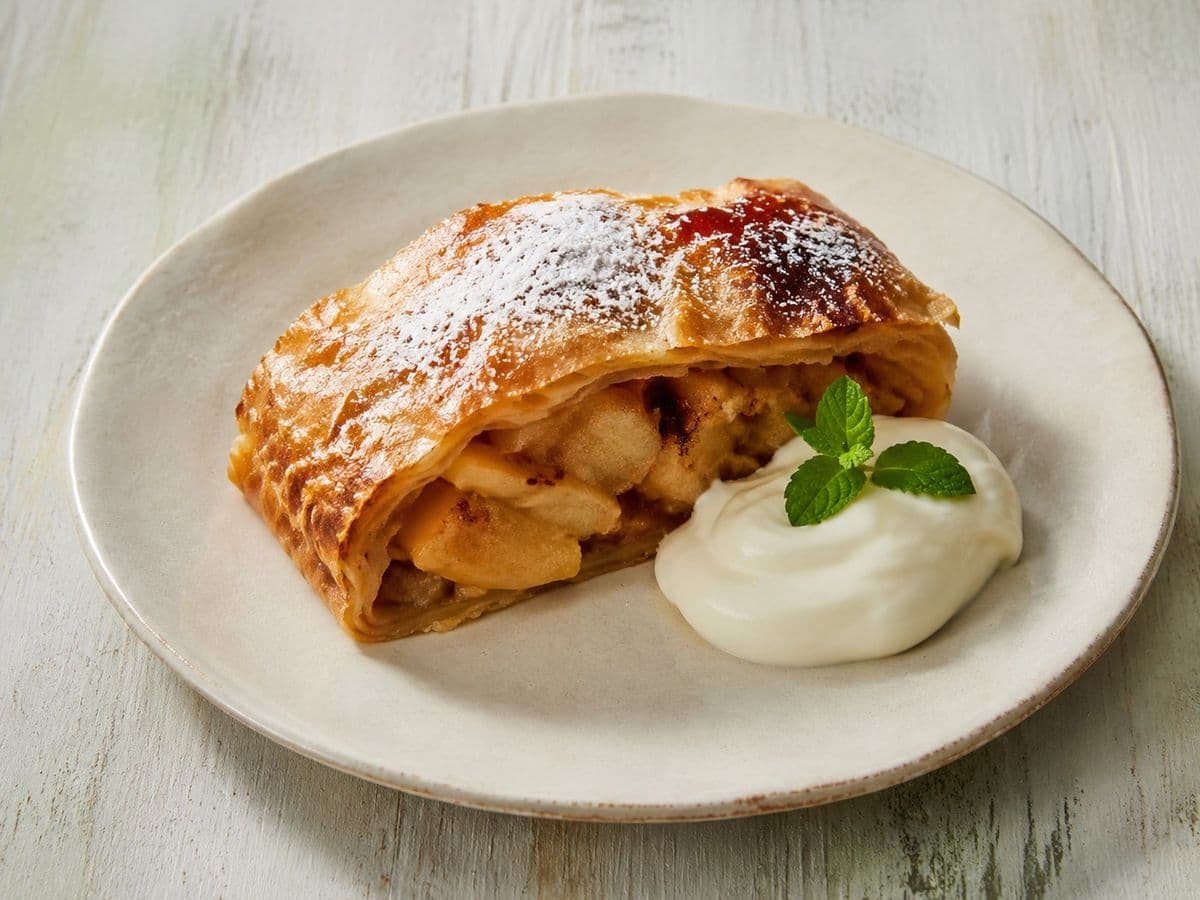
320 kcal a serving, against 530 for the traditional version. That is 210 kcal off, or 40%, with 5.1g of protein. Serves 8. 1 hour 30 minutes.
What the traditional version is
Viennese-style apple strudel, made with very thin, hand-stretched strudel dough or bought puff pastry, brushed lavishly with butter. The filling is sharp apples, soft breadcrumbs fried in more butter, sultanas or raisins soaked in rum, sugar, cinnamon, and sometimes nuts. Rolled and baked until golden, sliced thick, and usually eaten with whipped cream or custard.
What changed, and what each change costs
100g of butter down to 20g
Brushing butter between every layer is what makes each sheet crisp. You cut out 80g. The main job now is stopping the pastry from drying out, not creating a fat-soaked crust.
What it costs you. You get a paler, less crispy strudel. The 20g is just enough to avoid a dry, leathery roll. It's a compromise, and you'll notice - especially on the outside.
80g of fried breadcrumbs out, 80g more apple in
The breadcrumbs soak up melted butter and apple juice, turning the filling lush and rich. Swapping for apple keeps the filling juicy and sharp but cuts the buttery ballast.
What it costs you. Lose some of the pudding texture. The filling leans further towards baked fruit than the crumbly middle of a real strudel. There's no getting around it.
120g sugar down to 40g, raisins out entirely
There's so much sugar in the fruit already. Cutting out most of the added sugar (and losing the raisins) takes sweetness down to just above tart. If you like a pudding to shout 'dessert' at you, this version might whisper instead.
What it costs you. Less caramelisation, less sticky glaze, less of that clear 'pudding' hit. It isn't the original, it's a baked apple roll with a sensible jacket.
No double cream on the side; instead, serve with fat-free Greek yoghurt if you want
Double cream is the last luxury here. Yoghurt brings a bit of acidity and a tiny amount of protein. If you are going to skip the cream, you should swap it for something, and fat-free Greek yoghurt is at least a nod in the right direction.
What it costs you. No mistaking it - cream is lush, yoghurt is sharp and thin. If you want the original, you know what to do.
What goes in it
The ingredients, without the quantities. The weights are what the figures below are computed from, and they are in the book.
- Puff or shortcrust pastry
- Unsalted butter
- Apples
- Caster sugar
- Ground cinnamon
- Fat-free Greek yoghurt
How it starts
- Set your oven to 200C.
- Peel, core, and slice your apples as thin as you can - thinner apples cook faster and don't leave you with raw bits inside.
- Unroll the pastry and lay it flat on a sheet of baking paper.
The rest of the method, and every weight, is in Authentic-ish German.
The numbers
| Per serving | Traditional | Lightened |
|---|---|---|
| Calories | 530 | 320 |
| Protein | 4.3g | 5.1g |
| Fat | 32g | 16.5g |
| Saturated fat | 19.9g | 10.2g |
| Carbohydrate | 61.1g | 41.3g |
| Protein per 100 kcal | 0.8g | 1.6g |
Every figure is computed from the recipe's own weighed ingredient list against public food composition databases. The appendix in Authentic-ish German prints the exact database row used for each ingredient, so any number here can be checked. How every number is computed sets out the method.
Allergens. gluten, milk.
The method is in the book
This isn't a pudding to make you forget the original, especially if you grew up with proper Apfelstrudel piled high on whipped cream. There's no rich buttery aroma, no sticky sweet edge. What you do get is a proper slab of baked apple in a crisp shell. If that sounds like a let-down, trust me, you'll still want a second slice. If you want the classic, it's ready and waiting. But if you need pudding without the sugar headache, this version behaves itself admirably.
The quantities and the method for this dish are in Authentic-ish German, along with 54 more. Buy the paperback
More from Authentic-ish German
- Kasekuchen, 130 kcal a serving, 62% off
- Schwarzwalder Kirschtorte, 315 kcal a serving, 45% off
- Streuselkuchen, 289 kcal a serving, 29% off
- Bienenstich, 269 kcal a serving, 39% off
- Rote Grutze, 187 kcal a serving, 53% off
- Quarkkeulchen, 259 kcal a serving, 26% off
Every German dish and its calories · Every dish in the series