Japanese · Authentic-ish Japanese
Nabeyaki Udon
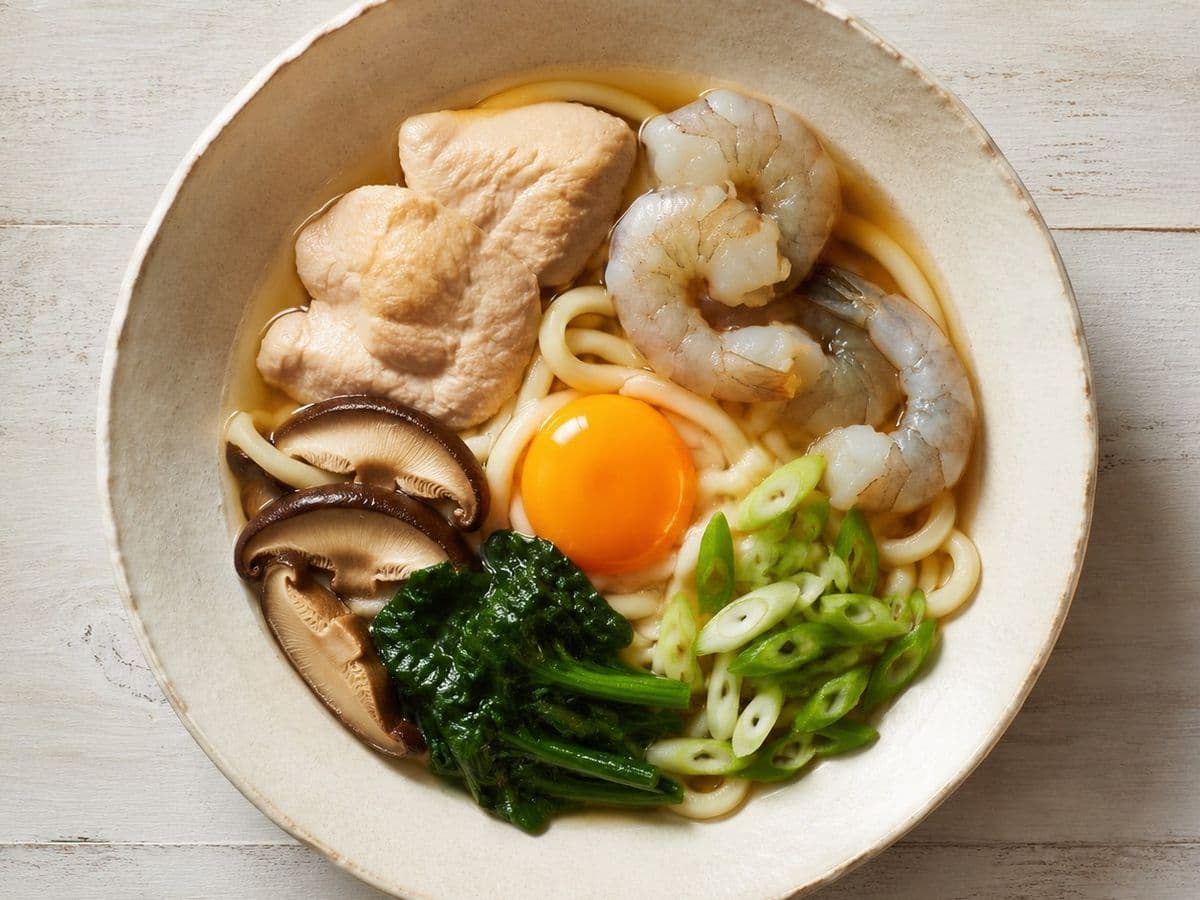
608 kcal a serving, against 973 for the traditional version. That is 365 kcal off, or 38%, with 48.5g of protein. Serves 4. .
What the traditional version is
Nabeyaki udon is cooked in a donabe or other heavy pan. Chicken thigh is simmered in dashi stock with thick udon noodles, shiitake mushrooms, spinach or pak choi, and topped with battered prawn tempura and a whole raw egg that cooks gently in the simmering soup. Sometimes a fish cake slice goes in, or a handful of spring onions. Everything gets cooked just until the noodles are soft but bouncy, and the tempura stays as crisp as you can manage.
What changed, and what each change costs
Deep-fried prawn tempura swapped for grilled prawns
The prawn tempura is pure battered crunch and soaks up oil for fun. Grill them instead, and you actually taste the prawn, not just what's stuck to it.
What it costs you. You lose the golden shatter of tempura and half the point of the topping. Is it as thrilling? Not really. But it's still proud, pink prawn on top.
Chicken thigh swapped for chicken breast
Chicken breast doesn't bring the same fatty slip as thigh, but you get more protein for less fat, and it's still tender if you cook it right.
What it costs you. A bit less flavour from fat, but you're here for soup, not confit.
Egg poached in broth, not cracked in raw
Poaching the egg keeps it safe for anyone worried about sloshing raw whites through the dashi. Still plenty of silk in the yolk.
What it costs you. You miss the drama of breaking the egg at the table, but there's no raw slipperiness to scare off the cautious.
Reduce udon by a third, increase vegetables
Cutting back on noodles means fewer carbs per bowl. Load up on shiitake and spinach and you'll barely notice what's missing.
What it costs you. Less noodle slurping, more room for mushrooms. If the carbs are all you care about, double the noodles and ignore me.
No batter, no deep-frying oil
Skipping tempura means saying goodbye to the flour-egg batter and half a bottle of oil - that's most of the fat.
What it costs you. The soup is cleaner and lighter, but the topping is stripped back. If you want tempura, just do classic nabeyaki next time and march round the park afterwards.
What goes in it
The ingredients, without the quantities. The weights are what the figures below are computed from, and they are in the book.
- Dashi stock
- Chicken breast
- Cooked udon noodles
- Fresh shiitake mushrooms
- Spinach or pak choi
- Raw prawns
- Spring onion
- Dried nori sheet
- 4 eggs
How it starts
- Set your grill to high and line a tray with foil.
- Bring the dashi stock to a simmer in a large pan or donabe.
- Add the shiitake mushrooms and cook for 2 minutes, then the spinach for just a minute more.
The rest of the method, and every weight, is in Authentic-ish Japanese.
The numbers
| Per serving | Traditional | Lightened |
|---|---|---|
| Calories | 973 | 608 |
| Protein | 52.6g | 48.5g |
| Fat | 28.7g | 10g |
| Saturated fat | 6.6g | 2.7g |
| Carbohydrate | 123.3g | 79.9g |
| Protein per 100 kcal | 5.4g | 8g |
Every figure is computed from the recipe's own weighed ingredient list against public food composition databases. The appendix in Authentic-ish Japanese prints the exact database row used for each ingredient, so any number here can be checked. How every number is computed sets out the method.
Allergens. crustaceans, eggs, fish, gluten.
The method is in the book
This isn't nabeyaki udon in a Tokyo izakaya - it's a British Tuesday with the heating stuck on. No tempura means you lose half the drama, but you gain a bowl that tastes like broth, prawn and veg, not a fried lunch. The grilled prawns are honest and sweet, and if you eat it fresh, the poached egg still gives you that little river of yolk. Missing the brittle topping? Of course you are - but you'll have room for pudding, or at least another bowl. If you really want tempura, do it properly on New Year's and call this one practice.
The quantities and the method for this dish are in Authentic-ish Japanese, along with 48 more. Buy the paperback
More from Authentic-ish Japanese
- Ramen, Tonkotsu, 651 kcal a serving, 43% off
- Ramen, Shoyu, 698 kcal a serving, 28% off
- Ramen, Miso, 622 kcal a serving, 23% off
- Tsukemen, 786 kcal a serving, 33% off
- Yakisoba, 409 kcal a serving, 31% off
- Zaru Soba, 287 kcal a serving, 14% off
Every Japanese dish and its calories · Every dish in the series