Japanese · Authentic-ish Japanese
Miso Shiru
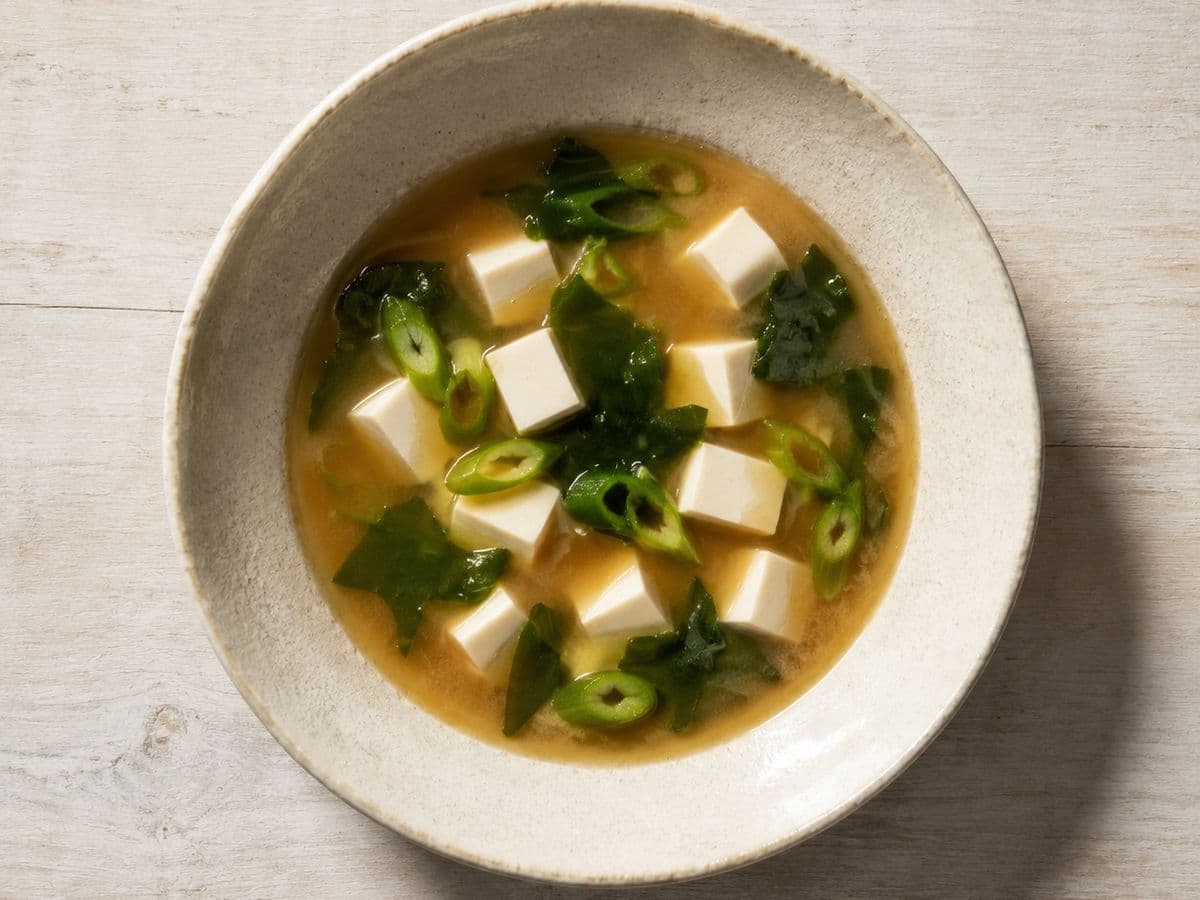
82 kcal a serving, against 95 for the traditional version. That is 13 kcal off, or 14%, with 8.7g of protein. Serves 4. .
What the traditional version is
Kombu and dried bonito are simmered to make dashi, which is whisked with pale miso paste. Cubes of silken tofu and a pinch of wakame seaweed make it a meal. A spring onion or two, if you want colour.
What changed, and what each change costs
Silken tofu for firm tofu, and a third more of it
Firm tofu doesn't break up so easily in the bowl and has a smidge more protein for the weight. Giving you more tofu per mouthful means the soup fills you up for an extra ten minutes.
What it costs you. Firm tofu is a bit rustic in texture, so you lose a touch of that barely-there effect. On the other hand, it's less likely to fall apart into soya mush in the ladle.
Half dashi is now water and a touch more kombu
Bonito flakes cost more than they're worth here. Half the dashi is just water and an extra bit of kelp, saving you fish and the effort of tracking it down.
What it costs you. You'll notice less sea flavour and miss the hint of smoke and depth from the bonito. If you're a purist or just feeling plush, put the fish back in.
Add another pinch of dried wakame
Wakame is all of three calories for a bowl and makes the broth taste a little more of the actual sea, which the extra water needs.
What it costs you. If you hate slimy seaweed bits, leave it out. If you like it, go nuts.
Miso paste down by a third
There's more tofu and wakame, so you can get away with less miso for the same bowlful. It's still salty as ever.
What it costs you. Slightly less of that rounded, malty hit. If you want the original wallop, keep the miso at 60g.
What goes in it
The ingredients, without the quantities. The weights are what the figures below are computed from, and they are in the book.
- Dried kombu
- Water
- Firm tofu
- White miso paste
- Dried wakame
- Spring onions
How it starts
- Put the kombu into 750ml cold water and let it sit for 20 minutes, or just bring it up towards the boil if you're in a rush.
- Fish out the kombu.
- Cut the firm tofu into small cubes, about 1.5cm across.
The rest of the method, and every weight, is in Authentic-ish Japanese.
The numbers
| Per serving | Traditional | Lightened |
|---|---|---|
| Calories | 95 | 82 |
| Protein | 6.9g | 8.7g |
| Fat | 3.3g | 4.2g |
| Saturated fat | 0.7g | 0.6g |
| Carbohydrate | 9.5g | 4g |
| Protein per 100 kcal | 7.3g | 10.7g |
Every figure is computed from the recipe's own weighed ingredient list against public food composition databases. The appendix in Authentic-ish Japanese prints the exact database row used for each ingredient, so any number here can be checked. How every number is computed sets out the method.
Allergens. soybeans.
The method is in the book
Swapping to firm tofu is the first nudge towards more filling, with a bit of extra protein, and a little more wakame doesn't hurt. But this soup is what it is: a hot briny sip to wake up your mouth before the main event. The original is silkier, but the cost here is tiny for a portion you'll actually notice. Double the tofu and it's not miso soup any more, it's sad.
The quantities and the method for this dish are in Authentic-ish Japanese, along with 48 more. Buy the paperback
More from Authentic-ish Japanese
- Tonjiru, 219 kcal a serving, 9% off
- Chicken Katsu, 502 kcal a serving, 41% off
- Tonkatsu, 430 kcal a serving, 51% off
- Ebi Fry, 332 kcal a serving, 27% off
- Tempura Moriawase, 245 kcal a serving, 50% off
- Korokke, 281 kcal a serving, 54% off
Every Japanese dish and its calories · Every dish in the series