Japanese · Authentic-ish Japanese
Tonjiru
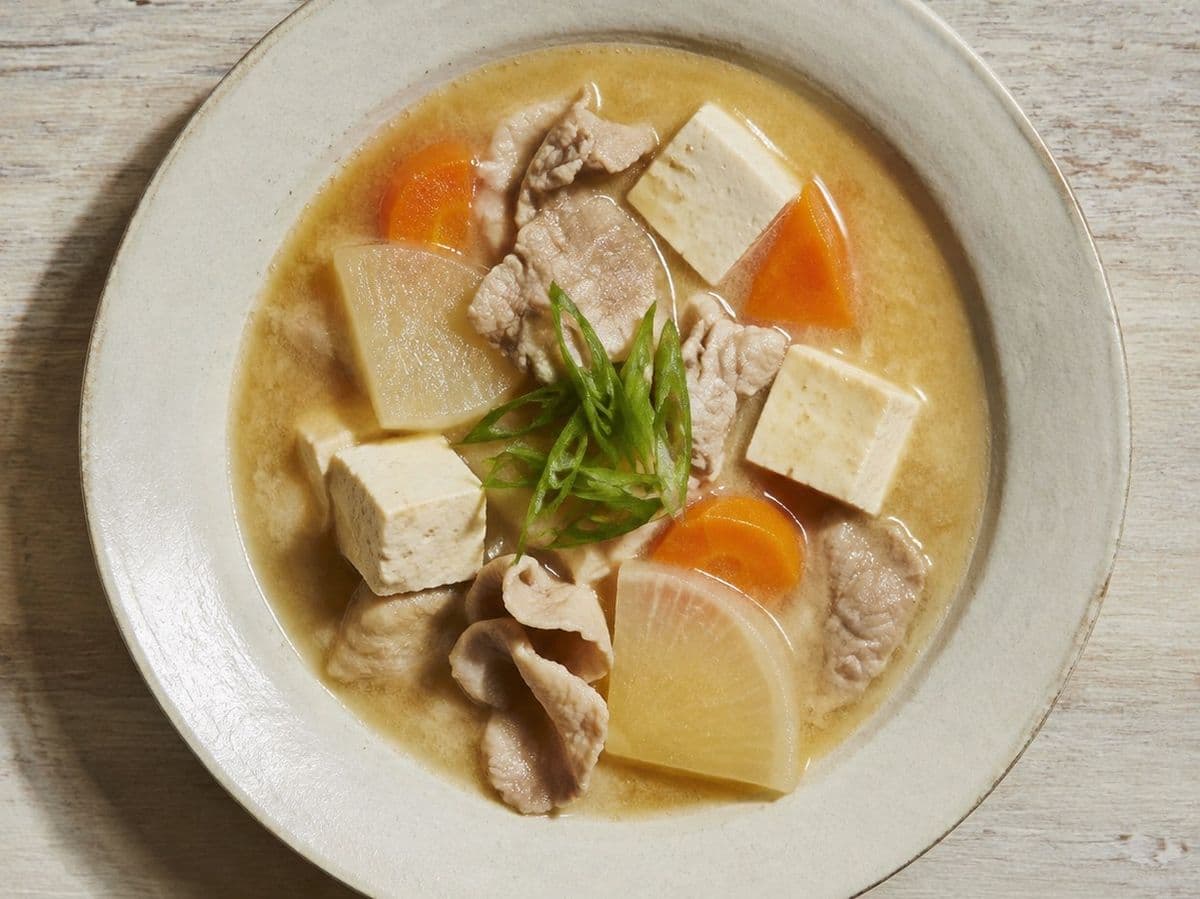
219 kcal a serving, against 241 for the traditional version. That is 22 kcal off, or 9%, with 27g of protein. Serves 6. .
What the traditional version is
Pork belly slices are sautéed and simmered with chunks of daikon, carrot, konnyaku and sometimes potato, in dashi stock. Miso is stirred in at the end, and you finish with a shower of spring onions and sometimes a flick of sesame oil. Serve it piping hot, ideally with a bowl of rice to go with.
What changed, and what each change costs
Pork belly swapped for pork loin
Pork loin is lean and still brings the right porkiness, just without the layer of melted fat. It's not as lush, but you can actually see the bottom of the bowl when you finish.
What it costs you. You lose the mouth-coating richness that makes tonjiru feel a bit like soup and a bit like stew. The broth isn't as silky, but your arteries might send a thank you card.
Extra tofu and more root veg added
To make up for the missing fat, double down on plant power: throw in more daikon and carrot, lose the potato, and let firm tofu bulk it up. Tofu bumps up the protein and keeps the soup feeling substantial.
What it costs you. You'll notice the lack of potato's comforting flop, and nobody is ever fooled by tofu cubes pretending to be pork. Still, they soak up the flavour well if you don't overcook them.
Sesame oil and konnyaku left out
Konnyaku is mostly texture, so bulking with other veg instead is no great loss. Sesame oil is just a garnish, and you won't miss that last hit if you're after lighter fare.
What it costs you. No glossy finish. If that's vital, add a single drop per bowl and don't tell your GP.
Keep dashi and miso the same
If you swap the dashi, it stops being tonjiru and starts being, well, a sad vegetable soup. Miso is non-negotiable here - it holds the whole thing together.
What it costs you. Honestly, this is where I draw the line. Cutting miso is no upgrade, just a downgrade in taste and soul.
What goes in it
The ingredients, without the quantities. The weights are what the figures below are computed from, and they are in the book.
- Pork loin
- Dashi stock
- Daikon
- Carrot
- Firm tofu
- White or mixed miso
- Spring onions
How it starts
- Cut the pork loin into bite-sized strips.
- In a large saucepan, bring the dashi to the boil.
- Add the daikon and carrot.
The rest of the method, and every weight, is in Authentic-ish Japanese.
The numbers
| Per serving | Traditional | Lightened |
|---|---|---|
| Calories | 241 | 219 |
| Protein | 16.9g | 27g |
| Fat | 14.4g | 8.4g |
| Saturated fat | 4.4g | 1.7g |
| Carbohydrate | 12.2g | 10.6g |
| Protein per 100 kcal | 7g | 12.3g |
Every figure is computed from the recipe's own weighed ingredient list against public food composition databases. The appendix in Authentic-ish Japanese prints the exact database row used for each ingredient, so any number here can be checked. How every number is computed sets out the method.
Allergens. fish, soybeans.
The method is in the book
This is honest food for cold days and empty bellies. You don't get the velvety depth of full-fat pork belly, and the broth is never quite as rich, but you can eat two bowls and not feel like someone has parked a mattress in your gut. The extra tofu makes up for the protein, but don't pretend it's the same thing. Still, for a soup that fills you up and makes your dietitian stop writing angry emails, it's a win. If you want the gloss, use the pork belly and live with the consequences - I won't judge.
The quantities and the method for this dish are in Authentic-ish Japanese, along with 48 more. Buy the paperback
More from Authentic-ish Japanese
- Miso Shiru, 82 kcal a serving, 14% off
- Chicken Katsu, 502 kcal a serving, 41% off
- Tonkatsu, 430 kcal a serving, 51% off
- Ebi Fry, 332 kcal a serving, 27% off
- Tempura Moriawase, 245 kcal a serving, 50% off
- Korokke, 281 kcal a serving, 54% off
Every Japanese dish and its calories · Every dish in the series