Jewish · Authentic-ish Jewish
Kishke
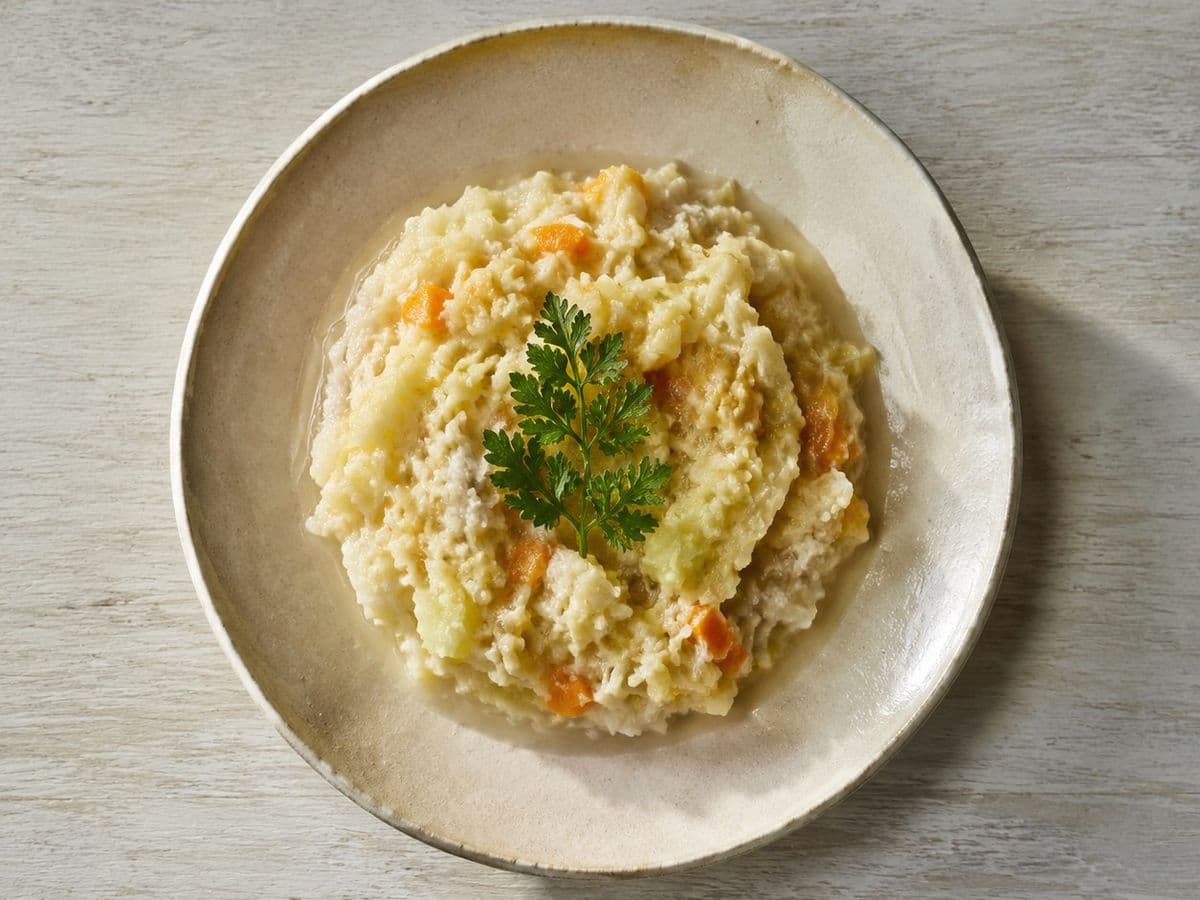
223 kcal a serving, against 523 for the traditional version. That is 300 kcal off, or 57%, with 5.6g of protein. Serves 8. 2 hours.
What the traditional version is
Traditional kishke uses beef suet cut into tiny cubes, mixed with plain flour, onion, blitzed carrots and celery, plus a hefty pinch of black pepper and salt.
What changed, and what each change costs
Swap beef suet for a precise dose of vegetable oil
You can't make this thing work with no fat at all, but switching from 350g suet to 75g oil gives you just enough richness so the thing's not a dry brick.
What it costs you. Lose the suet and what you lose is depth. The whole kitchen won't smell quite so deli-like. The soft, fatty melt is gone, replaced by something a bit lighter on the palate - less gluey, less memorable, more polite.
Replace most of the plain flour with chickpea flour and oat flour
A split of chickpea flour and oat flour gives you far more protein per bite and keeps some of the texture. The chickpea flour tries to mimic the fluffiness of suet, and oats give it ballast.
What it costs you. It does make the kishke more crumbly than the classic white loaf of the original. If you want it stodgy, this won't deliver.
Add potato starch for binding
Without all that suet, you need a proper binder or the filling will fall apart in the pot. Potato starch does the job, holding it together when you slice.
What it costs you. Potato starch is the third-best binder after animal fat and double the flour. Still, it means you can actually serve it without handing out spoons.
Switch the beef intestine for a synthetic casing
Finding beef intestine is more of a sourcing quest than most readers fancy, and it's wasted here anyway. Synthetic sausage casings do the trick and save some trouble.
What it costs you. You lose the natural snap and that faint whiff of childhood lunches. It's a fair trade for not having to clean a metre of cow's plumbing.
Dial up the veg and add a bit of egg white
More carrot and celery means more structure, more flavour and a hint of sweetness, plus the egg white boosts the protein and helps the lot stick together.
What it costs you. It's more colourful and tidy, but you won't fool anyone into thinking this is the original. It isn't kishke, it's kishke with a LinkedIn profile.
What goes in it
The ingredients, without the quantities. The weights are what the figures below are computed from, and they are in the book.
- Vegetable oil
- Gram flour
- Oat flour
- Potato starch
- Onion
- Carrots
- Celery
- About 2 egg whites
- Black pepper
- Salt
- Water
- Synthetic sausage casing
How it starts
- Heat the oil gently in a frying pan, then soften the onions, carrots and celery with a pinch of the salt for about 8 minutes till everything is just starting to colour.
- In a large bowl, combine the chickpea flour, oat flour, potato starch, black pepper and the rest of the salt.
- Add the egg whites and water, mixing until you get a thick, slightly sticky dough.
The rest of the method, and every weight, is in Authentic-ish Jewish.
The numbers
| Per serving | Traditional | Lightened |
|---|---|---|
| Calories | 523 | 223 |
| Protein | 3.6g | 5.6g |
| Fat | 44.1g | 11.2g |
| Saturated fat | 21.9g | 1.5g |
| Carbohydrate | 27.1g | 24.8g |
| Protein per 100 kcal | 0.7g | 2.5g |
Every figure is computed from the recipe's own weighed ingredient list against public food composition databases. The appendix in Authentic-ish Jewish prints the exact database row used for each ingredient, so any number here can be checked. How every number is computed sets out the method.
Allergens. gluten, eggs, celery.
The method is in the book
The original kishke is as much about memories as it is about taste. This one is safe for your arteries and friendlier to the scales, but if you're looking for beefy depth and that gluey, comforting chew, you'll find it comes up short. Still, it does the job as a side, and if you drown it in brisket gravy, nobody under the age of 60 will complain. The second reason to try it is you can actually eat seconds and not regret it by candlelight.
The quantities and the method for this dish are in Authentic-ish Jewish, along with 51 more. Buy the paperback
More from Authentic-ish Jewish
- Salt Beef, 365 kcal a serving, 14% off
- Chopped Egg and Onion, 116 kcal a serving, 55% off
- Potato Knish, 287 kcal a serving, 51% off
- Kasha Varnishkes, 399 kcal a serving, 15% off
- Kasha Knish, 223 kcal a serving, 46% off
- Roast Chicken, 312 kcal a serving, 40% off
Every Jewish dish and its calories · Every dish in the series