Jewish · Authentic-ish Jewish
Potato Knish
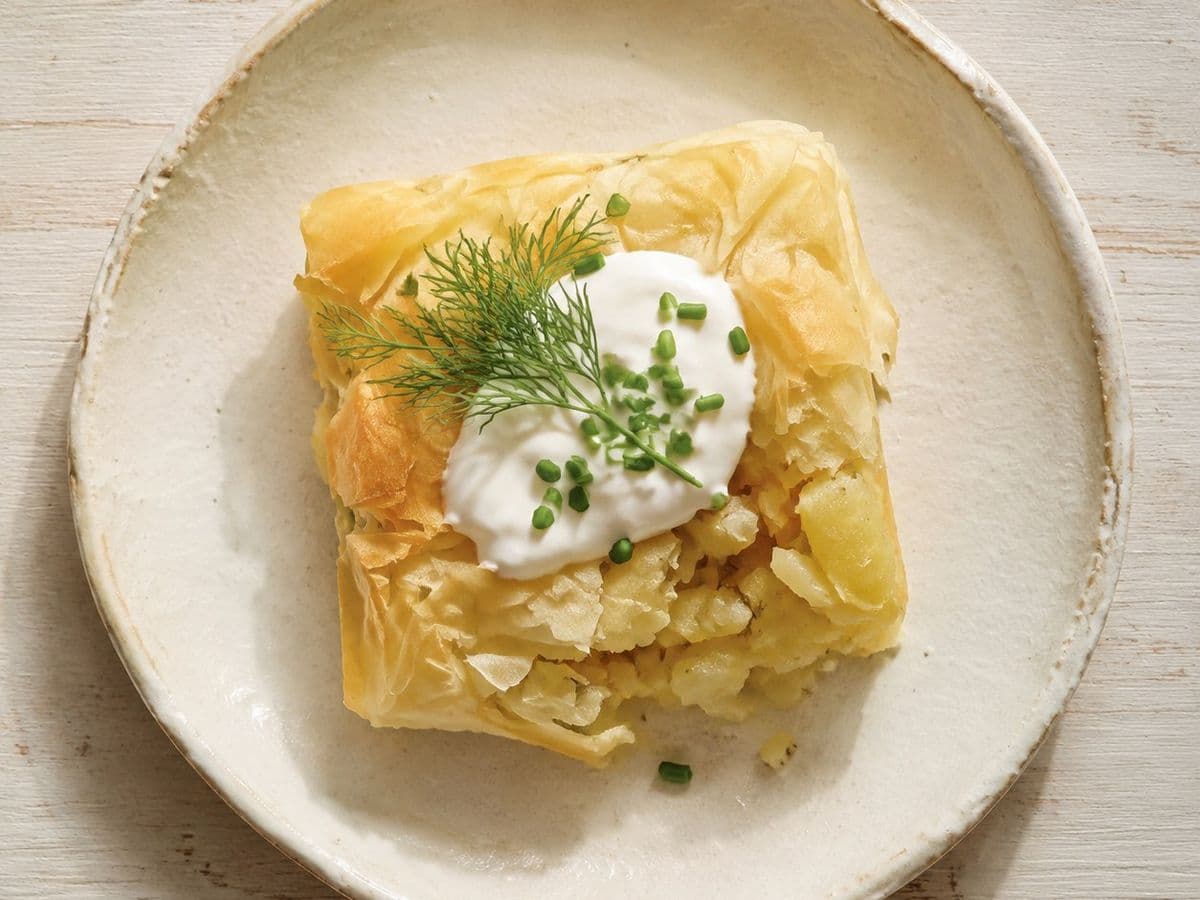
287 kcal a serving, against 587 for the traditional version. That is 300 kcal off, or 51%, with 11.1g of protein. Serves 4. 1 hour 30 minutes.
What the traditional version is
Potato knish the old-school way means mashed potato mixed with plenty of fried onion and a bit of egg, all wrapped up in a home-made pastry that's around a third fat by weight, rolled thin, and baked till golden.
What changed, and what each change costs
Classic short pastry swapped for filo pastry
Shortcrust pastry (with all that oil) is delicious but there's no escaping the fat. Filo gives you a paper-thin shell with a snap and barely any fat, if you brush it lightly. You miss the old pastry's shattering collapse, but at least your arteries will thank you.
What it costs you. Filo can't match the tender, flaky bite of real knish crust. You get crunch instead of crumble, and a drier eat. If you're after nostalgia, this isn't it, it's a different experience - but it does the job for a Tuesday night, especially with mustard.
Oil for frying onions cut from 50g to 10g
Most of the oil in the original gets used frying onions until they're sweet and soft. I just use 10g, enough to stop things burning, because the onions become background noise in this version.
What it costs you. Less richness, less of that comforting slow-fried background flavour. The onion's still there, but it won't melt your heart like the original.
Egg in the dough omitted; instead use a single egg as a glaze on the filo
There's really no dough to enrich any more, but the egg on top gives a bit of shine, helps the pastry brown, and glues the layers together.
What it costs you. The dough itself is a bit less rich. The filling is all potato, so the egg's just for looks here.
Added 150g fat-free Greek yoghurt to the potato mix
Mashed potato without all the oil and egg can get chalky, so Greek yoghurt steps in to keep the filling creamy and pack in more protein, without the calories of cheese or cream.
What it costs you. It's sharper and tangier inside, rather than just buttery and mild. I don't mind it, but it's a different style of knish entirely. The upside is, you can eat more and still get away from the table.
What goes in it
The ingredients, without the quantities. The weights are what the figures below are computed from, and they are in the book.
- Potato
- Onion
- Vegetable oil
- Filo pastry
- Fat-free Greek yoghurt
- One medium egg
- Salt
- Black pepper
How it starts
- Peel and chop the potatoes into chunks.
- While the potatoes cook, finely dice the onions.
- Mash the potatoes, then stir in the cooked onions, Greek yoghurt, and black pepper.
The rest of the method, and every weight, is in Authentic-ish Jewish.
The numbers
| Per serving | Traditional | Lightened |
|---|---|---|
| Calories | 587 | 287 |
| Protein | 13.3g | 11.1g |
| Fat | 19.9g | 5.8g |
| Saturated fat | 2.9g | 1.3g |
| Carbohydrate | 88.1g | 48g |
| Protein per 100 kcal | 2.3g | 3.9g |
Every figure is computed from the recipe's own weighed ingredient list against public food composition databases. The appendix in Authentic-ish Jewish prints the exact database row used for each ingredient, so any number here can be checked. How every number is computed sets out the method.
Allergens. gluten, eggs, milk.
The method is in the book
I'll be honest: if you're looking for the knish you remember from childhood, the classic pastry is out of reach here. Filo is the first compromise and you feel it in every bite. The filling, on the other hand, is creamier from the yoghurt and still packed with potato and onion. It's not the fat-laden monster I grew up loving, but I don't feel like I need to lie down for a week afterwards either. Serve with English mustard and a good pickle and call it lunch. If you're after nostalgia, knock on your gran's door. If you want four hot, crunchy, potato-filled parcels without the side order of guilt, this recipe does the trick.
The quantities and the method for this dish are in Authentic-ish Jewish, along with 51 more. Buy the paperback
More from Authentic-ish Jewish
- Salt Beef, 365 kcal a serving, 14% off
- Chopped Egg and Onion, 116 kcal a serving, 55% off
- Kishke, 223 kcal a serving, 57% off
- Kasha Varnishkes, 399 kcal a serving, 15% off
- Kasha Knish, 223 kcal a serving, 46% off
- Roast Chicken, 312 kcal a serving, 40% off
Every Jewish dish and its calories · Every dish in the series