Jewish · Authentic-ish Jewish
Kasha Varnishkes
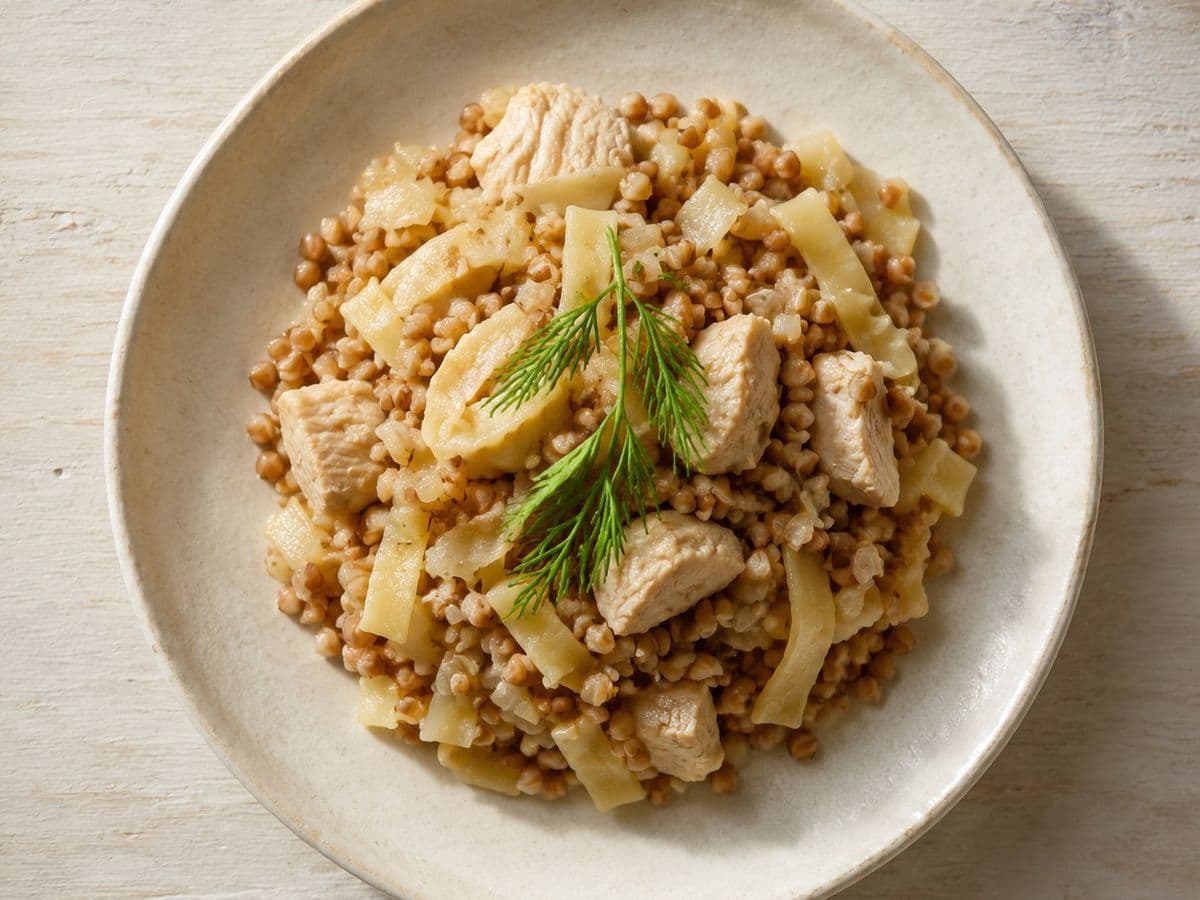
399 kcal a serving, against 471 for the traditional version. That is 72 kcal off, or 15%, with 23.5g of protein. Serves 4. 50 minutes.
What the traditional version is
The classic: buckwheat groats toasted in chicken schmaltz, simmered with vegetable or chicken stock till just cooked, then mixed with bowtie (farfalle) pasta, more schmaltz-fried onion, and plenty of salt and black pepper. Sometimes there's an egg to help separate the grains, but plenty skip it. Piled high, it's stick-to-your-ribs food, best eaten immediately before it seizes.
What changed, and what each change costs
Schmaltz for a dry toasting and extra vegetable stock
Schmaltz does two jobs: it coats the grains so they stay separate and gives everything a rich, chickeny flavour. Dry toasting keeps the nutty taste, and a slow simmer with a splash more stock stops the kasha clumping too much.
What it costs you. You lose the glossy sheen and any faint whiff of chicken. The grains can stick a bit. It's a trade-off: less luxury, a bit more claggy but lighter and less nap-inducing.
Half the pasta replaced with cooked chicken breast
Pasta's all starch. Swapping half for finely shredded chicken breast means more protein per bite. It makes a proper meal of it rather than an accidental side dish.
What it costs you. You'll miss the sheer heap of bowties on your fork, but you won't miss how heavy you feel after. The texture shifts from slippery to chewy, and nobody will mistake this for the original.
Egg left out completely
Without schmaltz, the egg's not doing much. The extra protein is useful, but chicken gives you a lot more per gram and binds nothing at all here.
What it costs you. The grains do clump slightly more, but not enough to ruin things unless you leave it sitting around.
More onion and less oil - 50% more onion, just a splash of oil-veg
Frying onions in loads of fat made sense when fat was cheap and flavour was life. Using more onion with less oil keeps the sweet, savoury thing going and soothes the loss of schmaltz.
What it costs you. The onions don't get as deep or glossy. They're softer, paler, but still bring sweetness. Nobody's fooled, but nobody complains either, as long as you serve fast.
What goes in it
The ingredients, without the quantities. The weights are what the figures below are computed from, and they are in the book.
- Buckwheat groats
- Farfalle or bowtie pasta
- Cooked chicken breast
- Vegetable oil
- Large onions
- Chicken stock
- Salt
- Black pepper
How it starts
- Cook the pasta first in salted, boiling water.
- Heat a wide frying pan over medium heat.
- Add 10g oil-veg to the pan and soften the onions over medium-low heat.
The rest of the method, and every weight, is in Authentic-ish Jewish.
The numbers
| Per serving | Traditional | Lightened |
|---|---|---|
| Calories | 471 | 399 |
| Protein | 16.2g | 23.5g |
| Fat | 12g | 7g |
| Saturated fat | 2.2g | 1.4g |
| Carbohydrate | 76.5g | 62.4g |
| Protein per 100 kcal | 3.4g | 5.9g |
Every figure is computed from the recipe's own weighed ingredient list against public food composition databases. The appendix in Authentic-ish Jewish prints the exact database row used for each ingredient, so any number here can be checked. How every number is computed sets out the method.
Allergens. gluten.
The method is in the book
Nobody's going to mistake this for the real deli classic. The best thing about the original is the hit of schmaltz and the way the pasta and kasha stay separate but mingle. That's gone. What you get instead is a bowlful that's still hearty, a bit more like dinner, and a lot less likely to make you need a nap at your desk. It's not a wonder, but it keeps the soul of the dish while letting you carry on with your day. That's the only honest promise I can make.
The quantities and the method for this dish are in Authentic-ish Jewish, along with 51 more. Buy the paperback
More from Authentic-ish Jewish
- Salt Beef, 365 kcal a serving, 14% off
- Chopped Egg and Onion, 116 kcal a serving, 55% off
- Kishke, 223 kcal a serving, 57% off
- Potato Knish, 287 kcal a serving, 51% off
- Kasha Knish, 223 kcal a serving, 46% off
- Roast Chicken, 312 kcal a serving, 40% off
Every Jewish dish and its calories · Every dish in the series