Jewish · Authentic-ish Jewish
Kasha Knish
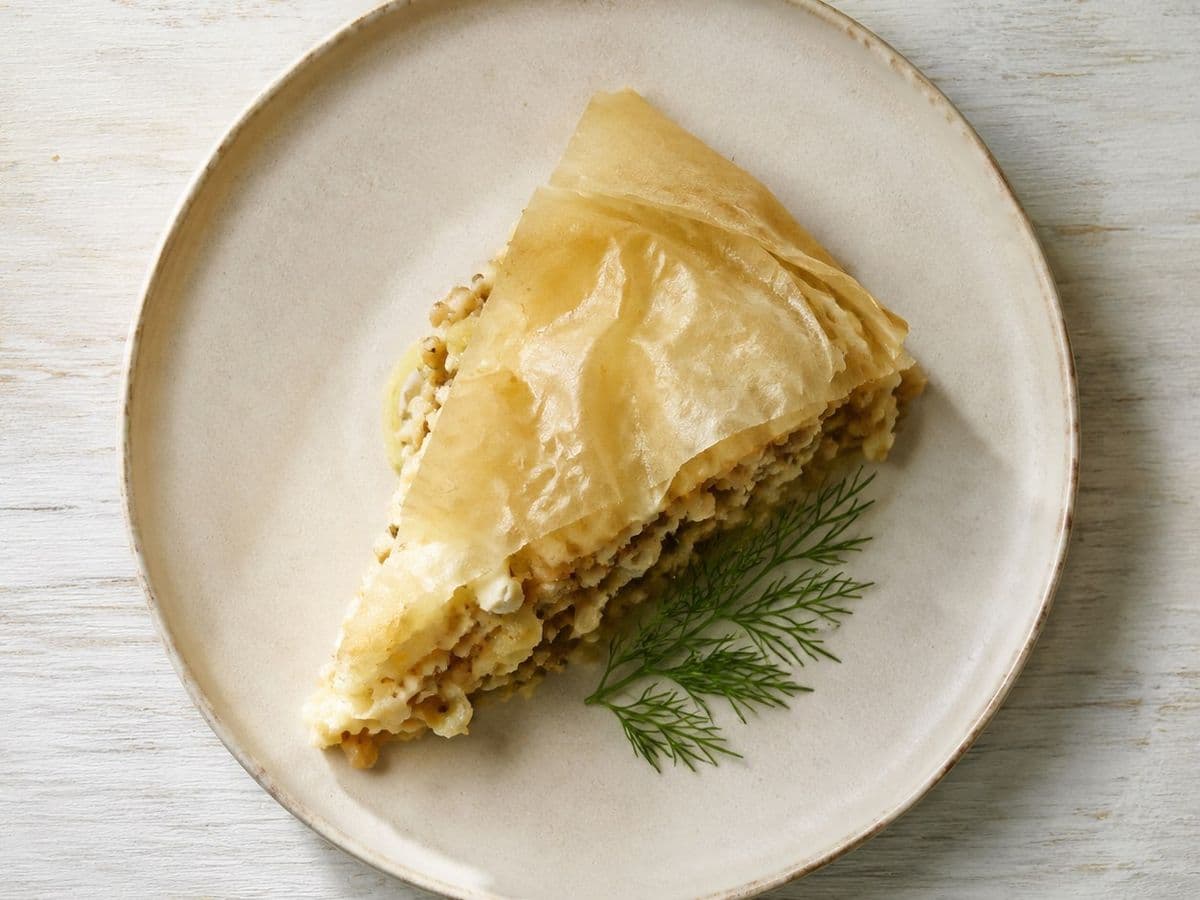
223 kcal a serving, against 415 for the traditional version. That is 192 kcal off, or 46%, with 11.1g of protein. Serves 6. 1 hour 20 minutes.
What the traditional version is
Buckwheat groats simmered till fluffy, then mixed with fried onion, mashed potato, salt, pepper, and sometimes egg for glue. The filling is wrapped in homemade shortcrust pastry made with plenty of schmaltz or butter, rolled thick and folded over the top.
What changed, and what each change costs
Shortcrust pastry made with butter or schmaltz swapped for a single layer of filo pastry
The dough is where most of the calories hide. Filo is paper thin and you only need one sheet per knish, so you slash the fat and white flour to almost nothing.
What it costs you. That thick, flaky shell is gone. There is no rich pastry to speak of. The filo crisps up a bit but it's not the same thing. Anyone hoping for a proper knish crust will be disappointed.
Butter and schmaltz in the pastry removed entirely
No fat in the dough means you lose almost all the heaviness - and all of the flavour it brought.
What it costs you. Without the buttery shell, the first bite is more about the filling and less about the pastry. You might miss the nostalgia but you'll not miss the greasy fingers.
Mashed potato replaced with low-fat cottage cheese and extra egg
Potato is comfort food, but it offers very little protein. Cottage cheese and egg bind the kasha while boosting the protein, and keep the texture creamy. Don't worry, the cheese disappears into the filling.
What it costs you. You lose the earthy sweetness and soft fluff of spud. The filling is a bit more springy and you can taste the dairy if you look for it. Not unpleasant, just different.
Boosted the kasha by half and cut the oil in the filling to a third
Buckwheat is already high in protein for a grain. Using more kasha and less oil means each knish is more filling, less greasy, and leaves you with energy rather than indigestion.
What it costs you. The onions fry but don't really caramelise. The filling tastes lighter, but less rich. You do at least finish one and don't need a nap.
Egg-wash instead of brushing with melted butter or schmaltz
Brushing with egg gives a little shine and colour, for almost no calories.
What it costs you. The top goes slightly glossy and the filo is less likely to burn, but nobody's fooled. You'll miss the crackle of buttered pastry.
What goes in it
The ingredients, without the quantities. The weights are what the figures below are computed from, and they are in the book.
- Filo pastry
- Kasha
- Low-fat cottage cheese
- 2 large eggs
- Onion
- Vegetable oil
- Salt
- Black pepper
How it starts
- Cook the kasha: rinse well, then simmer in salted water just until tender and the grains hold their shape.
- Slice the onions thin and fry them gently in the oil until soft.
- Beat one whole egg and mix it into the cottage cheese.
The rest of the method, and every weight, is in Authentic-ish Jewish.
The numbers
| Per serving | Traditional | Lightened |
|---|---|---|
| Calories | 415 | 223 |
| Protein | 9.4g | 11.1g |
| Fat | 18.1g | 5.6g |
| Saturated fat | 8g | 1.4g |
| Carbohydrate | 54.9g | 33.5g |
| Protein per 100 kcal | 2.3g | 5g |
Every figure is computed from the recipe's own weighed ingredient list against public food composition databases. The appendix in Authentic-ish Jewish prints the exact database row used for each ingredient, so any number here can be checked. How every number is computed sets out the method.
Allergens. gluten, eggs, milk.
The method is in the book
This is an honest attempt to sidestep the pastry-induced guilt - but the trade-off is obvious. You get more texture and protein from the filling, less sleepiness afterwards, and a crisp wrapper if you eat them while they're hot. But let's not kid ourselves: the original pastry is the first thing you'd miss, and nothing else comes close. Still, these look the part, you can eat two without falling asleep, and they're the only knish you'll make in under 90 minutes. For strict traditionalists, this is almost sacrilege. For everyone else, it's a halfway house between lunch and a weeknight snack. You can always eat them with your eyes shut and pretend.
The quantities and the method for this dish are in Authentic-ish Jewish, along with 51 more. Buy the paperback
More from Authentic-ish Jewish
- Salt Beef, 365 kcal a serving, 14% off
- Chopped Egg and Onion, 116 kcal a serving, 55% off
- Kishke, 223 kcal a serving, 57% off
- Potato Knish, 287 kcal a serving, 51% off
- Kasha Varnishkes, 399 kcal a serving, 15% off
- Roast Chicken, 312 kcal a serving, 40% off
Every Jewish dish and its calories · Every dish in the series