Korean · Authentic-ish Korean
Kongnamul Muchim
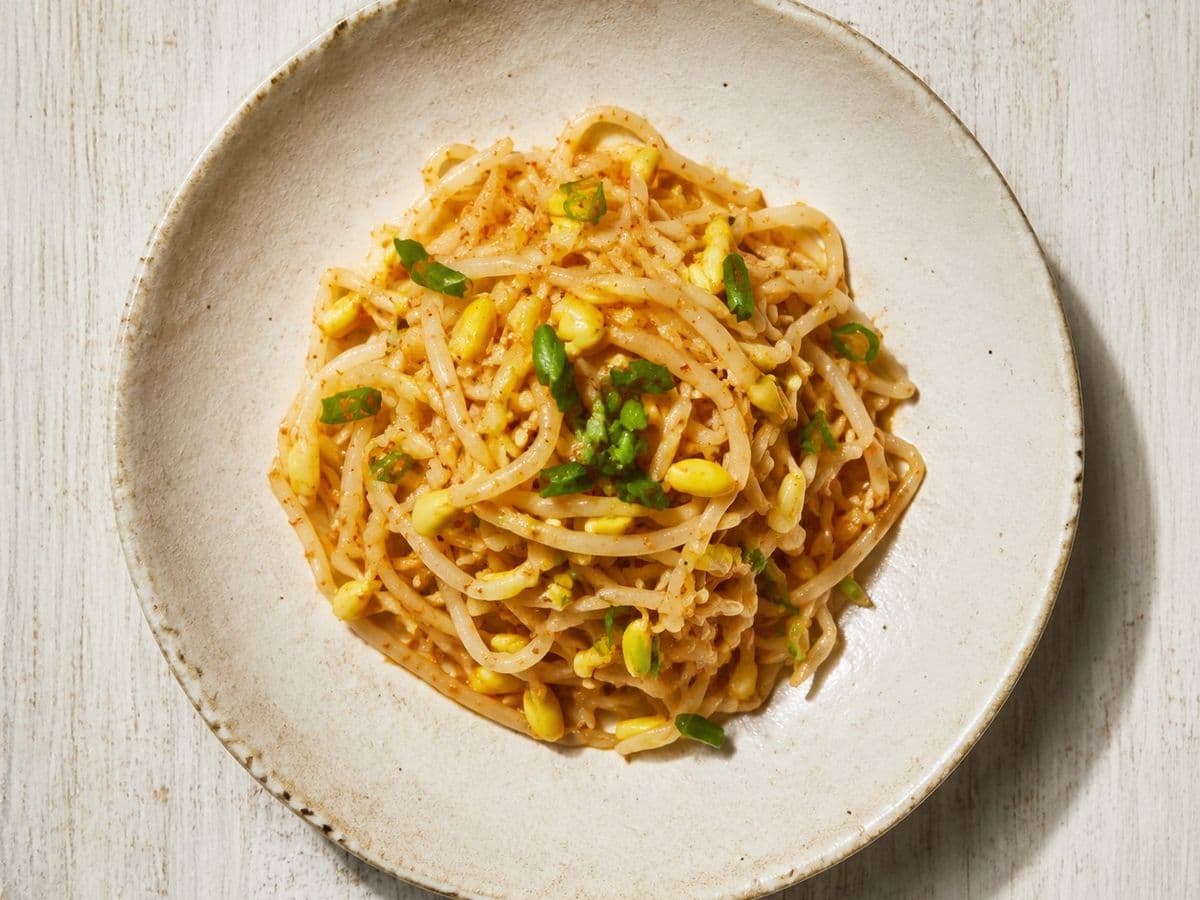
95 kcal a serving, against 123 for the traditional version. That is 28 kcal off, or 23%, with 8.9g of protein. Serves 6. 15 minutes.
What the traditional version is
Soybean sprouts blanched quickly, drained, then tossed with sesame oil, minced garlic, salt, spring onion and a bit of gochugaru. Served cold or at room temperature as part of a banchan spread.
What changed, and what each change costs
Sprouts held at 400g, not increased
Holding the sprouts where they were keeps this a calorie saving rather than a bigger bowl. They're filling, crunchy and have about 13g of protein per 200g. If you're already making a batch, you may as well double down.
What it costs you. It's honestly just nothing extra to buy and cook. The bowl looks more generous and the taste is unchanged, if not better. If your local supermarket only sells beansprouts (the white ones), go to a Korean or Chinese shop and get the right stuff.
25g sesame oil down to 6g
The oil is where the calories live. Halving it cuts about 100 kcal from the whole bowl, which isn't the end of the world, but it's something. Most of the aroma survives.
What it costs you. It isn't quite as rich or so glossy, but it still smells like sesame and tastes like Kongnamul Muchim should. If you stir well while the sprouts are still warm, you get better coverage from the smaller amount.
3g salt down to 2g, 20g spring onion up to 25g, and garlic and gochugaru unchanged
A slight salt cut balances the lower fat, and bumping up the spring onion keeps things lively. The garlic and gochugaru do their own job already.
What it costs you. None of these will strike anyone as a downgrade unless you're eating the two versions side-by-side.
What goes in it
The ingredients, without the quantities. The weights are what the figures below are computed from, and they are in the book.
- Soybean sprouts
- Toasted sesame oil
- Garlic
- Salt
- Spring onions
- Gochugaru
How it starts
- Rinse the soybean sprouts under cold running water, picking out any dodgy looking ones and any stray beans that have fallen off.
- Bring a big pan of water to a rolling boil and salt it lightly.
- While they're still just warm, toss the sprouts in a big bowl with the minced garlic, sliced spring onion, sesame oil, salt and gochugaru.
The rest of the method, and every weight, is in Authentic-ish Korean.
The numbers
| Per serving | Traditional | Lightened |
|---|---|---|
| Calories | 123 | 95 |
| Protein | 8.9g | 8.9g |
| Fat | 8.7g | 5.5g |
| Saturated fat | 1.2g | 0.8g |
| Carbohydrate | 7.4g | 7.5g |
| Protein per 100 kcal | 7.3g | 9.4g |
Every figure is computed from the recipe's own weighed ingredient list against public food composition databases. The appendix in Authentic-ish Korean prints the exact database row used for each ingredient, so any number here can be checked. How every number is computed sets out the method.
Allergens. soybeans, sesame.
The method is in the book
This is about as honest as quick wins get. More sprouts means more food and more protein, and cutting the oil doesn't turn it into salad penance. A 6-person serving, and not a sad one. Sure, the original with all the sesame oil is richer, but unless you tip in the bottle, the difference is small. I go back for seconds of this every time. It's a regular in my own fridge, and if you ever need to impress a Korean mate, just don't swap in mung beansprouts. They'll know.
The quantities and the method for this dish are in Authentic-ish Korean, along with 51 more. Buy the paperback
More from Authentic-ish Korean
- Baechu Kimchi, 83 kcal a serving, 22% off
- Sigeumchi Namul, 67 kcal a serving, 22% off
- Gyeranjjim, 82 kcal a serving, 35% off
- Dubu Buchim, 260 kcal a serving, 21% off
- Myeolchi Bokkeum, 99 kcal a serving, 25% off
- Gim Gui, 22 kcal a serving, 44% off
Every Korean dish and its calories · Every dish in the series