Korean · Authentic-ish Korean
Gyeranjjim
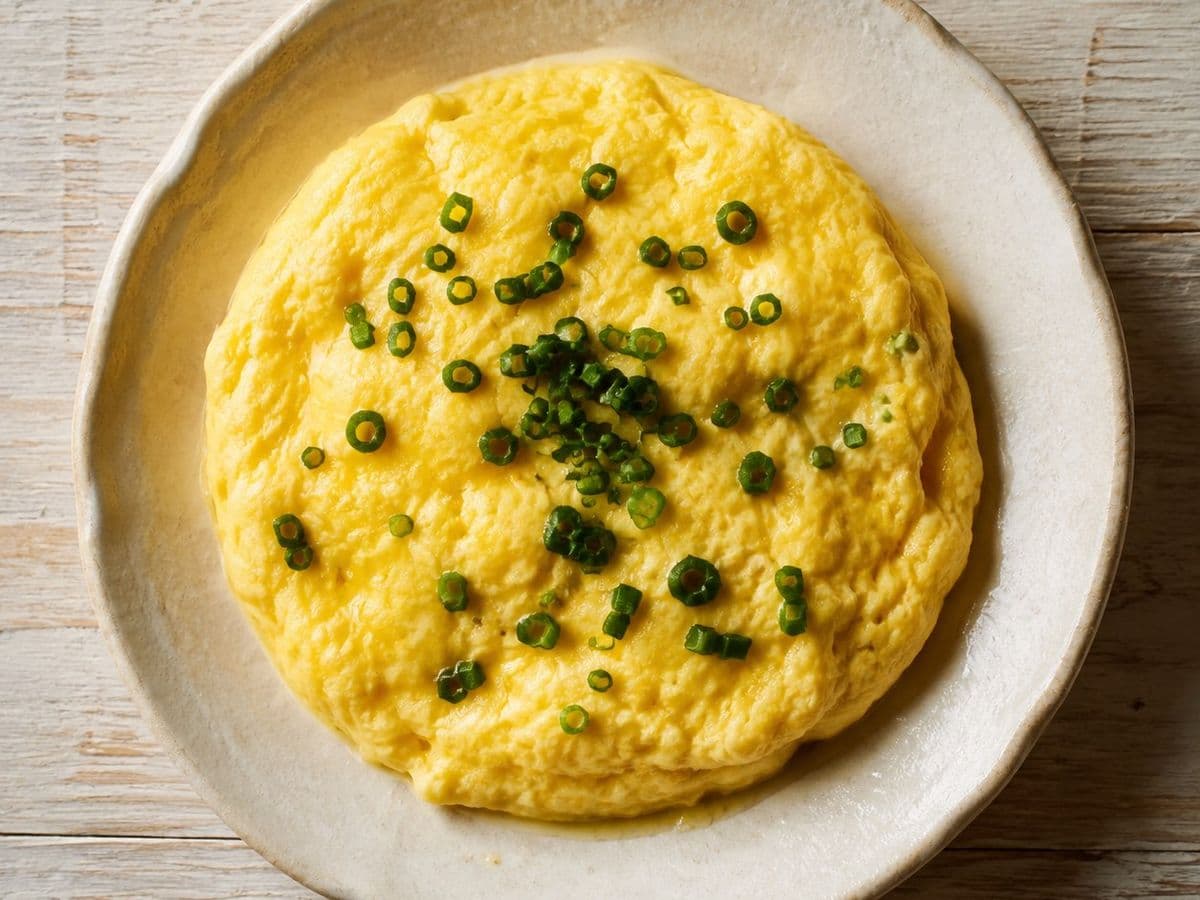
82 kcal a serving, against 127 for the traditional version. That is 45 kcal off, or 35%, with 9.5g of protein. Serves 4. 25 minutes.
What the traditional version is
Whisk together whole eggs, a splash of water, anchovy stock, and a pinch of salt. Pour into a heatproof bowl, set it over gently simmering water and steam until pillowy, just setting. Finished with spring onion or a pinch of sesame, and eaten straight from the bowl with a spoon.
What changed, and what each change costs
6 whole eggs swapped for 3 whole eggs plus 120g egg white
Egg white's almost pure protein, barely any fat, and does the same job of holding the custard together as the yolk-heavy version. Losing 3 yolks drops a chunk of fat and about 150 calories, but adds another 8g of protein by weight.
What it costs you. Let's be honest, yolks do a lot more than colour. They give the custard a richer taste and that fatty, creamy thing at the back of the mouth. Take half of them out and the dish is milder, paler, and not quite as lush. If you want pure nostalgia, make the classic. For everyone else, most won't notice until you confess.
Sesame oil halved from 4g to 2g
It's not a big calorie bomb, but when you're being precise, 2g still makes a difference and you don't need much for flavour.
What it costs you. You lose a little of that nutty aroma at the very end, but it's not fatal. Just warm the oil before drizzling for a bit more punch.
Sesame seeds left out
Sesame seeds are here for a tiny crunch, not taste. Without them, you cut about 10 calories and a couple of grams of fat.
What it costs you. The top looks bare, but after the first bite nobody remembers. If you miss it, you can always sneak a pinch back on.
What goes in it
The ingredients, without the quantities. The weights are what the figures below are computed from, and they are in the book.
- 3 medium eggs
- From about 4 eggs
- Dried anchovies
- Dried kelp
- Water
- Salt
- Spring onions
- Toasted sesame oil
How it starts
- Start with the stock.
- Crack 3 whole eggs into a jug and tip in 120g of egg white.
- Add the cooled stock, salt, and stir in the spring onion.
The rest of the method, and every weight, is in Authentic-ish Korean.
The numbers
| Per serving | Traditional | Lightened |
|---|---|---|
| Calories | 127 | 82 |
| Protein | 11g | 9.5g |
| Fat | 8.5g | 4.2g |
| Saturated fat | 2.6g | 1.3g |
| Carbohydrate | 0.9g | 0.8g |
| Protein per 100 kcal | 8.7g | 11.6g |
Every figure is computed from the recipe's own weighed ingredient list against public food composition databases. The appendix in Authentic-ish Korean prints the exact database row used for each ingredient, so any number here can be checked. How every number is computed sets out the method.
Allergens. eggs, fish, sesame.
The method is in the book
If you compare side by side, the proper gyeranjjim is the richer one - that's what yolks do, and I can't spin it any other way. But this version gets you 90% of the way, easily. The protein bump is real, the custard's just as cloudlike, and the calories don't sneak up on you. If you want the original's gold colour and creaminess, no shame in going full yolk once in a while.
The quantities and the method for this dish are in Authentic-ish Korean, along with 51 more. Buy the paperback
More from Authentic-ish Korean
- Baechu Kimchi, 83 kcal a serving, 22% off
- Kongnamul Muchim, 95 kcal a serving, 23% off
- Sigeumchi Namul, 67 kcal a serving, 22% off
- Dubu Buchim, 260 kcal a serving, 21% off
- Myeolchi Bokkeum, 99 kcal a serving, 25% off
- Gim Gui, 22 kcal a serving, 44% off
Every Korean dish and its calories · Every dish in the series