Korean · Authentic-ish Korean
Galbijjim
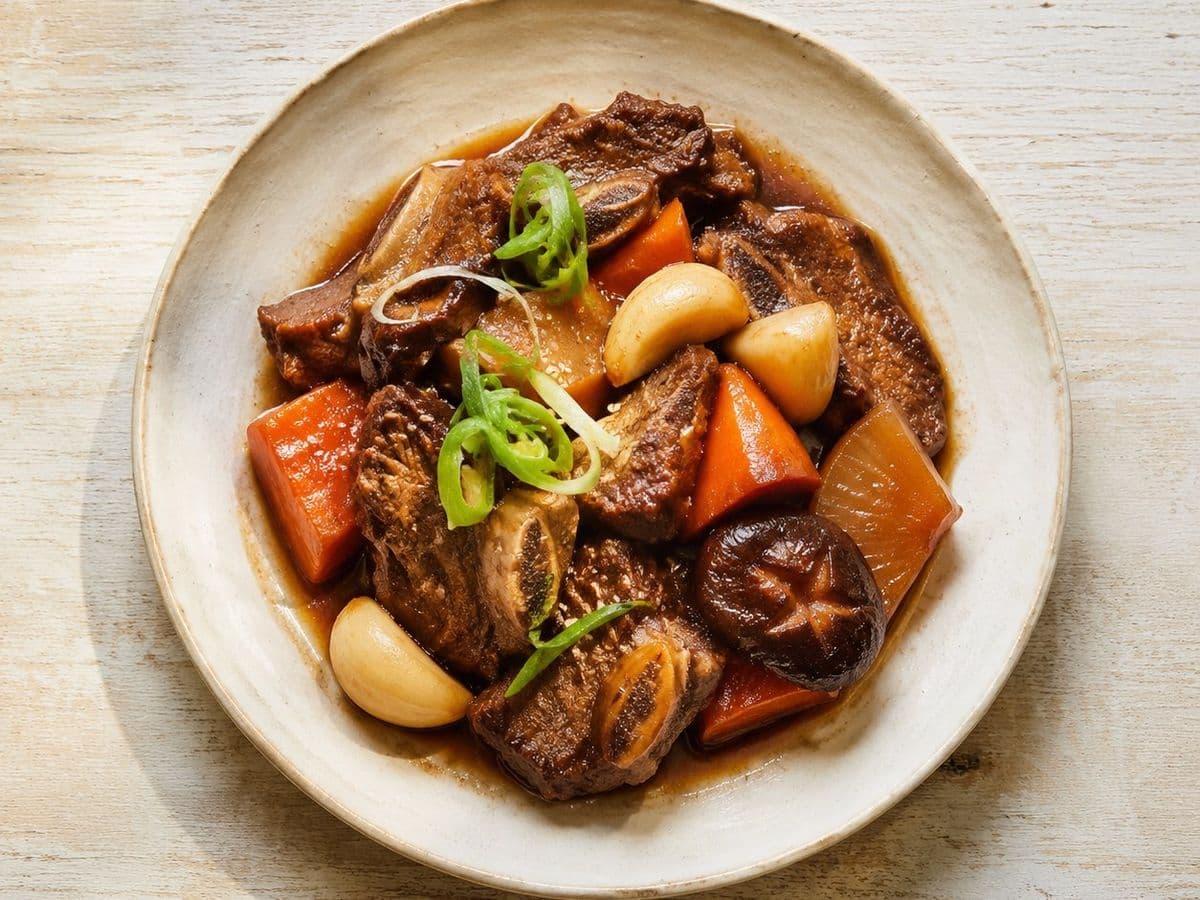
471 kcal a serving, against 687 for the traditional version. That is 216 kcal off, or 31%, with 41.2g of protein. Serves 6. 45 minutes active, 2 hours simmering.
What the traditional version is
Beef short ribs, chunked and left with all their fat, seared then simmered in a sweet and salty braising liquid made from light soy sauce, sugar, Asian pear, onion, garlic, ginger and a splash of rice wine. Carrots, chestnuts and mushrooms join in for the last stint. The sauce reduces until glossy and thick, then everything's scattered with spring onions and sesame seeds.
What changed, and what each change costs
Lean short rib instead of traditional, well-marbled bone-in short rib
Most of the glory comes from all that fat rendering into the sauce and melting into the meat. I ask for the leanest cuts and go heavy on trimming. It's less luscious, but you still get real depth from a long braise.
What it costs you. So: much cleaner - but you can eat a proper helping and not have to check your pulse after the fact. Velvet on your palate was never on the table once the fat came out. If you prefer it as a winter blowout, go for the full-fat ribs and take a brisk walk afterwards.
Sugar dropped from 90g to 30g
The traditional recipe is a syrupy affair, with nearly as much sweetness as soy. I lean hard on Asian pear and onion for fruitiness instead, so you're not left with that sticky finish.
What it costs you. If you're chasing that shiny, dessert-like glaze, you'll miss it. This is meatier, less candied. The sauce is still satisfying, but it just glazes rather than sticks in a glossy syrup.
Proper de-fatting: chill, then skim every bit of visible fat from the sauce
Most of the calories are hiding in the golden layer that floats up after chilling. That's what I scrape off. It extends the cooking time by a night but makes all the difference.
What it costs you. You lose some mouth-coating richness, and the finished dish isn't as shiny. Still, it's rich enough that you won't feel short-changed. Just don't skip the fridge step.
Drop the sesame oil and halve the sesame seeds (from 12g to 6g)
Sesame oil is classic, but it's pure fat and not a major player in the flavour here. A small hit of seeds at the end keeps the right nuttiness.
What it costs you. The perfume's lighter and you miss that nutty roundness at the end. If you want more, add back a drizzle and know what it costs you.
What goes in it
The ingredients, without the quantities. The weights are what the figures below are computed from, and they are in the book.
- Beef short rib
- Light soy sauce
- Caster sugar
- Asian pear
- Onion
- Garlic
- Fresh ginger
- Rice vinegar
- Carrot
- Chestnuts
- Shiitake mushrooms
- Sesame seeds
- Spring onions
- Black pepper
- Beef stock
How it starts
- Trim as much visible fat as you can from the short ribs.
- Stick the ribs in cold water for 30 minutes, then rinse and drain.
- In a big pot, sear the ribs until browned on all sides.
The rest of the method, and every weight, is in Authentic-ish Korean.
The numbers
| Per serving | Traditional | Lightened |
|---|---|---|
| Calories | 687 | 471 |
| Protein | 57.6g | 41.2g |
| Fat | 33.5g | 21.1g |
| Saturated fat | 12.9g | 8.6g |
| Carbohydrate | 41.3g | 30.8g |
| Protein per 100 kcal | 8.4g | 8.8g |
Every figure is computed from the recipe's own weighed ingredient list against public food composition databases. The appendix in Authentic-ish Korean prints the exact database row used for each ingredient, so any number here can be checked. How every number is computed sets out the method.
Allergens. gluten, sesame, soybeans, sulphites.
The method is in the book
Galbijjim is proper celebration food, and there's no faking the impact of beef and sugar together. That said, this is still a dish that feels like a reward after a grey week. You get big, beefy depth, a glossy enough sauce, and enough sweetness to feel like you're eating something special. Just don't serve it straight after a trip to Seoul - you'll taste what's missing. For a big table in Britain, though, this ticks the right boxes. Pass the rice and don't ask the calories.
The quantities and the method for this dish are in Authentic-ish Korean, along with 51 more. Buy the paperback
More from Authentic-ish Korean
- Dakbokkeumtang, 443 kcal a serving, 43% off
- Andong Jjimdak, 632 kcal a serving, 28% off
- Gamja Jorim, 207 kcal a serving, 5% off
- Dubu Jorim, 181 kcal a serving, 31% off
- Kongjang, 167 kcal a serving, 22% off
- Godeungeo Jorim, 412 kcal a serving, 15% off
Every Korean dish and its calories · Every dish in the series