Korean · Authentic-ish Korean
Dakbokkeumtang
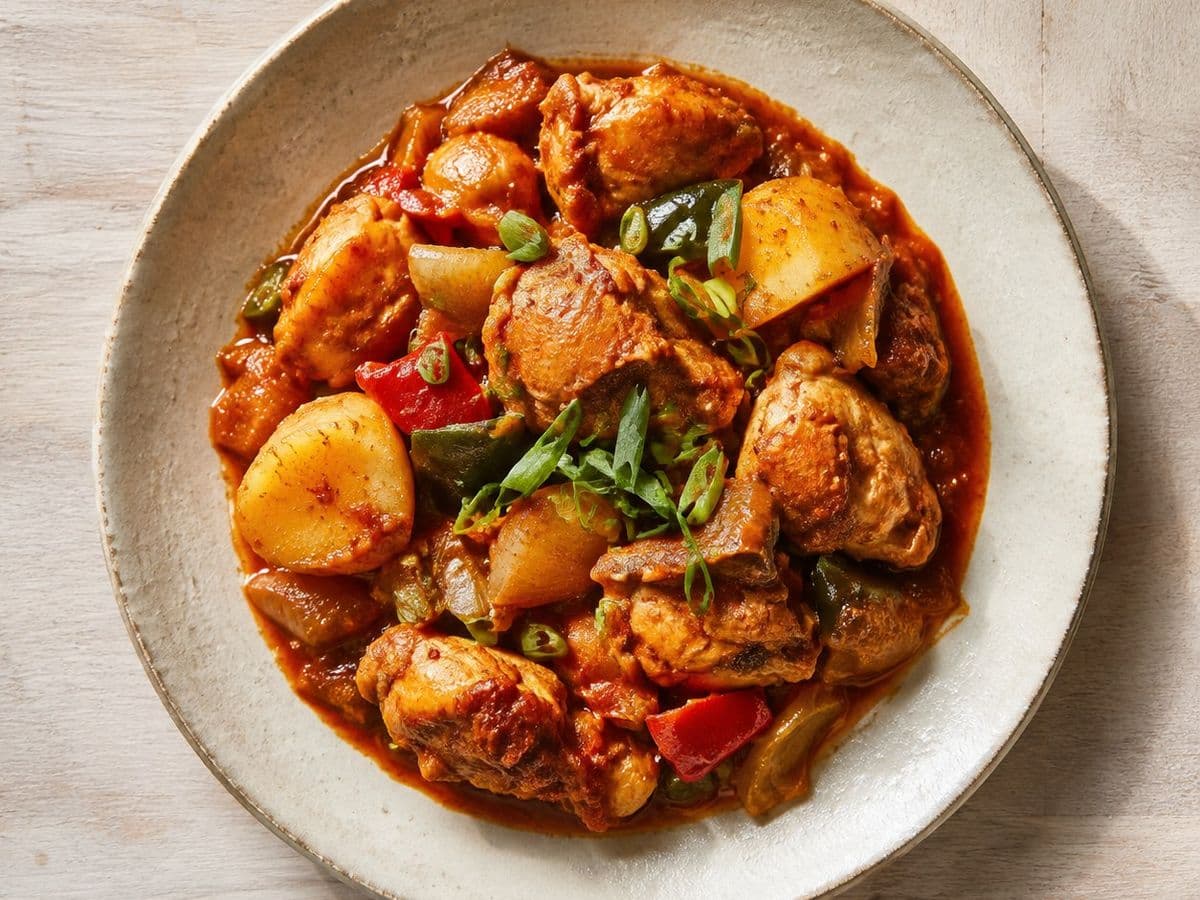
443 kcal a serving, against 773 for the traditional version. That is 330 kcal off, or 43%, with 42.8g of protein. Serves 4. 20 minutes active, 45 minutes simmering.
What the traditional version is
Bone-in, skin-on chicken thighs simmered with potato, carrot, onion, garlic, ginger and green chilli in a broth that's part stock, part soy sauce, gochujang, gochugaru, sugar and sesame oil. The skin renders into the sauce, thickening it and adding a slick gloss. The veg cook down till they nearly fall apart, soaking up all the spicy, savoury juices.
What changed, and what each change costs
Chicken thighs: use 700g skinless, boneless chicken thigh instead of 900g bone-in, skin-on
Losing the skin and bones gives you more actual chicken meat and protein for the same weight - and less fat dripping into the sauce. Without the bones you're also not chewing around gristle.
What it costs you. The sauce misses the thick, slightly sticky mouthfeel you get from chicken fat melting into it. The chicken flavours the sauce less intensely without the bones simmering away, but you'll manage. If you want that old-school richness, fry the skin separately till crisp and chuck the fat in, but you know what that does to your numbers.
Drop the sesame oil from 16g to 6g
Sesame oil is glorious, but it's pure fat and you don't need loads for flavour. A splash at the end does the trick.
What it costs you. You lose a layer of rich aroma and that shiny glaze coating the chicken. It still tastes properly Korean. If you're desperate for gloss, brush a whisper of oil over the top when serving.
Sugar cut from 18g to 7g
A proper fiery stew doesn't need to be sweet. A little sugar balances the gochujang, but you'll taste more of the actual chillies and soy this way.
What it costs you. The sauce is sharper and less mellow. If you want to blunt the heat, try adding a tiny splash more stock, not more sugar.
Gochujang down from 60g to 45g, and gochugaru from 18g to 12g
Both bring heat and some carbs, especially gochujang. A bit less means a less sugary, less fiery stew, but you won't be left sweating into your rice.
What it costs you. No hiding from it: it's not as deep red and the sauce doesn't punch quite so hard. There's still plenty of flavour, but you won't need to mop your brow every other mouthful.
What goes in it
The ingredients, without the quantities. The weights are what the figures below are computed from, and they are in the book.
- Chicken thigh
- Potato
- Carrot
- Onion
- Garlic
- Fresh ginger
- Spring onions
- Red chilli
- Light soy sauce
- Gochujang
- Gochugaru
- Caster sugar
- Toasted sesame oil
- Chicken stock
How it starts
- Cut the chicken thighs into big chunks, about the size of golf balls.
- Put the chicken, potato, carrot and onion in a large saucepan or casserole.
- Bring to a gentle boil, then drop the heat to a lively simmer.
The rest of the method, and every weight, is in Authentic-ish Korean.
The numbers
| Per serving | Traditional | Lightened |
|---|---|---|
| Calories | 773 | 443 |
| Protein | 45.9g | 42.8g |
| Fat | 43.3g | 10.5g |
| Saturated fat | 11.2g | 2.6g |
| Carbohydrate | 50g | 44g |
| Protein per 100 kcal | 5.9g | 9.7g |
Every figure is computed from the recipe's own weighed ingredient list against public food composition databases. The appendix in Authentic-ish Korean prints the exact database row used for each ingredient, so any number here can be checked. How every number is computed sets out the method.
Allergens. soybeans, sesame, gluten.
The method is in the book
You do lose something when you strip the skin and bones from this stew - the sauce isn't as sticky and the flavours aren't quite as deep. But what you win is pure speed, fewer calories from fat and more meat you actually get to eat. If you're all about that old-school lip-smacking richness, you'll want to save this for a Sunday and do it the proper way. For a cold evening when you want to eat well but don't want to wait, this is dynamite.
The quantities and the method for this dish are in Authentic-ish Korean, along with 51 more. Buy the paperback
More from Authentic-ish Korean
- Galbijjim, 471 kcal a serving, 31% off
- Andong Jjimdak, 632 kcal a serving, 28% off
- Gamja Jorim, 207 kcal a serving, 5% off
- Dubu Jorim, 181 kcal a serving, 31% off
- Kongjang, 167 kcal a serving, 22% off
- Godeungeo Jorim, 412 kcal a serving, 15% off
Every Korean dish and its calories · Every dish in the series