Korean · Authentic-ish Korean
Godeungeo Jorim
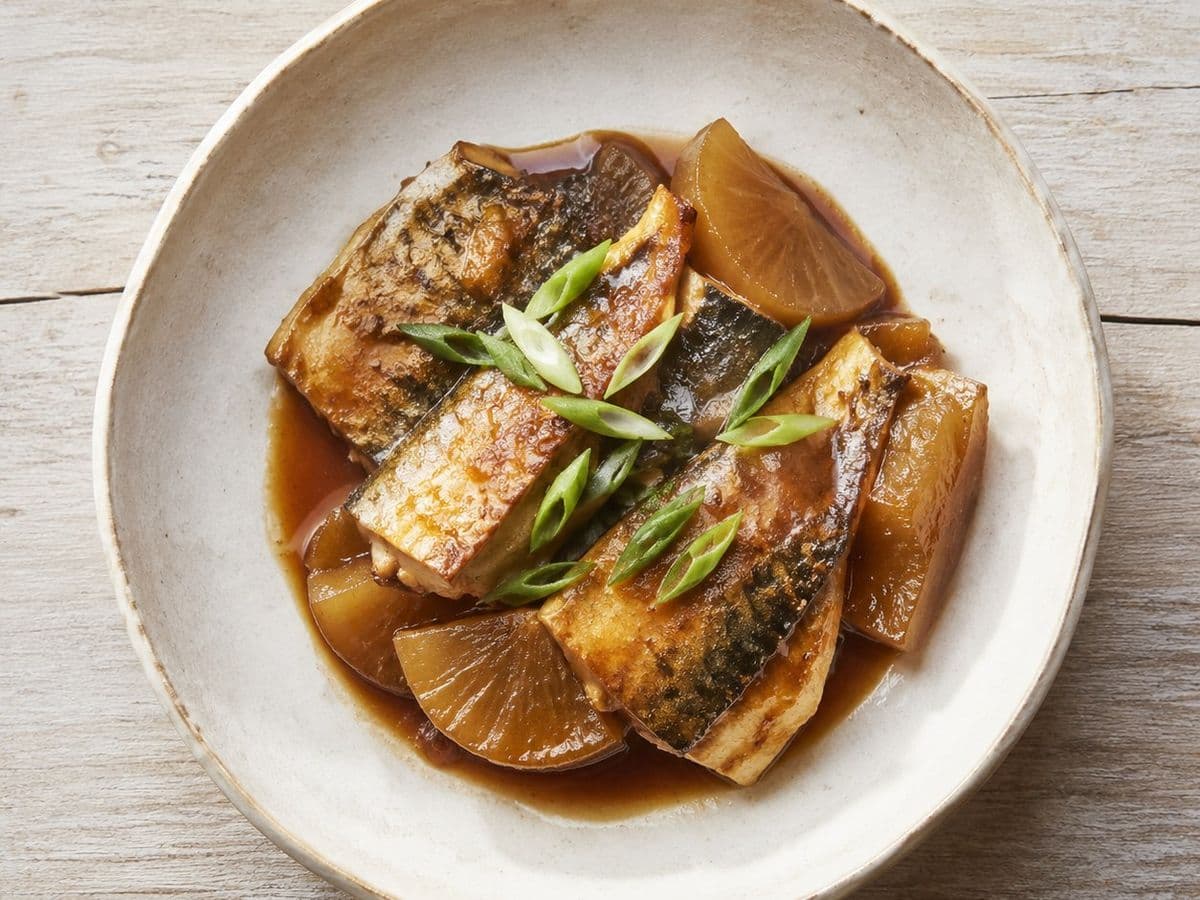
412 kcal a serving, against 484 for the traditional version. That is 72 kcal off, or 15%, with 30.7g of protein. Serves 4. 20 minutes prep, 35 minutes braising.
What the traditional version is
Slices of mackerel fillet layered over thick wedges of Korean radish, all simmered in a punchy sauce of soy, gochugaru, garlic, ginger, sugar, and a generous slug of oil. The sauce reduces to a sticky, spicy glaze that soaks into the fish and veg. Spring onions and red chillies add fresh heat on top, and steamed rice soaks up every drop.
What changed, and what each change costs
Halve the vegetable oil from 40g to 20g
That shine on top comes from generous oil. Cutting it means the sauce is less glossy and the mackerel flakes look a bit more virtuous than they used to.
What it costs you. You lose some of that lovely cling and the sauce feels thinner. It's not going to coat your lips in chilli oil, but it also won't leave a rainbow streak on your plate.
Sugar from 25g down to 10g
The sauce doesn't need to be as sweet as your memory tells you, and most of the flavour comes from the fish, chilli and soy. Less sugar means it stays more savoury and leans into the mackerel's own briny punch.
What it costs you. There's less stickiness and caramel, so you'll miss out on the proper lacquered finish. The sauce might not cling to the fish quite the same. If you really want that nostalgia, leave the sugar in and move an extra ten minutes after dinner.
What goes in it
The ingredients, without the quantities. The weights are what the figures below are computed from, and they are in the book.
- Mackerel
- Korean radish
- Light soy sauce
- Gochugaru
- Garlic
- Fresh ginger
- Caster sugar
- Vegetable oil
- Spring onions
- Red chilli
How it starts
- Peel the radish and cut into thick discs about 1.5cm.
- Slice the tofu into fat fingers and arrange on top of the radish.
- Mix together the soy sauce, gochugaru, minced garlic, grated ginger, sugar and oil.
The rest of the method, and every weight, is in Authentic-ish Korean.
The numbers
| Per serving | Traditional | Lightened |
|---|---|---|
| Calories | 484 | 412 |
| Protein | 30.7g | 30.7g |
| Fat | 31.5g | 25.2g |
| Saturated fat | 6.3g | 5.5g |
| Carbohydrate | 19.5g | 15.3g |
| Protein per 100 kcal | 6.3g | 7.5g |
Every figure is computed from the recipe's own weighed ingredient list against public food composition databases. The appendix in Authentic-ish Korean prints the exact database row used for each ingredient, so any number here can be checked. How every number is computed sets out the method.
Allergens. fish, gluten, soybeans.
The method is in the book
Godeungeo jorim is the second dish my gran ever taught me and is still one of my go-tos when I want proof that tinned mackerel isn't the answer to everything. This isn't the lush, sticky, oil-slicked version you'll get at a proper Korean table, but it's no diet plate either - it's just practical, tasty fish that actually fills you up. If you want the lacquered version, double the oil and sugar and don't look back. If you've never eaten tofu with mackerel, try it at least once and see if you aren't won over.
The quantities and the method for this dish are in Authentic-ish Korean, along with 51 more. Buy the paperback
More from Authentic-ish Korean
- Galbijjim, 471 kcal a serving, 31% off
- Dakbokkeumtang, 443 kcal a serving, 43% off
- Andong Jjimdak, 632 kcal a serving, 28% off
- Gamja Jorim, 207 kcal a serving, 5% off
- Dubu Jorim, 181 kcal a serving, 31% off
- Kongjang, 167 kcal a serving, 22% off
Every Korean dish and its calories · Every dish in the series