Korean · Authentic-ish Korean
Ojingeo Bokkeum
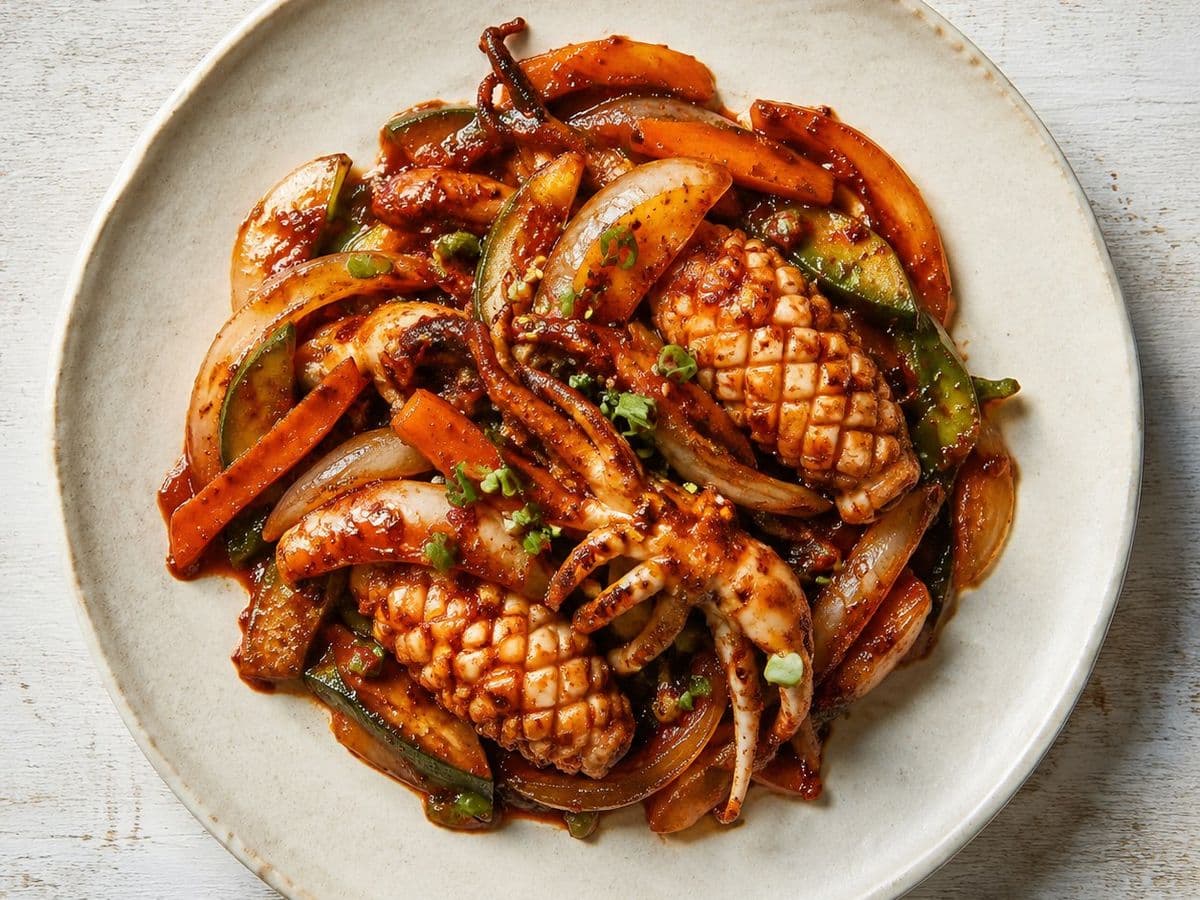
267 kcal a serving, against 362 for the traditional version. That is 95 kcal off, or 26%, with 23.1g of protein. Serves 4. 25 minutes.
What the traditional version is
Fresh squid bodies and tentacles, cut into bite-sized pieces and stir-fried hot with sliced onion, carrot, courgette, and a sauce of gochujang, gochugaru, sugar, soy sauce, sesame oil, garlic, and a big glug of neutral oil. Finished with spring onion and a sprinkle of toasted sesame seeds, often eaten with a pile of steamed rice and a cold beer.
What changed, and what each change costs
Oil down from 45g to 12g (1 tablespoon, and it's more than enough)
Traditional recipes go big on oil to fry the squid fast and glaze the sauce. Turns out, if you get the pan properly hot and add veg, you can get away with a quarter as much without the whole thing sticking.
What it costs you. You'll get less of that glossy restaurant stir-fry finish - no oil running around the plate - but the squid won't end up rubbery and you keep the fresh, clean edge. If you want extra shine, brush a drop of sesame oil over at the end.
Sugar cut from 25g to 10g
The sauce is meant to be sweet-hot, but with squid and gochujang both giving a bit of sweetness, you don't need the full hit. Ten grams gets you plenty of stick without tipping into syrup.
What it costs you. You lose a bit of that candied shell and a little stick-to-your-teeth finish. If sugar is your main motive for eating, double it and take up jogging.
Vegetables doubled: carrot 80g up to 160g, courgette 100g to 180g, onion 120g to 180g
The sauce covers more volume this way, and a plate that looked like bar food now works as a meal. If you want to stop at the pub, use the smaller veg hit and order some chips.
What it costs you. The veg-to-squid ratio is higher now, so the dish is lighter and less punchy. But it bulks the plate, so you walk away full, not just thirsty.
Sesame oil and sesame seeds halved: sesame oil from 15g to 7g, seeds from 8g to 4g
Sesame gives Ojingeo bokkeum its deep nutty finish, but you really only need a whiff. If you're not drinking with this, the lighter touch keeps the finish clean.
What it costs you. A bit less perfume. If that's make-or-break, pour on a drop extra at the end.
What goes in it
The ingredients, without the quantities. The weights are what the figures below are computed from, and they are in the book.
- 2-3 medium squid
- Onion
- Carrot
- Courgette
- Vegetable oil
- Gochujang
- Gochugaru
- Light soy sauce
- Caster sugar
- Toasted sesame oil
- Garlic
- Spring onions
- Sesame seeds
How it starts
- Clean the squid: pull out the innards, slice off the tentacles just below the eyes, and remove the beak and backbone.
- Slice the onion, carrot and courgette into thin batons.
- Mix up the sauce: gochujang, gochugaru, soy sauce, sugar, and half the sesame oil.
The rest of the method, and every weight, is in Authentic-ish Korean.
The numbers
| Per serving | Traditional | Lightened |
|---|---|---|
| Calories | 362 | 267 |
| Protein | 22.7g | 23.1g |
| Fat | 18.1g | 7.4g |
| Saturated fat | 2.6g | 1.2g |
| Carbohydrate | 27.5g | 27.5g |
| Protein per 100 kcal | 6.3g | 8.6g |
Every figure is computed from the recipe's own weighed ingredient list against public food composition databases. The appendix in Authentic-ish Korean prints the exact database row used for each ingredient, so any number here can be checked. How every number is computed sets out the method.
Allergens. gluten, molluscs, sesame, soybeans.
The method is in the book
If you want a proper win, squid is the second best protein for dishes like this, right after tofu, and you don't have to pretend you're at a yoga retreat. The sauce still slaps, the squid's all bounce and bite, and the veg make it a meal. It isn't as sticky or glossy, but it hits all your Korean cravings for half the guilt and more protein. Not much of a sacrifice, this one.
The quantities and the method for this dish are in Authentic-ish Korean, along with 51 more. Buy the paperback
More from Authentic-ish Korean
- Galbijjim, 471 kcal a serving, 31% off
- Dakbokkeumtang, 443 kcal a serving, 43% off
- Andong Jjimdak, 632 kcal a serving, 28% off
- Gamja Jorim, 207 kcal a serving, 5% off
- Dubu Jorim, 181 kcal a serving, 31% off
- Kongjang, 167 kcal a serving, 22% off
Every Korean dish and its calories · Every dish in the series