Korean · Authentic-ish Korean
Jangjorim
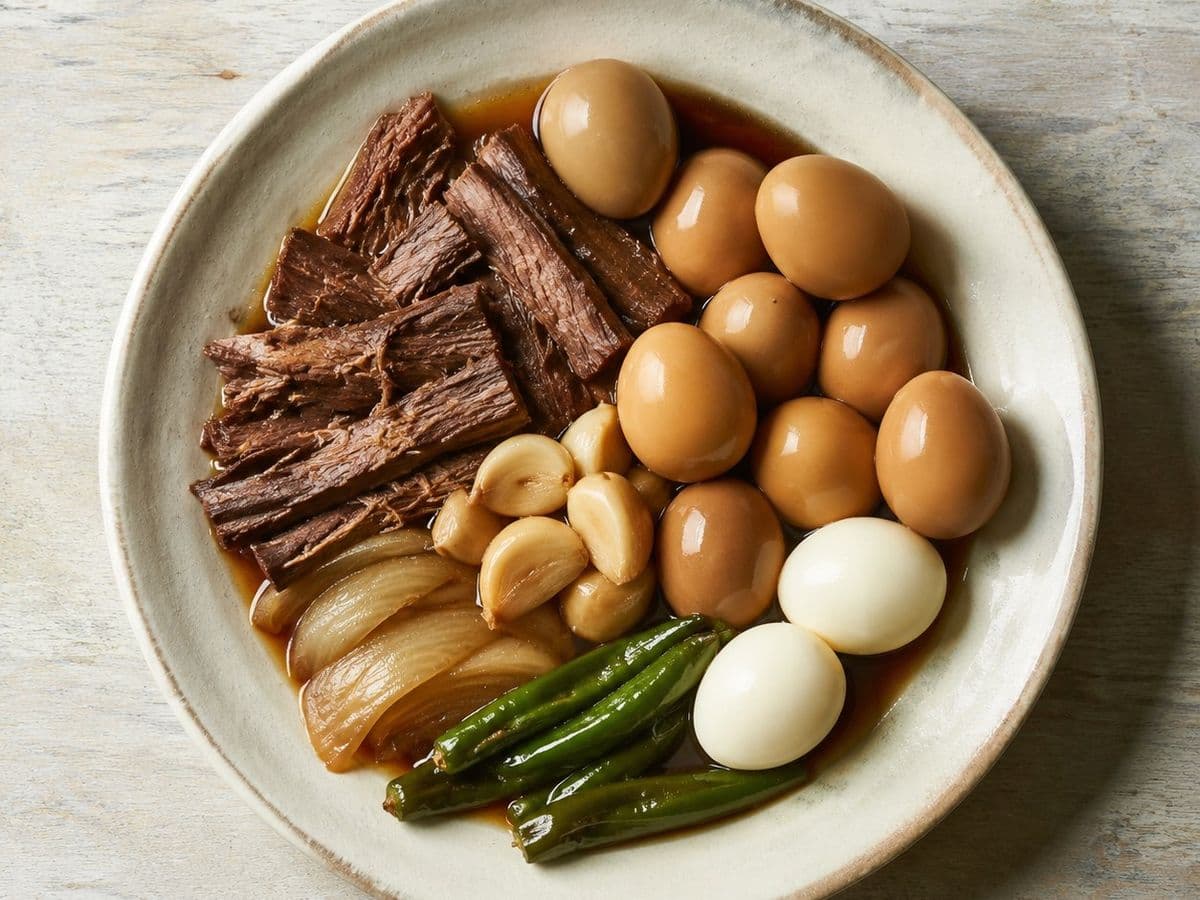
318 kcal a serving, against 369 for the traditional version. That is 51 kcal off, or 14%, with 39.8g of protein. Serves 8. 30 minutes active, 2 hours simmering.
What the traditional version is
Large chunks of beef brisket or shin are simmered for hours with whole garlic, onion, ginger, soy sauce, plenty of sugar and chillies, until just tender enough to tear into fibres.
What changed, and what each change costs
Cut the sugar from 80g to 20g
The original is oddly sweet for a savoury banchan - more brown sauce than beef. A spoonful of sugar is enough to round off the salt and bring out the beef's savoury notes without overdoing it.
What it costs you. You lose some of that candied edge and stickier glaze. The beef tastes more like itself, but the liquor isn't quite as comforting as Mum's if you grew up in Korea. If you can't bear to lose it, drizzle a touch of honey over at the table.
Skim the fat after chilling the broth
There's no clever science here - once the broth is cold, the fat floats up and goes solid.
What it costs you. The glossy, soft beef loses some richness, and the cold broth isn't as mouth-coating. Warm it gently before eating if you want that texture back.
Switch from brisket to topside or lean braising beef (beef-braising)
Brisket is classic for shredded beef, but it's marbled through with fat. Topside or another lean cut gives you a bit less flavour, but more of the bite and chew you want in a packed lunch box.
What it costs you. The first bowl is the best. The second and third aren't quite as lush, and leftovers dry out a bit more. If you want the classic flavour, use all brisket, skim off as much fat as you can, and move on.
Eggs bumped up from 8 to 12, and a couple swapped for British Lion egg whites only
Jangjorim eggs are the part everyone fights over, and eggs are where you can squeeze in extra protein without much fuss.
What it costs you. You lose the best bit (the yolk) in a few eggs. The whites are a bit rubbery, so stash them under the beef where the marinade soaks in more. If you want all yolks, use all whole eggs, but don't tell the book's editor.
What goes in it
The ingredients, without the quantities. The weights are what the figures below are computed from, and they are in the book.
- Brisket for flavour
- Reduced-salt soy sauce
- Water
- Caster sugar
- Garlic
- Onion
- Fresh ginger
- 4 mild long green chillies
- 12 medium eggs
- 3 egg whites
- Black pepper
- Spring onions
- Toasted sesame oil
How it starts
- Put both cuts of beef into a large saucepan and cover with the 1200g water.
- Add the soy sauce, sugar, peeled garlic cloves, onion (cut into quarters), ginger (sliced) and the green chillies.
- While the beef's cooking, boil your eggs: bring another pan of water to the boil, lower in the eggs, and cook for 8 minutes.
The rest of the method, and every weight, is in Authentic-ish Korean.
The numbers
| Per serving | Traditional | Lightened |
|---|---|---|
| Calories | 369 | 318 |
| Protein | 36.2g | 39.8g |
| Fat | 16.2g | 11.8g |
| Saturated fat | 5.1g | 3.8g |
| Carbohydrate | 18.8g | 11.6g |
| Protein per 100 kcal | 9.8g | 12.5g |
Every figure is computed from the recipe's own weighed ingredient list against public food composition databases. The appendix in Authentic-ish Korean prints the exact database row used for each ingredient, so any number here can be checked. How every number is computed sets out the method.
Allergens. eggs, gluten, sesame, soybeans.
The method is in the book
The whole point of jangjorim is protein and salt - nobody eats this for the fat or sugar. Swapping in some lean beef and scooping off the set fat does the work without anyone really noticing. The eggs are a bonus. It isn't the sticky, glossy stuff that's pure comfort on white rice, but it's honest and the lunchbox never lies. Go all brisket and sugar if that's what you're after; otherwise, this is as close as you'll get to a healthy banchan that still makes you want seconds.
The quantities and the method for this dish are in Authentic-ish Korean, along with 51 more. Buy the paperback
More from Authentic-ish Korean
- Baechu Kimchi, 83 kcal a serving, 22% off
- Kongnamul Muchim, 95 kcal a serving, 23% off
- Sigeumchi Namul, 67 kcal a serving, 22% off
- Gyeranjjim, 82 kcal a serving, 35% off
- Dubu Buchim, 260 kcal a serving, 21% off
- Myeolchi Bokkeum, 99 kcal a serving, 25% off
Every Korean dish and its calories · Every dish in the series