Korean · Authentic-ish Korean
Dwaeji Bulgogi
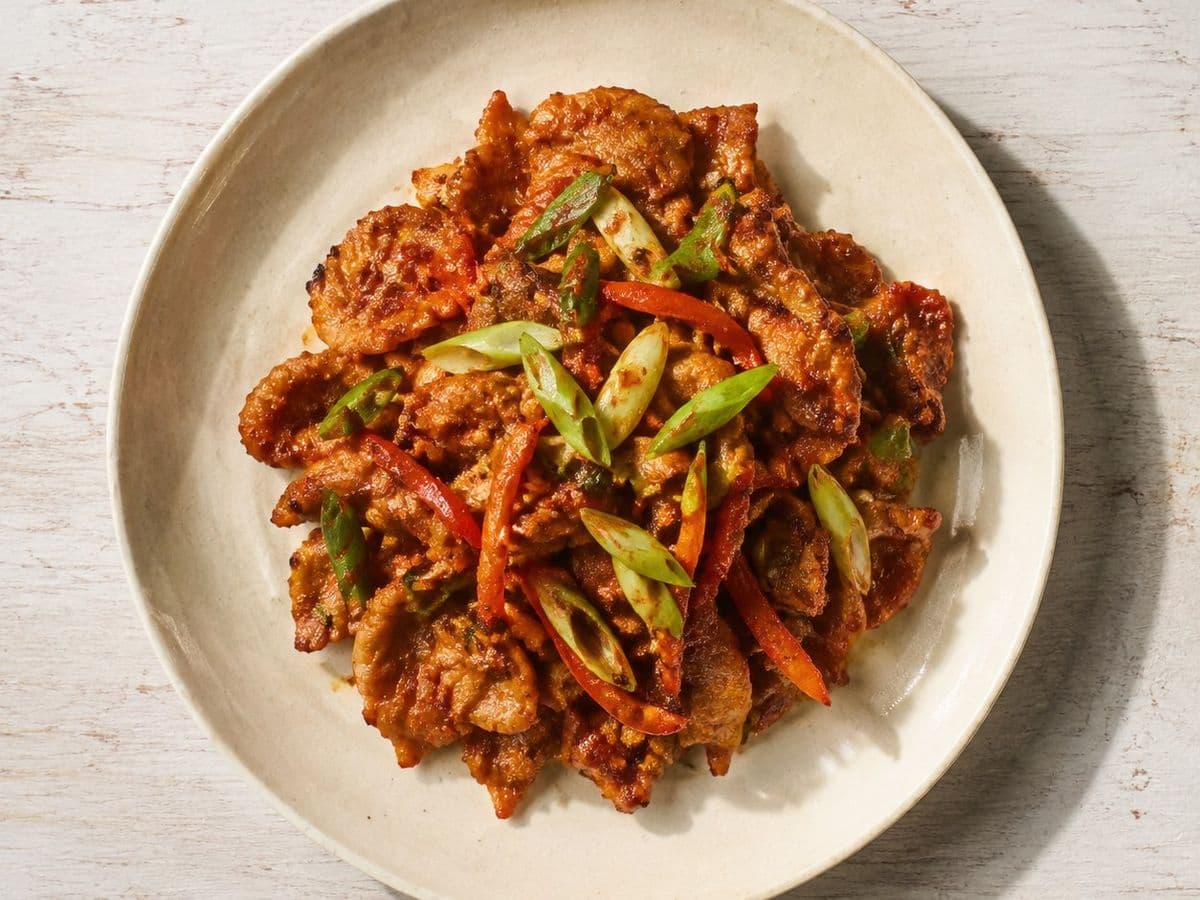
391 kcal a serving, against 622 for the traditional version. That is 231 kcal off, or 37%, with 37.5g of protein. Serves 4. 30 minutes active, 2-12 hours marinating.
What the traditional version is
Slices of pork belly or collar marinated in a thick blend of gochujang, soy sauce, sugar, honey, garlic, ginger, sesame oil and sometimes fruit puree (apple or pear). The pork sits in this sticky bath for hours, then hits a scorching grill or frying pan for maximal char. Piled into lettuce leaves, maybe with rice and extra sauce.
What changed, and what each change costs
Switch pork belly/collar for lean pork shoulder, trimmed and sliced
Belly and collar are gorgeous, but they're a full-fat party. Lean shoulder is still porky enough and stays tender if marinated, especially sliced thin. Cut the big seams of fat while you're at it.
What it costs you. It isn't as luscious or as crisp at the edges. Without all the fat, you lose some of that melting texture and caramelised chew. Still, it lets you eat a proper plateful without needing a nap.
Drop honey, drop half the sugar, up the garlic and ginger
Sugar brings the stick, but it's heavy-handed. No honey, less sugar, more aromatics: it's spicier, less rich, and a bit cleaner. The ginger punches through, so you barely notice the missing sweetness.
What it costs you. You lose a bit of that syrupy gloss and a little of the glossed-up edge where the pork would char. It's more of a meal and less of a treat, but you won't regret it unless dessert is next.
Asian pear halved, sesame oil halved, sesame seeds halved
Pear is for tenderising and a subtle sweetness - you still want some, just less. Sesame oil and seeds build the depth, but in big doses they're there for aroma, not substance.
What it costs you. Slightly less fragrance and the pork won't melt quite as much, but it's still tender and there's enough nuttiness to make it classic.
What goes in it
The ingredients, without the quantities. The weights are what the figures below are computed from, and they are in the book.
- Pork shoulder
- Gochujang
- Light soy sauce
- Caster sugar
- Garlic
- Fresh ginger
- Toasted sesame oil
- Spring onions
- Red pepper
- Asian pear
- Sesame seeds
- Black pepper
How it starts
- Grate the garlic, ginger and pear.
- In a big bowl, mix gochujang, soy sauce, sugar, garlic, ginger, sesame oil, black pepper and half the sesame seeds.
- Throw in the spring onion and red pepper.
The rest of the method, and every weight, is in Authentic-ish Korean.
The numbers
| Per serving | Traditional | Lightened |
|---|---|---|
| Calories | 622 | 391 |
| Protein | 33.3g | 37.5g |
| Fat | 37.7g | 15.8g |
| Saturated fat | 11.8g | 4.8g |
| Carbohydrate | 37.4g | 24g |
| Protein per 100 kcal | 5.4g | 9.6g |
Every figure is computed from the recipe's own weighed ingredient list against public food composition databases. The appendix in Authentic-ish Korean prints the exact database row used for each ingredient, so any number here can be checked. How every number is computed sets out the method.
Allergens. gluten, sesame, soybeans.
The method is in the book
This isn't the showstopper with fat dripping onto the coals and sweet, spicy glaze sticking to your fingers, but it's a pork bulgogi you can keep in your weeknight rotation. It's got all the fire, spice and savour you want - just without the nap afterwards. If you miss that sticky, caramelised edge, you'll have to ignore your sensible side and do it properly on the weekend.
The quantities and the method for this dish are in Authentic-ish Korean, along with 51 more. Buy the paperback
More from Authentic-ish Korean
- Bulgogi, 287 kcal a serving, 15% off
- Galbi, 432 kcal a serving, 23% off
- Dak Galbi, 475 kcal a serving, 39% off
- Bossam, 313 kcal a serving, 47% off
- Tteokgalbi, 286 kcal a serving, 21% off
- Baechu Kimchi, 83 kcal a serving, 22% off
Every Korean dish and its calories · Every dish in the series