Korean · Authentic-ish Korean
Tteokgalbi
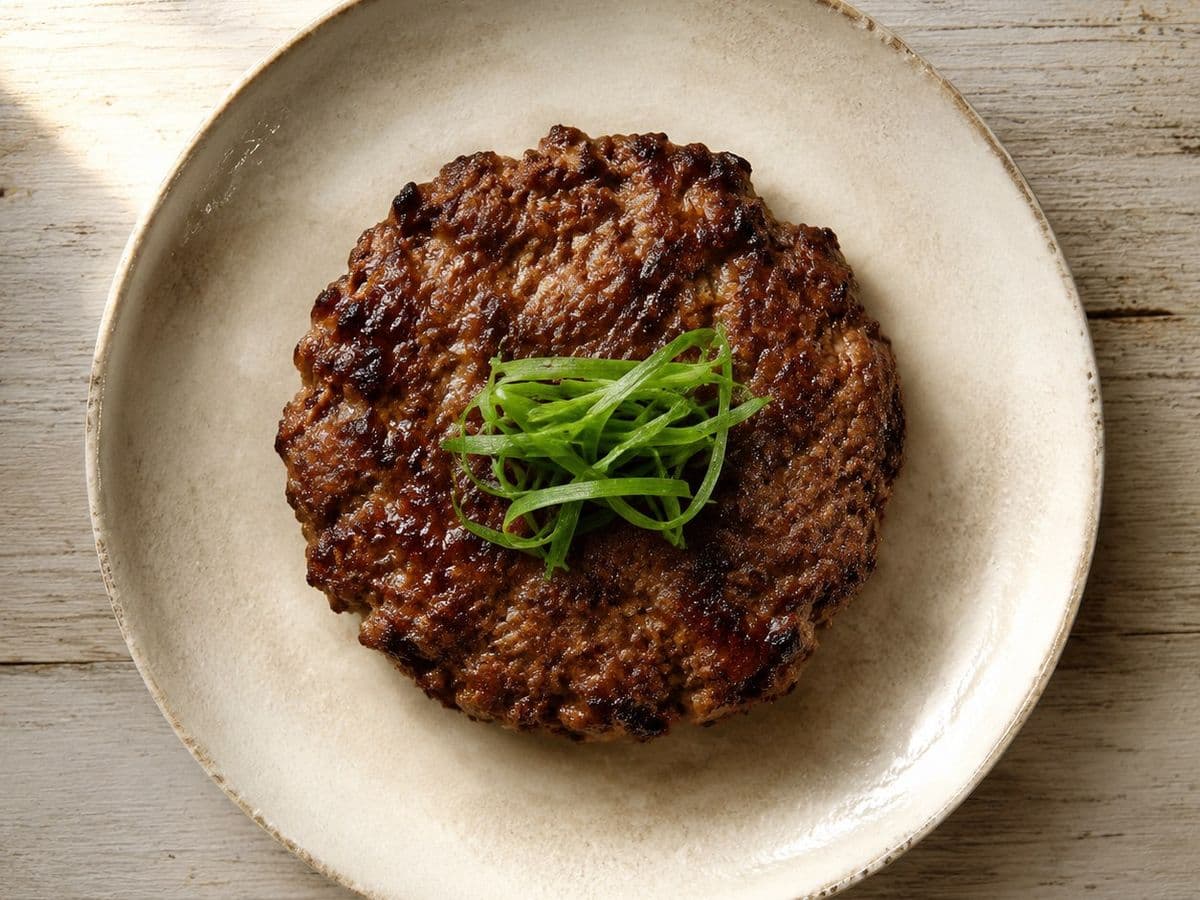
286 kcal a serving, against 363 for the traditional version. That is 77 kcal off, or 21%, with 34.2g of protein. Serves 4. 40 minutes, plus 1 hour chilling.
What the traditional version is
Classic tteokgalbi starts with beef short rib, traditionally cut off the bone, then minced or pounded until smooth. Mix in soy sauce, sugar, garlic, ginger, chopped spring onion and a dash of sesame oil. Add a splash of rice wine and a little grated Asian pear for sweetness and tenderising. Shape into thick ovals or patties, brush with glaze and grill over coals or a hot pan until caramelised outside and juicy inside.
What changed, and what each change costs
Beef short rib swapped for 600g lean beef mince (5% fat)
Short rib gives you natural, melting fat but most of it isn't going to help your arteries or your shirt. Lean mince is the easiest fix: same protein, less baggage.
What it costs you. You lose a load of beefy richness and that signature fatty pop when the patties hit the pan. If you're after the original's full blast, don't skimp on the short rib. The protein's higher, and you won't need to mop your chin after every bite.
Extra grated onion (doubled) and Asian pear bulked up
Leaner mince needs all the moisture it can get or you'll end up with a dry, crumbly mess. Doubling the grated onion and bumping up the pear keep things tender, with a touch of natural sweetness.
What it costs you. The patties feel lighter and you get a bit more juice. It's not as dense as the classic and the hit of beef is dialled back, but at least it won't dry out if you get chatty at the grill.
Sugar cut from 32g to 16g
You'll miss some of that lacquered gloss but between the pear and the glaze that's left, it's still plenty sticky.
What it costs you. The glaze is less like toffee and more like a regular soy dressing. Not the end of the world, but you won't get quite the same dark crust.
Sesame oil halved
It's all about aroma in the original, but too much isn't kind to your macros. A little still perfumes the glaze and keeps it Korean.
What it costs you. You'll get less toasted sesame on the nose. If that's your favourite part, ignore me and pour it in.
What goes in it
The ingredients, without the quantities. The weights are what the figures below are computed from, and they are in the book.
- Beef mince
- Onion
- Asian pear
- Garlic
- Fresh ginger
- Spring onions
- Light soy sauce
- Caster sugar
- Toasted sesame oil
- Rice vinegar
- Sesame seeds
- Black pepper
How it starts
- Tip the beef mince, grated onion, grated pear, garlic, ginger and spring onion into a big bowl.
- Add half the soy sauce and half the sesame oil, then season with a good pinch of salt and black pepper.
- Divide the mix into eight equal portions and shape thick, rugby-ball-shaped patties.
The rest of the method, and every weight, is in Authentic-ish Korean.
The numbers
| Per serving | Traditional | Lightened |
|---|---|---|
| Calories | 363 | 286 |
| Protein | 30.9g | 34.2g |
| Fat | 20.2g | 10.2g |
| Saturated fat | 7.4g | 3.7g |
| Carbohydrate | 15.5g | 13.2g |
| Protein per 100 kcal | 8.5g | 11.9g |
Every figure is computed from the recipe's own weighed ingredient list against public food composition databases. The appendix in Authentic-ish Korean prints the exact database row used for each ingredient, so any number here can be checked. How every number is computed sets out the method.
Allergens. gluten, sesame, soybeans, sulphites.
The method is in the book
The classic tteokgalbi is about lush, fat-splattered beef you have to wipe off your chin. Mine's drier, with more spring from the vegetables than the original, but you can actually taste the beef and the pear instead of just hot fat and soy. If you want the full buttery sizzle, grab real short rib and go for it - but if you want a plate you can eat on a Tuesday night and not slump into a food nap, this'll do you proud. It isn't rib-cracking, but it's decent.
The quantities and the method for this dish are in Authentic-ish Korean, along with 51 more. Buy the paperback
More from Authentic-ish Korean
- Bulgogi, 287 kcal a serving, 15% off
- Dwaeji Bulgogi, 391 kcal a serving, 37% off
- Galbi, 432 kcal a serving, 23% off
- Dak Galbi, 475 kcal a serving, 39% off
- Bossam, 313 kcal a serving, 47% off
- Baechu Kimchi, 83 kcal a serving, 22% off
Every Korean dish and its calories · Every dish in the series