Korean · Authentic-ish Korean
Bossam
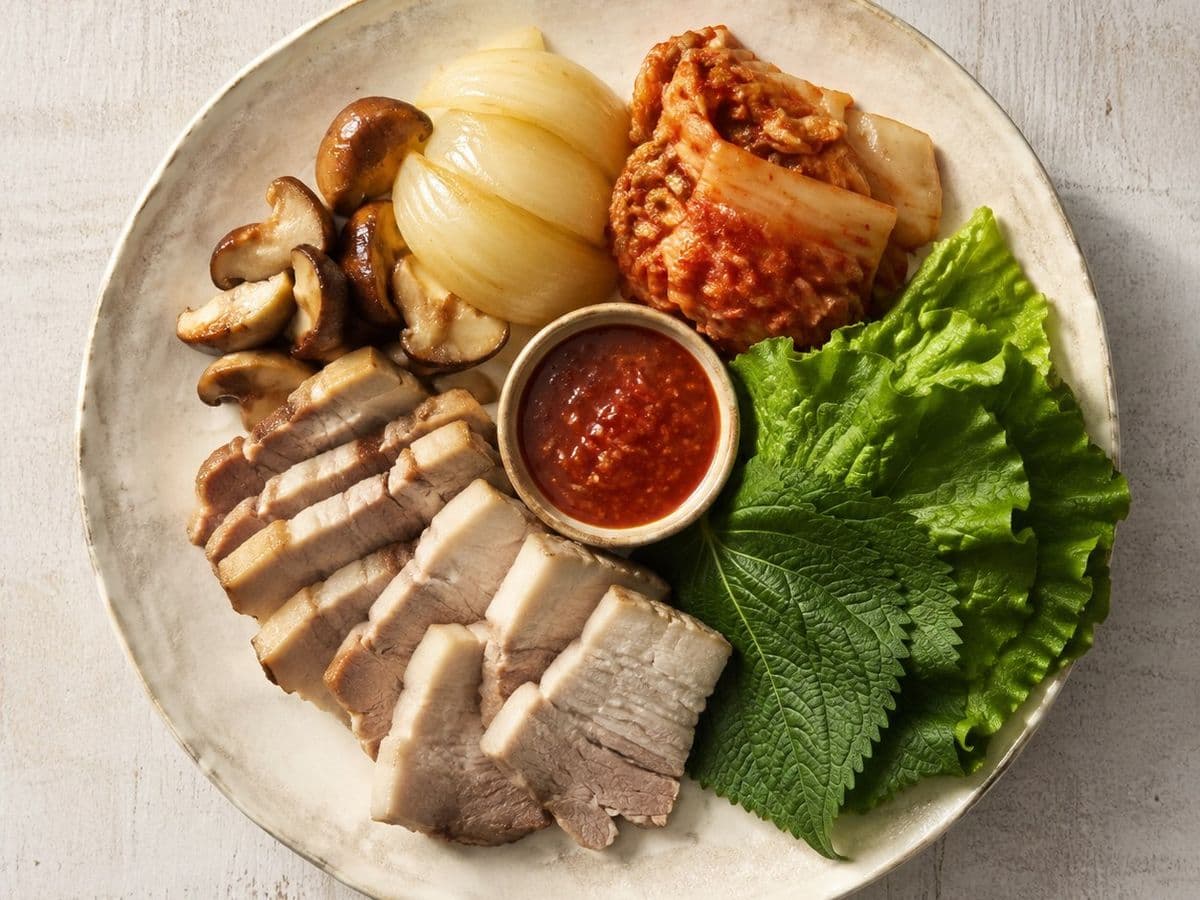
313 kcal a serving, against 594 for the traditional version. That is 281 kcal off, or 47%, with 40.3g of protein. Serves 6. 30 minutes prep, 90 minutes cooking, 10 minutes assembly.
What the traditional version is
Pork belly, simmered whole with aromatics (think garlic, ginger, onion, bay leaf, maybe a spoon of doenjang or coffee for depth) until meltingly tender. It's sliced and served warm, piled up with fresh or fermented kimchi, lettuce leaves, raw garlic, green chilli, and a salty dipping sauce like ssamjang. Every mouthful is a little parcel you build at the table.
What changed, and what each change costs
Swap pork belly for lean pork loin and add firm tofu for volume
Belly is nothing but layers of fat and a bit of meat. Pork loin is lean, and it holds up nicely to simmering, especially when sliced thin against the grain. Adding tofu gives you more parcels to build, and once it's warm and dipped in sauce nobody's complaining.
What it costs you. Let's be honest: you lose the wobble and the lip-coating richness that makes bossam bossam. Pork loin is a bit more businesslike than celebratory. Still, you keep the flavour, and you can eat more without immediately booking a lie-down.
Add chestnut mushrooms to the simmer for texture and extra protein
Mushrooms soak up flavour from the broth, fill out the platter, and get you another protein hit without a trace of fat. Plus, there's always a couple of people at the table who don't love the fatty bits, and this gives them something else to wrap.
What it costs you. Mushrooms never passed for pork belly and never will. But as a counterpoint in the lettuce wrap, they're a good addition rather than just a compromise.
Cut sesame oil in the dipping sauce from 10g to 4g, replace with extra gochujang and soy
Sesame oil is half the bossam dipping experience, but it's pure fat and less is all you need for flavour. Bumping up the gochujang keeps it punchy.
What it costs you. You don't quite get the full perfume, but you won't miss it after two wraps. If you want the original hit, just use the full glug and don't tell me about it.
What goes in it
The ingredients, without the quantities. The weights are what the figures below are computed from, and they are in the book.
- Whole pork loin
- Firm tofu
- Chestnut
- Garlic
- 1 medium onion
- Bay leaf
- Fresh ginger
- Doenjang
- Baechu kimchi
- Soft lettuce or perilla leaves
- 2 green chillies
- Gochujang
- Light soy sauce
- Toasted sesame oil
- Sesame seeds
How it starts
- Lay the pork loin in a large saucepan with the tofu and mushrooms.
- Bring to a simmer over medium heat.
- Let the pork rest out of the broth for 10 minutes, then slice thin against the grain.
The rest of the method, and every weight, is in Authentic-ish Korean.
The numbers
| Per serving | Traditional | Lightened |
|---|---|---|
| Calories | 594 | 313 |
| Protein | 41.3g | 40.3g |
| Fat | 43.2g | 11.3g |
| Saturated fat | 15g | 2.4g |
| Carbohydrate | 11.7g | 15g |
| Protein per 100 kcal | 6.9g | 12.9g |
Every figure is computed from the recipe's own weighed ingredient list against public food composition databases. The appendix in Authentic-ish Korean prints the exact database row used for each ingredient, so any number here can be checked. How every number is computed sets out the method.
Allergens. gluten, sesame, soybeans.
The method is in the book
If I'm honest, pork belly is the first thing you want here - but this lean version is a proper party tray you can eat midweek without writing off the following morning. The platter looks the same, the sauce still kicks, and you won't feel the need to unbutton your jeans halfway through. If you've got a real bossam craving, do it right once in a while - but this one's good for any night you're after a feast without the food coma.
The quantities and the method for this dish are in Authentic-ish Korean, along with 51 more. Buy the paperback
More from Authentic-ish Korean
- Bulgogi, 287 kcal a serving, 15% off
- Dwaeji Bulgogi, 391 kcal a serving, 37% off
- Galbi, 432 kcal a serving, 23% off
- Dak Galbi, 475 kcal a serving, 39% off
- Tteokgalbi, 286 kcal a serving, 21% off
- Baechu Kimchi, 83 kcal a serving, 22% off
Every Korean dish and its calories · Every dish in the series