Japanese · Authentic-ish Japanese
Gyudon
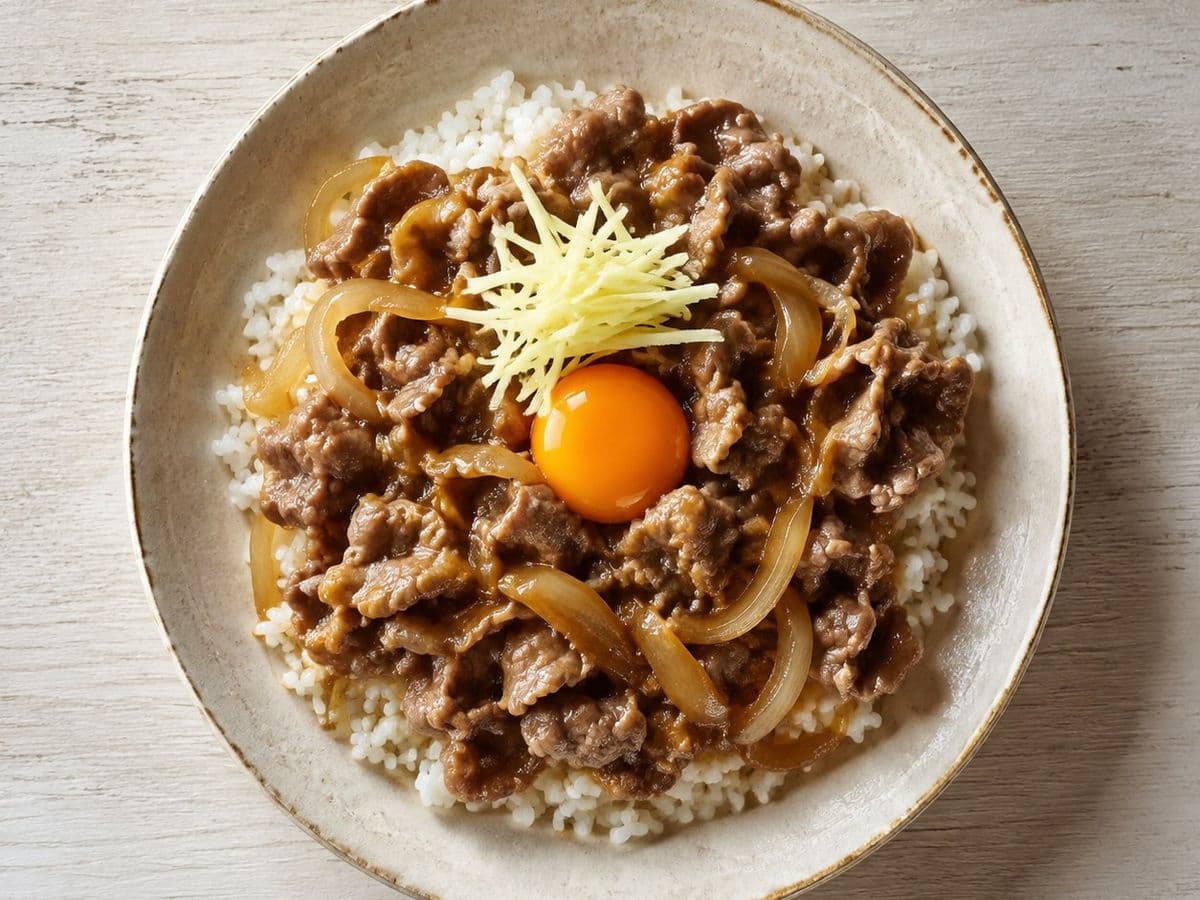
750 kcal a serving, against 1109 for the traditional version. That is 359 kcal off, or 32%, with 40.2g of protein. Serves 4. .
What the traditional version is
For the classic version, very thin slices of fatty beef belly are simmered with plenty of onions in a sauce of soy, mirin, sake and a heavy hand of sugar. The result is glossy, tender and rich all the way through.
What changed, and what each change costs
Beef belly for lean sirloin
Switching to sirloin means you lose most of the visible fat but keep the beefy flavour. The fat is what makes the bowl taste rich, but it's doing you no favours if you want to leave the table awake.
What it costs you. Lean sirloin isn't as melt-in-the-mouth as belly, and the sauce can't cling to the meat in quite the same way. You get a cleaner bite but it's nowhere near as decadent.
Double the onions, cut the sauce sugar hard
The onions bring sweetness without all the sugar, so you can get away with less of the white stuff. The bowl still tastes sweet, but more from the vegetables than from a sugar rush.
What it costs you. You miss a bit of that shiny, caramel gloss the sugar brings. The sauce isn't quite as sticky, but it's not a pudding, it's dinner.
Rice portion down by a third
You can eat a doorstop of rice with gyudon - nobody's stopping you - but it's the quickest way to make the meal less stodgy without losing beef. You're here for the topping, not to eat a pillowcase of starch.
What it costs you. Cutting the rice does make the bowl look smaller, and you'll catch yourself scraping up the last grains. If you want the bottomless donburi feeling, leave it at full whack and just own it.
Egg yolk swapped for whole poached egg
Swapping from yolk to whole egg gives you more protein for the same treat effect. The runny yolk is lovely, but the white brings something too.
What it costs you. The silky raw yolk melts in a way poached egg can't touch. This is the one where the trade-off feels most obvious, but you're getting more for it.
Up the ginger, drop the mirin
Pickled ginger is sharper and bolder than the sauce needs, so I use a bit more and drop the mirin, which is mostly sugar in other clothes. The sauce is simpler, but the ginger brings some bite.
What it costs you. You lose a little boozy sweetness. If you're set on the original, keep the mirin.
What goes in it
The ingredients, without the quantities. The weights are what the figures below are computed from, and they are in the book.
- Short-grain rice
- Beef sirloin
- Onion
- Light soy sauce
- Sake
- Caster sugar
- Water
- Pickled ginger
- Poached egg
How it starts
- Cook the rice however you like, but keep the grains a little springy if you can.
- Slice the onions as thin as you dare and cook them in a wide frying pan with a splash of water until just starting to collapse.
- Pour in the soy sauce, sake, sugar and the rest of the water.
The rest of the method, and every weight, is in Authentic-ish Japanese.
The numbers
| Per serving | Traditional | Lightened |
|---|---|---|
| Calories | 1109 | 750 |
| Protein | 35.5g | 40.2g |
| Fat | 25g | 9.3g |
| Saturated fat | 9.7g | 3.2g |
| Carbohydrate | 173.6g | 116.8g |
| Protein per 100 kcal | 3.2g | 5.4g |
Every figure is computed from the recipe's own weighed ingredient list against public food composition databases. The appendix in Authentic-ish Japanese prints the exact database row used for each ingredient, so any number here can be checked. How every number is computed sets out the method.
Allergens. gluten, eggs, soybeans.
The method is in the book
Sirloin isn't as lush as the proper fatty belly, and the sauce is less of a sugar syrup, but you're still getting a bowl that tastes like it should. Losing rice means your dinner looks a bit mean, but you're not chewing through a brick of starch just to get to the end. The poached egg has its own charms, but if you want pure velvet, stick a yolk on top and enjoy it. This is one of those where the original wins for pure comfort, but the tweaks mean you can have it on a weeknight and not need a nap.
The quantities and the method for this dish are in Authentic-ish Japanese, along with 48 more. Buy the paperback
More from Authentic-ish Japanese
- Oyakodon, 711 kcal a serving, 23% off
- Katsudon, 638 kcal a serving, 30% off
- Chahan, 486 kcal a serving, 37% off
- Onigiri, 319 kcal a serving, 27% off
- Omurice, 726 kcal a serving, 36% off
- Tamago Kake Gohan, 389 kcal a serving, 37% off
Every Japanese dish and its calories · Every dish in the series