Japanese · Authentic-ish Japanese
Onigiri
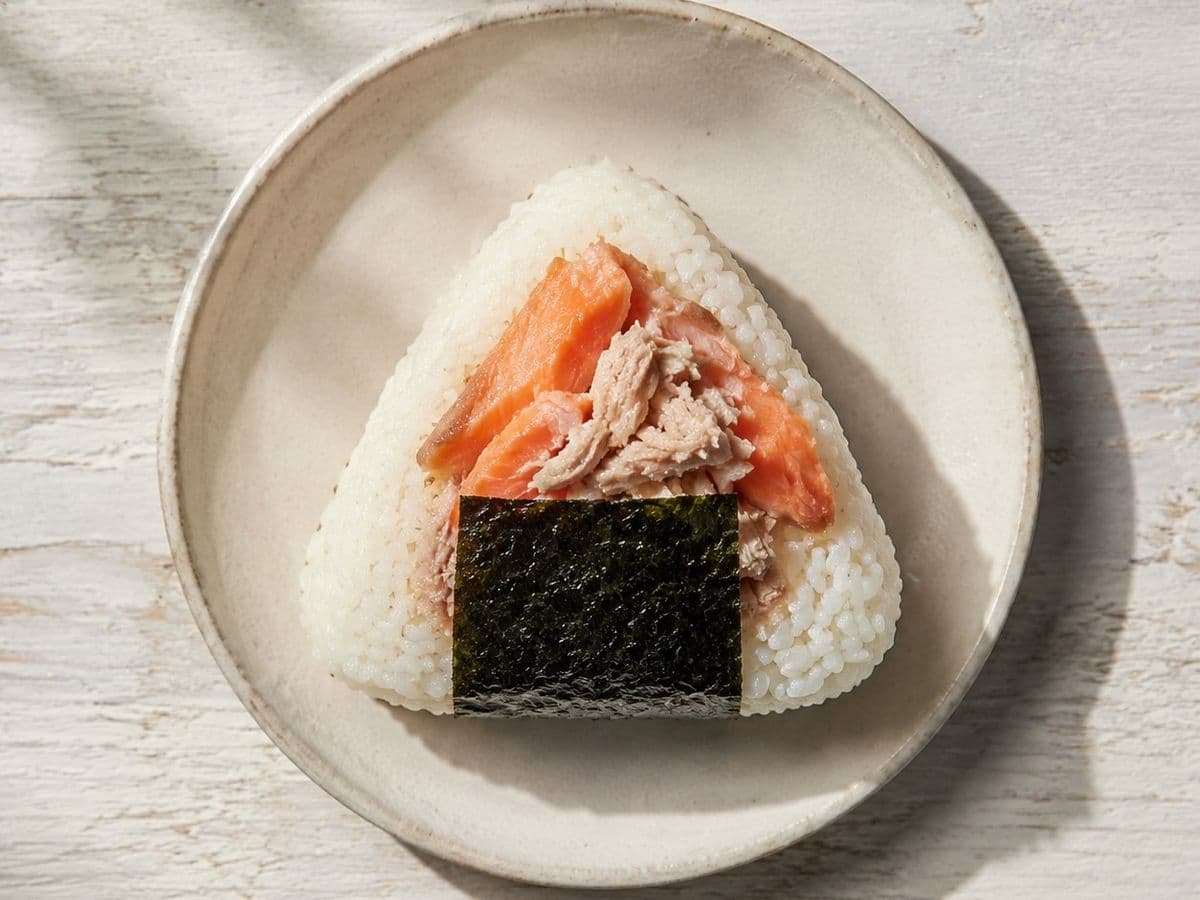
319 kcal a serving, against 439 for the traditional version. That is 120 kcal off, or 27%, with 15.5g of protein. Serves 6. .
What the traditional version is
Short-grain Japanese rice, washed and cooked, seasoned with a little salt, is shaped by hand into balls or triangles. The centre is filled with salt-grilled salmon, pickled plum (umeboshi), or tuna mixed with full-fat mayonnaise. Each is wrapped with a strip of nori and eaten cold or at room temperature.
What changed, and what each change costs
All tuna-mayo swapped for plain tuna, bulked up with more salmon
Mayonnaise brings little beyond creaminess and extra fat - not much protein. By upping the salmon and letting the tuna stand on its own, you get a bigger hit of fish and more protein per bite.
What it costs you. You lose that smooth, slightly tangy centre. The filling is firmer and drier, and if you miss the mayo, well, that's what you signed up for.
Rice reduced by a quarter per serving
Onigiri is mostly rice, so if you cut some out, you've automatically trimmed the starchy bit and let more filling take the stage.
What it costs you. The ball shrinks, obviously. You'll eat more seaweed and filling in each bite, but don't expect to be stuffed. If you're ravenous, just eat another.
More filling per onigiri
More fish means more protein, and the stronger flavour compensates for the lack of mayo. This is also the easiest way to make a small rice ball feel less like a side and more like a snack.
What it costs you. It's a bit fish-forward now - that's not a complaint, but it isn't subtle.
Nori unchanged
I refuse to mess with nori. You need it to hold the lot together, and it's basically a rounding error for calories.
What it costs you. None at all. The only way to ruin it is to skip it entirely, and then your hands stick to your lunch.
What goes in it
The ingredients, without the quantities. The weights are what the figures below are computed from, and they are in the book.
- Uncooked short-grain rice
- Fine salt
- Cooked salmon
- Tinned tuna in spring water
- Nori sheets
How it starts
- Cook the rice: Wash the short-grain rice in several changes of water until it runs clear, then drain and rest for 15 minutes.
- While the rice is cooling (but still warm), flake the cooked salmon finely and mix it with the drained tuna.
- Cut the nori sheets into strips wide enough to wrap around each onigiri, about 5cm.
The rest of the method, and every weight, is in Authentic-ish Japanese.
The numbers
| Per serving | Traditional | Lightened |
|---|---|---|
| Calories | 439 | 319 |
| Protein | 13.1g | 15.5g |
| Fat | 10g | 4g |
| Saturated fat | 1.8g | 0.9g |
| Carbohydrate | 71.5g | 52.9g |
| Protein per 100 kcal | 3g | 4.9g |
Every figure is computed from the recipe's own weighed ingredient list against public food composition databases. The appendix in Authentic-ish Japanese prints the exact database row used for each ingredient, so any number here can be checked. How every number is computed sets out the method.
Allergens. fish.
The method is in the book
Is this as satisfying as the tuna-mayo triangle from a Japanese forecourt? No, it isn't, it's lunch with all the creaminess left out. The rice shrinks, so the protein's higher, but you lose some of that fluffy ballast. The upside is you get a stronger hit of salmon, and if you're after more than just a starch-fest, it does the job. Still, if you want that classic, squishy onigiri centre, you'll have to add the mayo back in and take the hit.
The quantities and the method for this dish are in Authentic-ish Japanese, along with 48 more. Buy the paperback
More from Authentic-ish Japanese
- Gyudon, 750 kcal a serving, 32% off
- Oyakodon, 711 kcal a serving, 23% off
- Katsudon, 638 kcal a serving, 30% off
- Chahan, 486 kcal a serving, 37% off
- Omurice, 726 kcal a serving, 36% off
- Tamago Kake Gohan, 389 kcal a serving, 37% off
Every Japanese dish and its calories · Every dish in the series