Japanese · Authentic-ish Japanese
Omurice
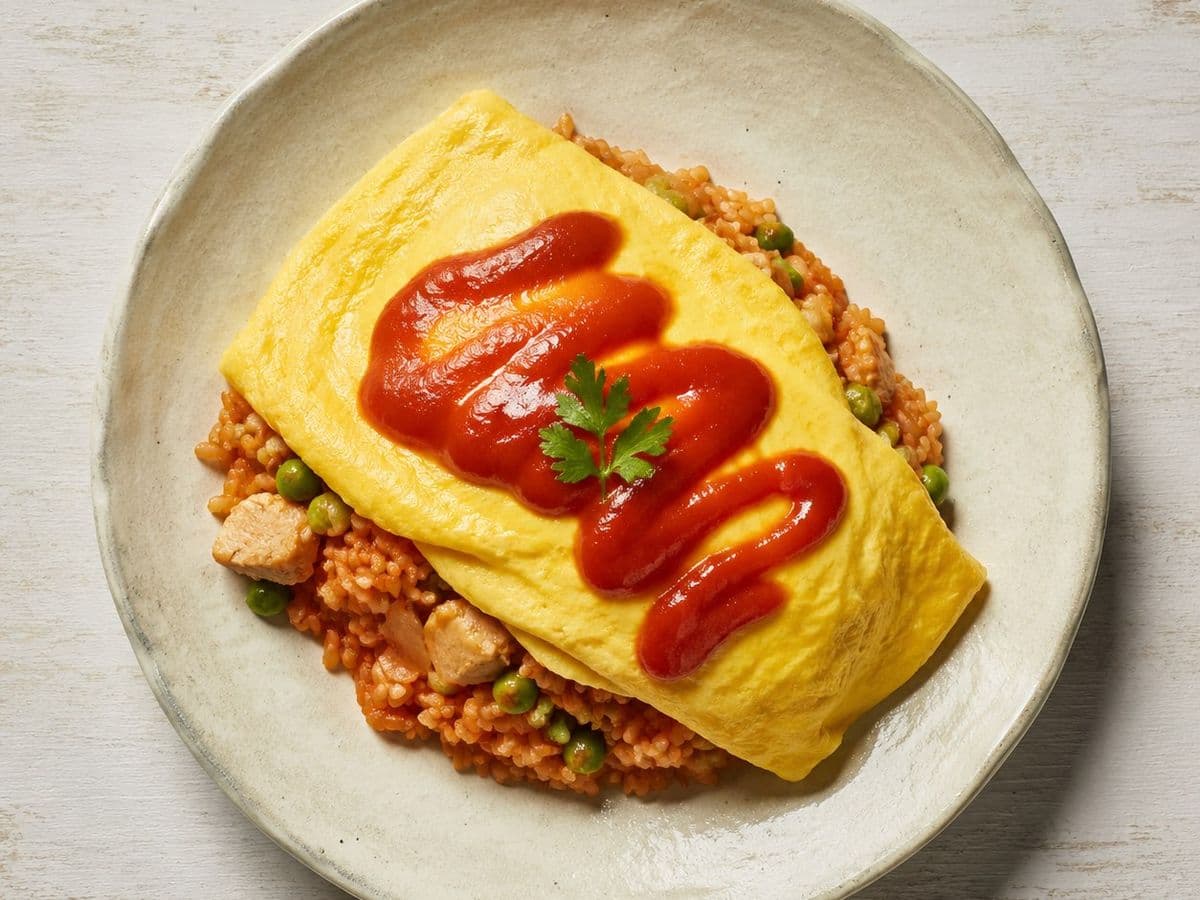
726 kcal a serving, against 1134 for the traditional version. That is 408 kcal off, or 36%, with 42.4g of protein. Serves 4. .
What the traditional version is
Omurice is short-grain rice fried with chicken, onion, a good hit of ketchup, a splash of oil and a knob of butter.
What changed, and what each change costs
Chicken thigh switched out for chicken breast
Chicken breast brings up the protein without the extra fat, and you won't notice the swap once it's chopped up in rice drowning in ketchup.
What it costs you. You lose that richer flavour and a bit of tenderness, but let's be honest, the ketchup is doing all the work.
Butter slashed, oil cut in half
Butter and oil are not here for their subtlety. You need a little of each for flavour and to stop sticking, but slashing both won't ruin things.
What it costs you. You get less of that glossy, coat-the-lips finish. No-one will mistake it for a restaurant plate, but you won't feel like you've eaten a butter sandwich either.
Rice trimmed down
There's a mountain of rice in the original. Cutting some means you get a higher share of chicken and egg per bite, which is sort of the whole point here.
What it costs you. If you want to carb-load, just use more, but you'll be fine with what's left, especially if you like protein.
Eggs per person cut slightly, with a sneaky egg white boost
Cutting back on some yolk makes room for extra white, keeping the omelette big and tender, but with more protein and less fat.
What it costs you. You lose a bit of richness and that deep yellow colour, but the omelette stays soft if you don't overcook it. It isn't silk, it's satin.
Ketchup held steady, peas added
Ketchup is both flavour and binding agent here - cut it and you're just eating dry chicken rice with an egg hat. The peas were there anyway, but honestly, if you hate them, skip them.
What it costs you. You still get that sweet tang. If you want to really cut sugar, use less ketchup and accept your fate.
What goes in it
The ingredients, without the quantities. The weights are what the figures below are computed from, and they are in the book.
- Cooked short-grain rice
- Chicken breast
- Onion
- Vegetable oil
- Unsalted butter
- Frozen peas
- Tomato ketchup
- 8 medium eggs
- Egg whites
- Salt
- Black pepper
How it starts
- If your rice isn't already cold, spread it out on a tray and chill it - hot rice turns to mush in the pan.
- Dice the onion and chicken breast small, so you don't get any mouthfuls of nothing but chicken.
- Heat half the oil in a large frying pan over medium-high.
The rest of the method, and every weight, is in Authentic-ish Japanese.
The numbers
| Per serving | Traditional | Lightened |
|---|---|---|
| Calories | 1134 | 726 |
| Protein | 44g | 42.4g |
| Fat | 44.2g | 17.8g |
| Saturated fat | 14.6g | 5.7g |
| Carbohydrate | 134.7g | 94.7g |
| Protein per 100 kcal | 3.9g | 5.8g |
Every figure is computed from the recipe's own weighed ingredient list against public food composition databases. The appendix in Authentic-ish Japanese prints the exact database row used for each ingredient, so any number here can be checked. How every number is computed sets out the method.
Allergens. eggs, milk.
The method is in the book
The omelette's thinner and slightly less golden, but with the extra whites you get more volume and a decent soft texture if you don't overcook it. Chicken breast stands up for itself, and the smaller helping of rice means you actually taste the filling. There's less buttery gloss, but that means you can eat it without feeling you're in debt to your arteries. No, it's not quite the stuff you get in a Tokyo kissaten - it's more school dinner than hotel brunch - but you still get the main event: hot, soft egg, sweet-savoury rice, and an irresponsible amount of ketchup. I can't call it sophisticated, but I can call it lunch.
The quantities and the method for this dish are in Authentic-ish Japanese, along with 48 more. Buy the paperback
More from Authentic-ish Japanese
- Gyudon, 750 kcal a serving, 32% off
- Oyakodon, 711 kcal a serving, 23% off
- Katsudon, 638 kcal a serving, 30% off
- Chahan, 486 kcal a serving, 37% off
- Onigiri, 319 kcal a serving, 27% off
- Tamago Kake Gohan, 389 kcal a serving, 37% off
Every Japanese dish and its calories · Every dish in the series