Japanese · Authentic-ish Japanese
Oyakodon
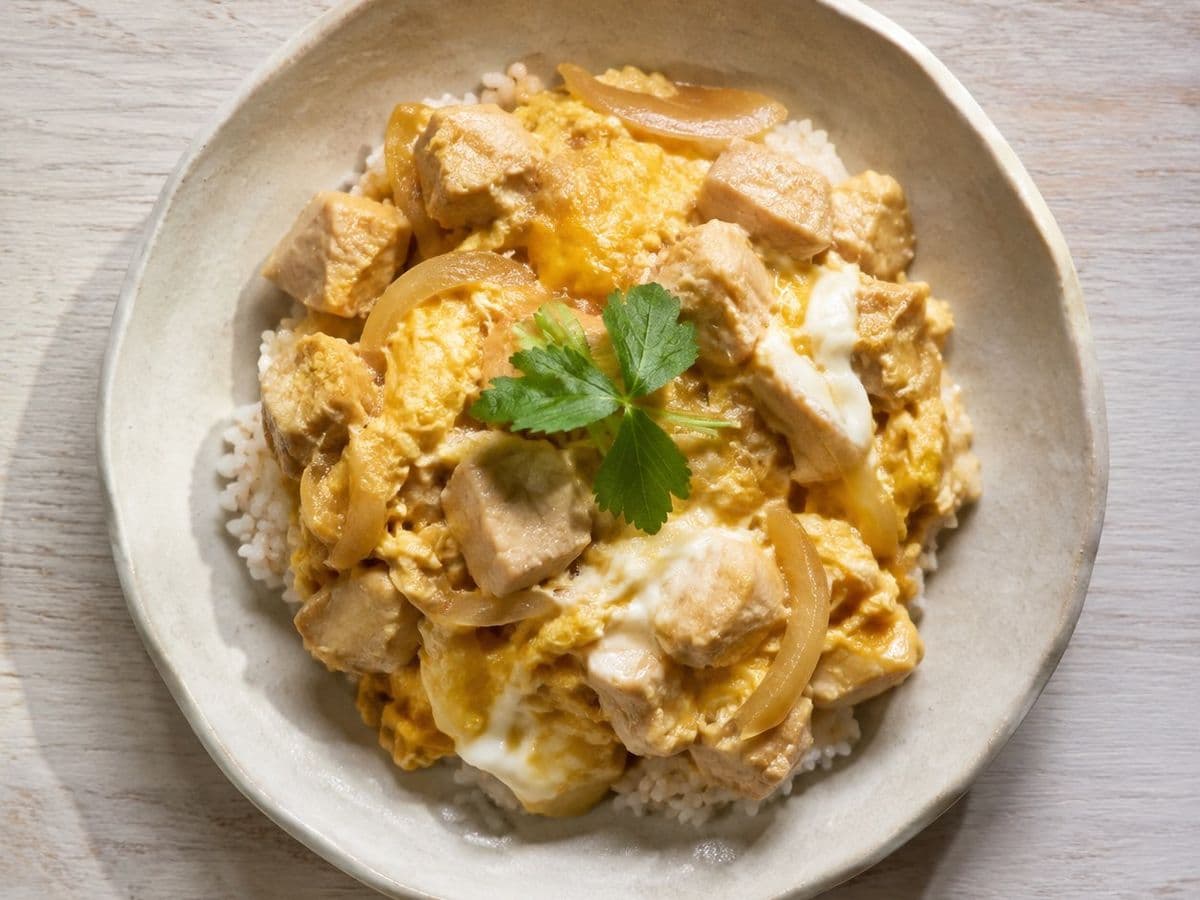
711 kcal a serving, against 927 for the traditional version. That is 216 kcal off, or 23%, with 35.9g of protein. Serves 4. .
What the traditional version is
Traditionally, oyakodon is white rice topped with chicken thigh, lightly simmered in a mix of soy, mirin, sake and a good hit of sugar, onions for sweetness, and a couple of eggs swirled in to cook just enough.
What changed, and what each change costs
Chicken thigh (with skin) for skinless chicken breast
Chicken breast is leaner and brings more protein for the same weight. Thigh has deeper flavour and more fat, but this isn't one of those times the swap ruins the dish.
What it costs you. You lose a bit of that melting, sweet chicken fat that soaks into the rice. If you love the richness, keep the thighs, but skinless breast is the easy win here.
Rice portion down by a third
I've trimmed the rice down to 120g cooked per bowl. Oyakodon is meant to be a meal-in-one, but the traditional mountain of rice isn't doing much for your chicken and eggs except stretching them further.
What it costs you. Less rice means less soak to catch the sweet broth, and you'll finish the bowl a bit quicker. But the egg and chicken are the main draw, and no one's ever put down chopsticks after this thinking 'if only there'd been more rice'.
Less sugar, more onion for sweetness
I've cut the sugar by two-thirds and upped the onion a touch, letting their sweetness do the job. Mirin still brings some sugar, so you won't be eating a savoury omelette.
What it costs you. You lose some of that unmistakable glossy, almost caramel slick the old recipe brings. It isn't quite the same, it's lighter and a bit more honest. If you like it proper sweet, put a spoonful or two of sugar back.
Eggs up by a quarter
A bit more egg, not for a richer sauce, but for more protein. Oyakodon is built on eggs as much as chicken, so it takes it without protest.
What it costs you. A touch thicker and less silky in the finished bowl. Still feels right once you dig in. If you want that classic tremble, use the same eggs as the old way.
Chicken breast cooked gently, not boiled
Chicken breast dries out if you get cocky with the heat. I simmer the sauce and onions first, add chicken only for the last couple of minutes, then in with the egg.
What it costs you. If you leave the chicken in too long, it'll go squeaky. Watch it, and you get tender pieces. Ignore it, and it's chicken chewing gum.
What goes in it
The ingredients, without the quantities. The weights are what the figures below are computed from, and they are in the book.
- Japanese short-grain rice
- Skinless chicken breast
- Onion
- Light soy sauce
- Mirin
- Sake
- Caster sugar
- Water
- 5 medium eggs
- Spring onions
- Shredded nori
How it starts
- Cook the rice as you usually do.
- Slice the onion thin and scatter it in a large frying pan.
- Slice the chicken breast into bite-sized pieces, not too small.
The rest of the method, and every weight, is in Authentic-ish Japanese.
The numbers
| Per serving | Traditional | Lightened |
|---|---|---|
| Calories | 927 | 711 |
| Protein | 31.5g | 35.9g |
| Fat | 18.3g | 8.9g |
| Saturated fat | 5.2g | 2.6g |
| Carbohydrate | 149.8g | 112.8g |
| Protein per 100 kcal | 3.4g | 5.1g |
Every figure is computed from the recipe's own weighed ingredient list against public food composition databases. The appendix in Authentic-ish Japanese prints the exact database row used for each ingredient, so any number here can be checked. How every number is computed sets out the method.
Allergens. gluten, eggs, soybeans.
The method is in the book
Dropping the fatty thigh and most of the sugar is the second biggest change after the rice cut. It's not quite the hug of the original, but it's firm, filling and actually tastes more of egg and chicken than syrup. The egg adds substance as well as protein, and the bowl still comforts, just with less of a nap attack after. If you want a whack of nostalgia, dial the sugar and rice back up a bit, but don't say I didn't warn you.
The quantities and the method for this dish are in Authentic-ish Japanese, along with 48 more. Buy the paperback
More from Authentic-ish Japanese
- Gyudon, 750 kcal a serving, 32% off
- Katsudon, 638 kcal a serving, 30% off
- Chahan, 486 kcal a serving, 37% off
- Onigiri, 319 kcal a serving, 27% off
- Omurice, 726 kcal a serving, 36% off
- Tamago Kake Gohan, 389 kcal a serving, 37% off
Every Japanese dish and its calories · Every dish in the series