Japanese · Authentic-ish Japanese
Chahan
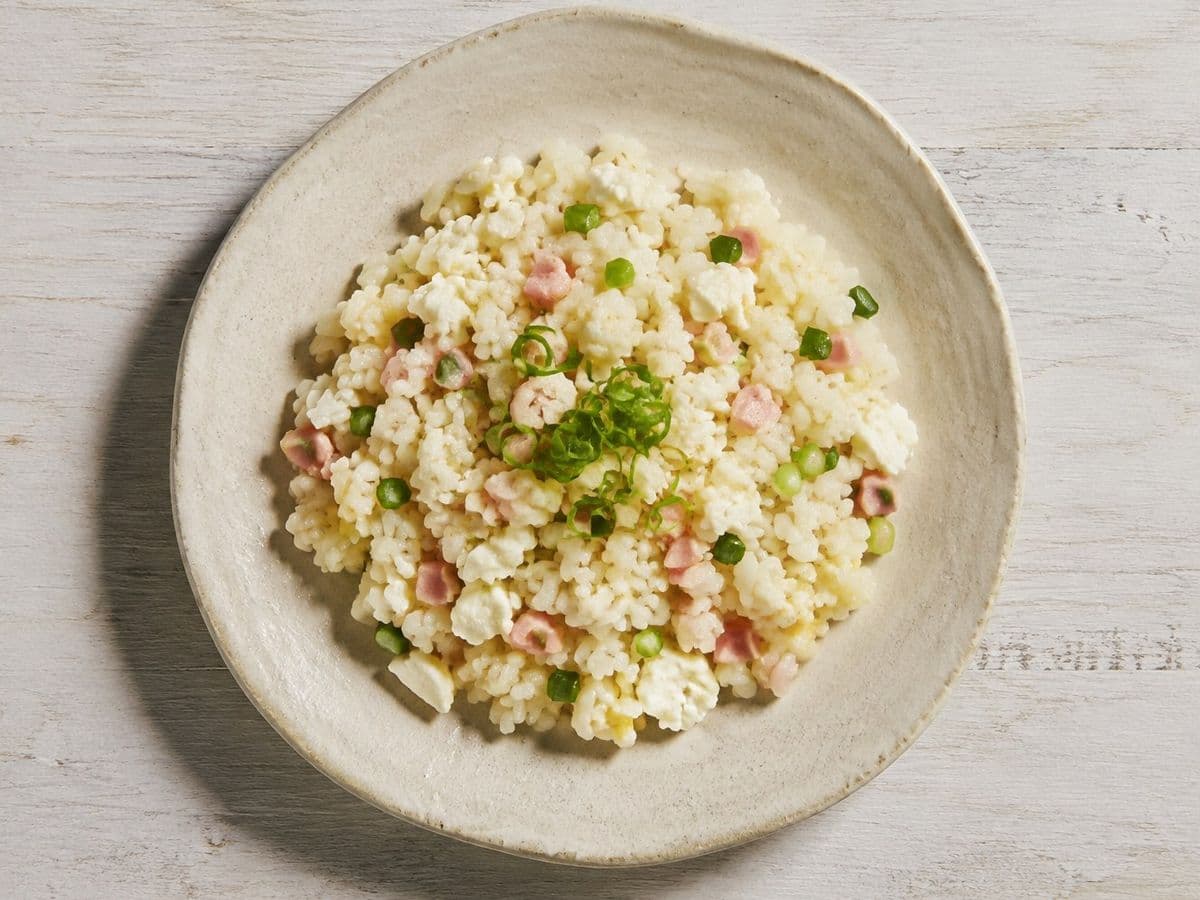
486 kcal a serving, against 771 for the traditional version. That is 285 kcal off, or 37%, with 21.2g of protein. Serves 4. .
What the traditional version is
Chahan usually means cold, day-old white rice stir-fried in generous oil with diced char siu or pork belly, chopped garlic, spring onions, a splash of soy sauce, and beaten eggs. Sometimes you'll get peas, but it's mostly about the pork and the fragrance of the rice.
What changed, and what each change costs
Pork belly replaced with lean cooked ham
Ham is what you reach for when you want the savoury hit but not the fat. You can throw in more of it and not worry about the oil leaching out and turning your rice into a slip hazard.
What it costs you. You lose the richness and little caramelised nubs of pork fat. There's a reason pork belly is the default - it gives chahan a silky mouthfeel. Ham is honest but never luxurious.
Whole eggs replaced with double the egg whites
Egg whites bring in extra protein without the fat of the yolk. You get more fluffy bits in the rice and it feels lighter when you shovel it in.
What it costs you. You miss the golden richness of yolks. The egg looks almost ghostly and the rice won't be quite as moist. It's protein, not plushness.
Vegetable oil cut by two-thirds
A tablespoon of oil is plenty to stop sticking if the wok's hot and the rice is cold. You're frying, not shallow-frying, so don't drown it. The rest belongs in the bottle, not your arteries.
What it costs you. The rice might not shine as much and there's less chance of any proper wok hei unless you're cooking over a blast furnace. Still, if greasy fried rice is your craving, look elsewhere.
Rice reduced by a third, more ham and egg white added
Taking out some rice lets you add more of the good stuff. No one ever said, 'there's too much filling in this fried rice'.
What it costs you. You get fewer mouthfuls of pure starch, but that's the point. If you want a mound, just cook more rice, but don't call it light.
All the extras (spring onion, garlic, soy sauce) stay put
You can't fry rice without garlic and onion, and the soy is non-negotiable for salt and colour. Cutting them would be criminal, not to mention a flavour disaster.
What it costs you. There's nowhere left to cut, unless you want a bowl of sadness. Keep these as they are.
What goes in it
The ingredients, without the quantities. The weights are what the figures below are computed from, and they are in the book.
- Cooked short-grain rice
- Lean cooked ham
- Vegetable oil
- Egg whites from about 4 medium eggs
- 3 cloves garlic
- Spring onions
- Soy sauce
How it starts
- Make sure the rice is properly cold - warm rice turns into glue.
- Cut the ham into tiny cubes - you want little bits, not slabs.
- Separate the eggs and tip the whites into a jug.
The rest of the method, and every weight, is in Authentic-ish Japanese.
The numbers
| Per serving | Traditional | Lightened |
|---|---|---|
| Calories | 771 | 486 |
| Protein | 21.6g | 21.2g |
| Fat | 20.4g | 6.5g |
| Saturated fat | 5.1g | 1.5g |
| Carbohydrate | 121.2g | 82.3g |
| Protein per 100 kcal | 2.8g | 4.4g |
Every figure is computed from the recipe's own weighed ingredient list against public food composition databases. The appendix in Authentic-ish Japanese prints the exact database row used for each ingredient, so any number here can be checked. How every number is computed sets out the method.
Allergens. gluten, eggs, soybeans.
The method is in the book
Is it as satisfying as pork belly fried in half a bottle of oil? No. Is it bad? Absolutely not. With enough ham and plenty of egg white, it's filling and genuinely tasty. You get all the savoury bits, the garlic, the bounce from the onions, and enough sheen to feel like a treat. If you're after that exact silkiness and almost criminal depth from the real thing, go traditional. For a fry-up that doesn't leave you planning your next nap, this is what you want.
The quantities and the method for this dish are in Authentic-ish Japanese, along with 48 more. Buy the paperback
More from Authentic-ish Japanese
- Gyudon, 750 kcal a serving, 32% off
- Oyakodon, 711 kcal a serving, 23% off
- Katsudon, 638 kcal a serving, 30% off
- Onigiri, 319 kcal a serving, 27% off
- Omurice, 726 kcal a serving, 36% off
- Tamago Kake Gohan, 389 kcal a serving, 37% off
Every Japanese dish and its calories · Every dish in the series