Japanese · Authentic-ish Japanese
Nikujaga
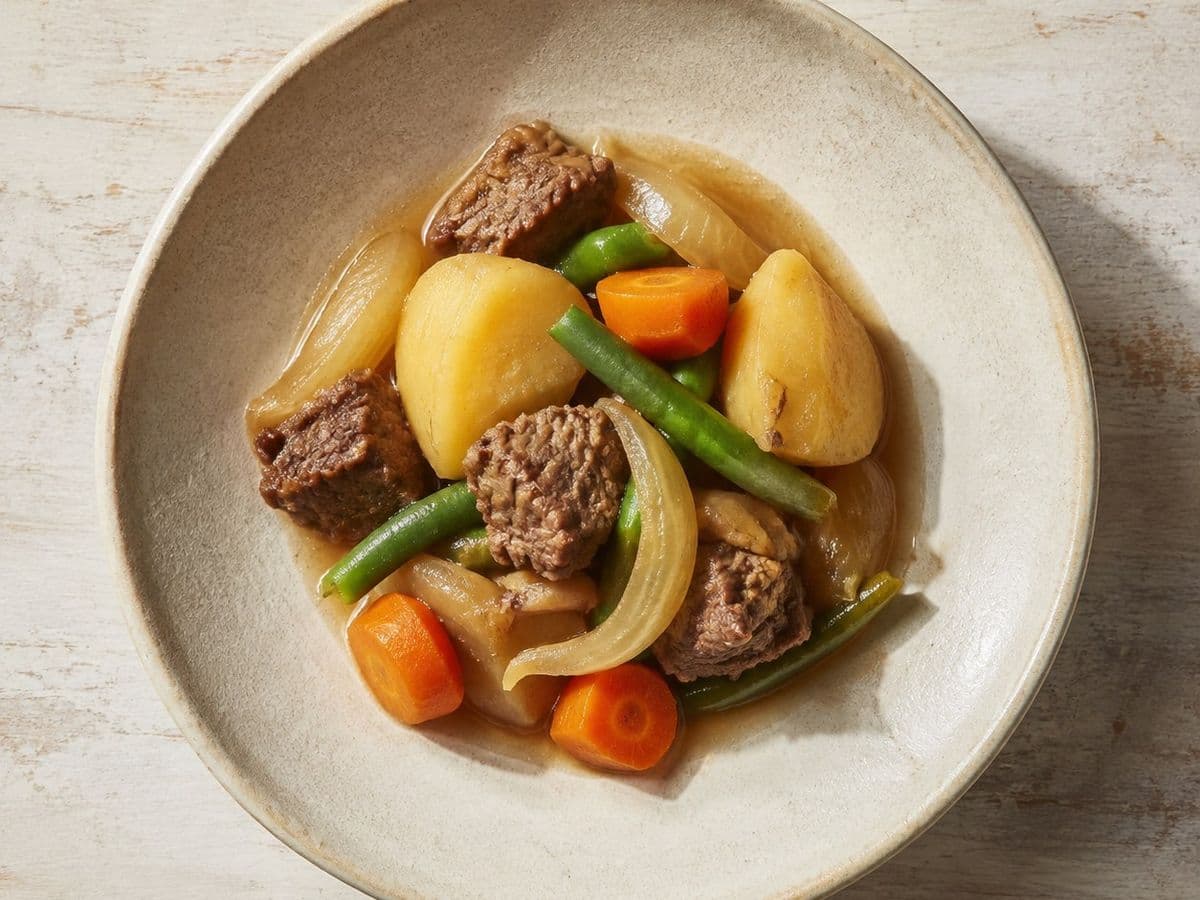
378 kcal a serving, against 435 for the traditional version. That is 57 kcal off, or 13%, with 28.4g of protein. Serves 4. .
What the traditional version is
Thinly sliced fatty beef is quickly simmered with potatoes, onions, carrots and shirataki noodles in a sauce of dashi, soy, mirin and sugar. The potatoes soak up all the stock until they're tender, and the beef turns silky. Usually served with white rice, it's the family staple for a reason.
What changed, and what each change costs
Swap fatty beef for lean beef shin, sliced thin
Beef shin's lean and holds up to simmering. It's not as buttery as rib, but you still get real beef flavour and a bit of bite.
What it costs you. You lose that near-dissolving texture and the lush mouthfeel from all the fat. This is stew, not velvet. If you want it melting, you'll need a longer simmer or a nostalgia filter.
Cut sugar in half and up the mirin a touch
Classic nikujaga is far sweeter than you remember. I've cut the sugar and nudged up the mirin, so it still tastes right but doesn't masquerade as dessert.
What it costs you. If your childhood memories are as sweet as the stew, you're going to notice. The broth's a bit less candied, but the beef and veg speak louder.
Double the carrots, add green beans, and cut back the potatoes
More colourful veg means more on the plate and more chew for fewer stodge points. Green beans keep their bite, which the potatoes absolutely do not.
What it costs you. You get less of that soft, collapsing potato that's the first thing everyone goes for. If you want a pure carb-fest, add rice.
Skip shirataki noodles
Shirataki bring bounce but almost no protein. I've ditched them for more veg and beef - your stomach will cope.
What it costs you. Texture fiends will miss the slither. If you're wedded to rubbery noodles, add them back. Otherwise, move on.
Lean beef needs a little longer and more seasoning
Fatty beef is forgiving. Lean beef can be stubborn, so let it go low and slow or slice even thinner.
What it costs you. If you rush it, you get dry bits and sulks. Give it time and it behaves itself.
What goes in it
The ingredients, without the quantities. The weights are what the figures below are computed from, and they are in the book.
- Lean beef shin
- Waxy potatoes
- Onions
- Carrots
- Green beans
- Dashi stock
- Light soy sauce
- Mirin
- Caster sugar
- Sake
How it starts
- Slice the beef across the grain as thinly as you can.
- Peel and chunk the potatoes and carrots, slice the onions, and trim the green beans.
- Heat a large pan or casserole over medium heat.
The rest of the method, and every weight, is in Authentic-ish Japanese.
The numbers
| Per serving | Traditional | Lightened |
|---|---|---|
| Calories | 435 | 378 |
| Protein | 27.6g | 28.4g |
| Fat | 12.1g | 8.8g |
| Saturated fat | 4.9g | 2.9g |
| Carbohydrate | 52.2g | 43.1g |
| Protein per 100 kcal | 6.4g | 7.5g |
Every figure is computed from the recipe's own weighed ingredient list against public food composition databases. The appendix in Authentic-ish Japanese prints the exact database row used for each ingredient, so any number here can be checked. How every number is computed sets out the method.
Allergens. fish, gluten, soybeans.
The method is in the book
This nikujaga won't win any prizes for luxury, but it still manages "comfort" in a bowl. The lean beef makes things a bit firmer, but you get a beefy base note and plenty of veg to keep things interesting. The lower sugar means you taste more than just syrup, and there's enough left in the broth for nostalgia. Would I serve this to a homesick obaasan? Maybe not. But if you want a lighter dinner that still counts as real food, this is about as close as you'll get without lying.
The quantities and the method for this dish are in Authentic-ish Japanese, along with 48 more. Buy the paperback
More from Authentic-ish Japanese
- Buta no Kakuni, 461 kcal a serving, 38% off
- Chikuzenni, 285 kcal a serving, 30% off
- Saba no Misoni, 646 kcal a serving, 11% off
- Oden, 356 kcal a serving, 16% off
- Sukiyaki, 494 kcal a serving, 24% off
- Shabu Shabu, 518 kcal a serving, 30% off
Every Japanese dish and its calories · Every dish in the series