Japanese · Authentic-ish Japanese
Saba no Misoni
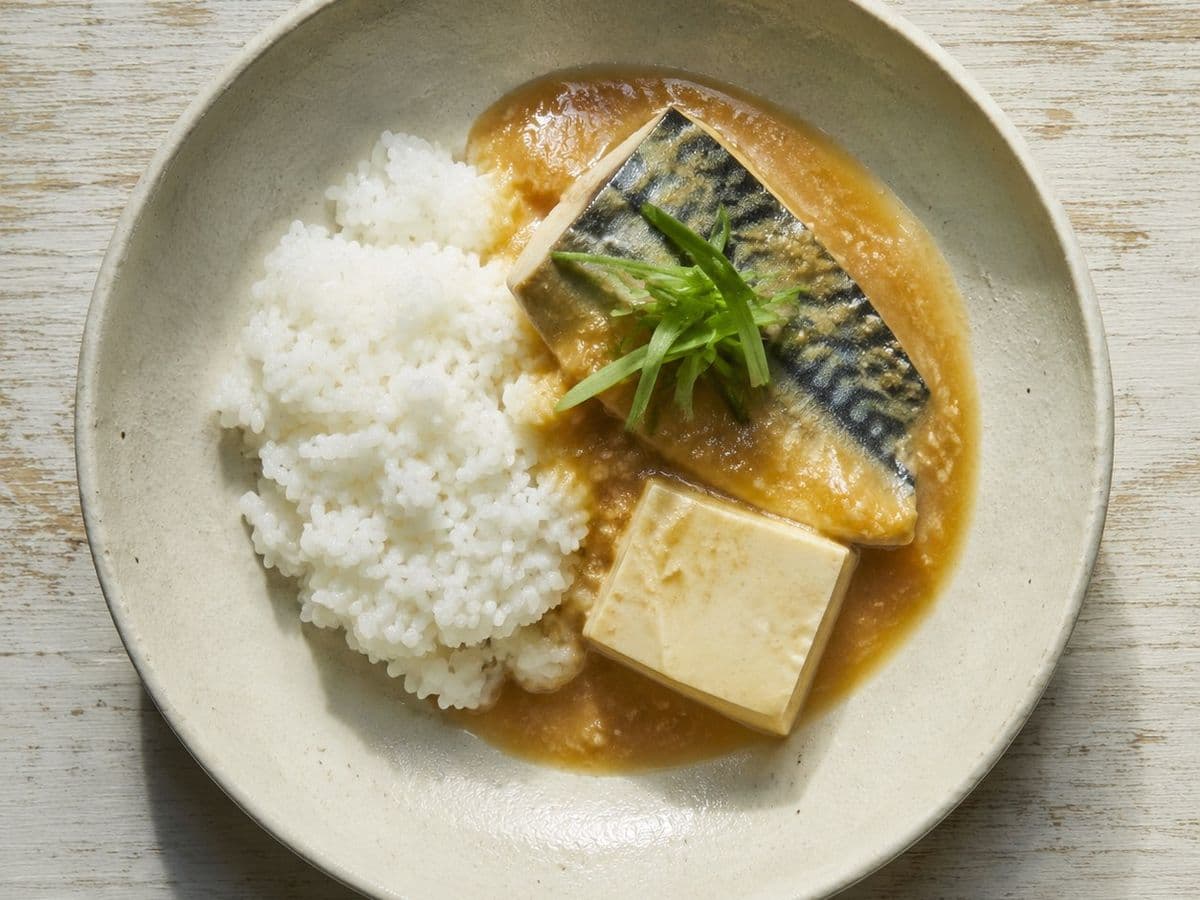
646 kcal a serving, against 723 for the traditional version. That is 77 kcal off, or 11%, with 37.6g of protein. Serves 4. .
What the traditional version is
Classic saba no misoni starts with thick fillets of mackerel, scored and briefly blanched to firm the skin. The fish is simmered in a sauce made from miso, sugar, sake, mirin, ginger and a splash of water. It bubbles down to a sweet, glossy glaze that clings to every flake of fish. Serve it over a little rice, with plenty of gingery sauce spooned on top.
What changed, and what each change costs
Sugar cut by three-quarters and mirin halved
Half the appeal here is the sweetness, but you can get plenty of flavour from miso and ginger without a syrup puddle. Whatever's left is enough to balance out all that fish and salt.
What it costs you. You lose most of the stickiness. The sauce ends up thinner and quite a bit sharper, and if you're a sweet tooth you'll miss the caramel notes.
Silken tofu added to the simmer at the end
Classic versions don't bother with tofu, but it soaks up the sauce and bumps up the protein without messing with the flavour. More substance, less sugar - a rare bargain.
What it costs you. The tofu's not fooling anyone: it's soft where the fish is rich, and the texture is a bit like eating pudding in the middle of dinner. Still, it's genuinely tasty once it drinks in the sauce.
Rice cut by a quarter
It's always tempting to shovel in more rice because of all that sauce, but if you're honest, you really don't need it. The fish does most of the heavy lifting.
What it costs you. If you want to eat mountains, just steam more. Otherwise you won't notice unless you're trained to count grains.
What goes in it
The ingredients, without the quantities. The weights are what the figures below are computed from, and they are in the book.
- Mackerel fillets
- White miso
- Caster sugar
- Sake
- Mirin
- Fresh ginger
- Water
- Silken tofu
- Cooked short-grain rice
How it starts
- Slice the mackerel fillets in half if they're huge, and score the skin lightly in a crosshatch.
- Boil a kettle.
- Peel and slice the ginger as thin as you can - no need to be neat, just don't leave it in great lumps.
The rest of the method, and every weight, is in Authentic-ish Japanese.
The numbers
| Per serving | Traditional | Lightened |
|---|---|---|
| Calories | 723 | 646 |
| Protein | 35.3g | 37.6g |
| Fat | 22.2g | 24.1g |
| Saturated fat | 5.2g | 5.4g |
| Carbohydrate | 85.9g | 61.2g |
| Protein per 100 kcal | 4.9g | 5.8g |
Every figure is computed from the recipe's own weighed ingredient list against public food composition databases. The appendix in Authentic-ish Japanese prints the exact database row used for each ingredient, so any number here can be checked. How every number is computed sets out the method.
Allergens. fish, soybeans.
The method is in the book
This version's not going to win over sugar fiends, but if you want to eat proper saba and not a dessert, it's solid. The tofu's a cheat but a friendly one. The sauce isn't as glossy, and you'll notice the missing caramel, especially if you grew up on the real thing. Still, the fish is just as rich, and your teeth don't tingle afterwards. If your mission is to eat more fish and less pudding, you're set. It isn't pudding for tea, it's fish you can eat on a weeknight.
The quantities and the method for this dish are in Authentic-ish Japanese, along with 48 more. Buy the paperback
More from Authentic-ish Japanese
- Nikujaga, 378 kcal a serving, 13% off
- Buta no Kakuni, 461 kcal a serving, 38% off
- Chikuzenni, 285 kcal a serving, 30% off
- Oden, 356 kcal a serving, 16% off
- Sukiyaki, 494 kcal a serving, 24% off
- Shabu Shabu, 518 kcal a serving, 30% off
Every Japanese dish and its calories · Every dish in the series