Japanese · Authentic-ish Japanese
Oden
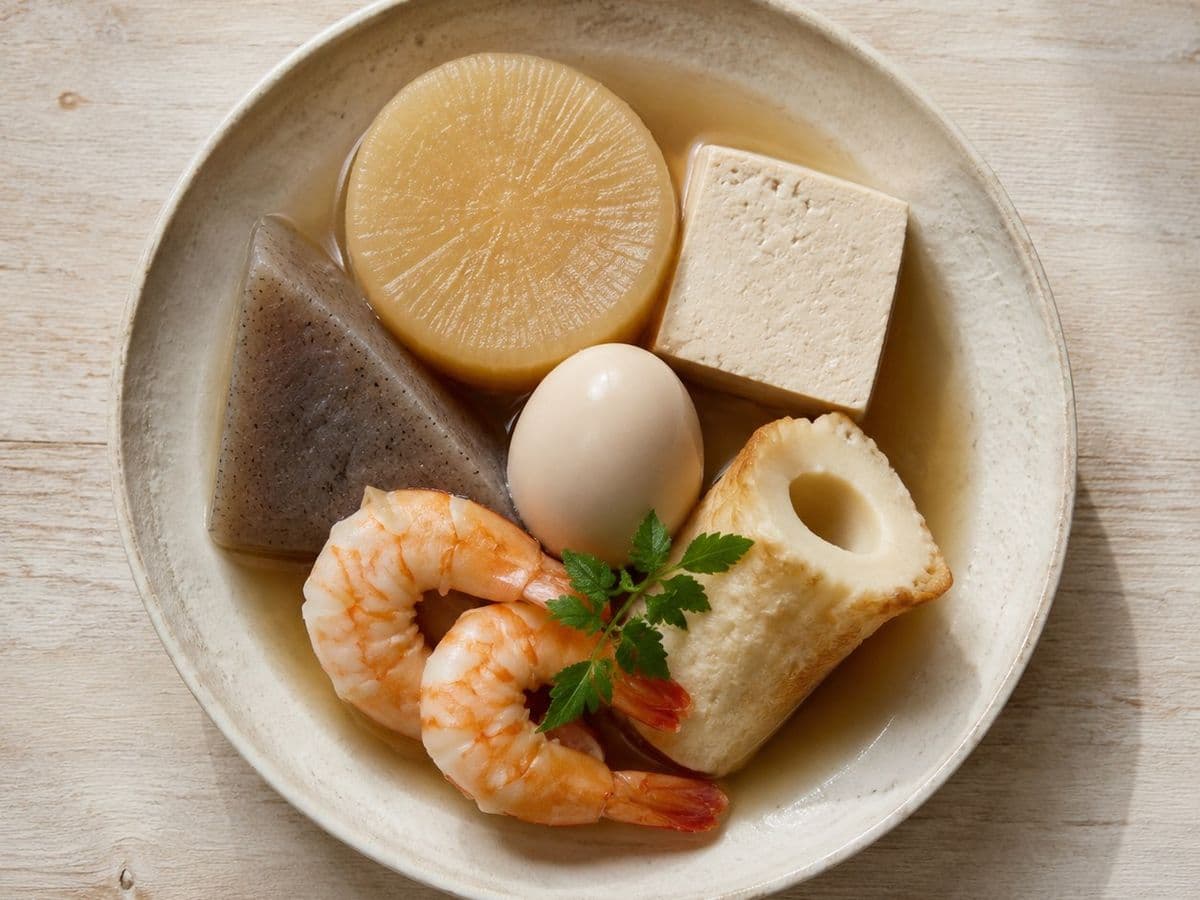
356 kcal a serving, against 422 for the traditional version. That is 66 kcal off, or 16%, with 42.3g of protein. Serves 6. .
What the traditional version is
Dashi is simmered with soy sauce, mirin and salt to make a light but savoury broth. Into this go all sorts: assorted processed fish cakes (satsuma-age, chikuwa, hanpen), daikon slices, boiled eggs, konnyaku, tofu, potato, and sometimes octopus or beef tendon. Everything simmers together for up to an hour, soaking up broth. Served with hot mustard.
What changed, and what each change costs
Half the fish cakes out, prawns and more tofu in
Most Japanese fish cakes are less fish, more starch and oil. Prawns and extra tofu bring actual protein, don't vanish in the broth and aren't just bouncy filler.
What it costs you. You do lose that familiar play-dough chew and the sense of fishing about in a lucky dip. Oden's mystery factor drops, but the bowl is more honest about what you're eating.
Keep chikuwa, lose satsuma-age and hanpen
Chikuwa is all right - it's got enough actual fish, and a chew worth keeping. Satsuma-age is mostly fried starch, and hanpen is a white sponge that tastes of air.
What it costs you. If you're chasing childhood nostalgia, these are the bits you'll miss. If not, you won't remember them were there.
Potatoes out, daikon and konnyaku up
Daikon and konnyaku are filling, give bulk with barely any energy, and don't compete with the broth. Potato's just ballast here.
What it costs you. Potatoes soak up broth like a sponge, but you won't be left wishing for them unless you're from Hokkaido.
Broth unchanged
Change the broth and it isn't oden, it's veg stew with ideas above its station.
What it costs you. Still plenty of salt, still moreish, and you'll notice if it's missing.
Eggs stay - boiled protein forever
Eggs are the only thing in konbini oden worth fighting for.
What it costs you. You win on this one. No loss at all.
What goes in it
The ingredients, without the quantities. The weights are what the figures below are computed from, and they are in the book.
- Dashi stock
- Light soy sauce
- Mirin
- Salt
- Daikon
- Konnyaku
- Firm tofu
- 6 medium eggs
- Chikuwa
- Raw prawns
- Japanese mustard
How it starts
- Bring the dashi, soy sauce, mirin and salt to a gentle simmer in a big pot.
- Add the daikon and konnyaku to the pot.
- Slide in the cubes of tofu gently so they don't break up, then add the chikuwa and boiled eggs.
The rest of the method, and every weight, is in Authentic-ish Japanese.
The numbers
| Per serving | Traditional | Lightened |
|---|---|---|
| Calories | 422 | 356 |
| Protein | 44.2g | 42.3g |
| Fat | 14.1g | 15.3g |
| Saturated fat | 3.3g | 3.4g |
| Carbohydrate | 30.7g | 14.3g |
| Protein per 100 kcal | 10.5g | 11.9g |
Every figure is computed from the recipe's own weighed ingredient list against public food composition databases. The appendix in Authentic-ish Japanese prints the exact database row used for each ingredient, so any number here can be checked. How every number is computed sets out the method.
Allergens. gluten, eggs, soybeans, fish, crustaceans, mustard.
The method is in the book
The new oden is straight-up honest about what you're eating: eggs, prawns, tofu and a big hit of broth. If you want to wallow in fish cake nostalgia, you'll miss the full bouncy set, but you won't wonder if the konbini's hiding the good bits in the back. You get actual protein and a lot less of that grey chew. Don't expect a lucky dip, but you'll finish warmer and not need a nap.
The quantities and the method for this dish are in Authentic-ish Japanese, along with 48 more. Buy the paperback
More from Authentic-ish Japanese
- Nikujaga, 378 kcal a serving, 13% off
- Buta no Kakuni, 461 kcal a serving, 38% off
- Chikuzenni, 285 kcal a serving, 30% off
- Saba no Misoni, 646 kcal a serving, 11% off
- Sukiyaki, 494 kcal a serving, 24% off
- Shabu Shabu, 518 kcal a serving, 30% off
Every Japanese dish and its calories · Every dish in the series