Japanese · Authentic-ish Japanese
Chikuzenni
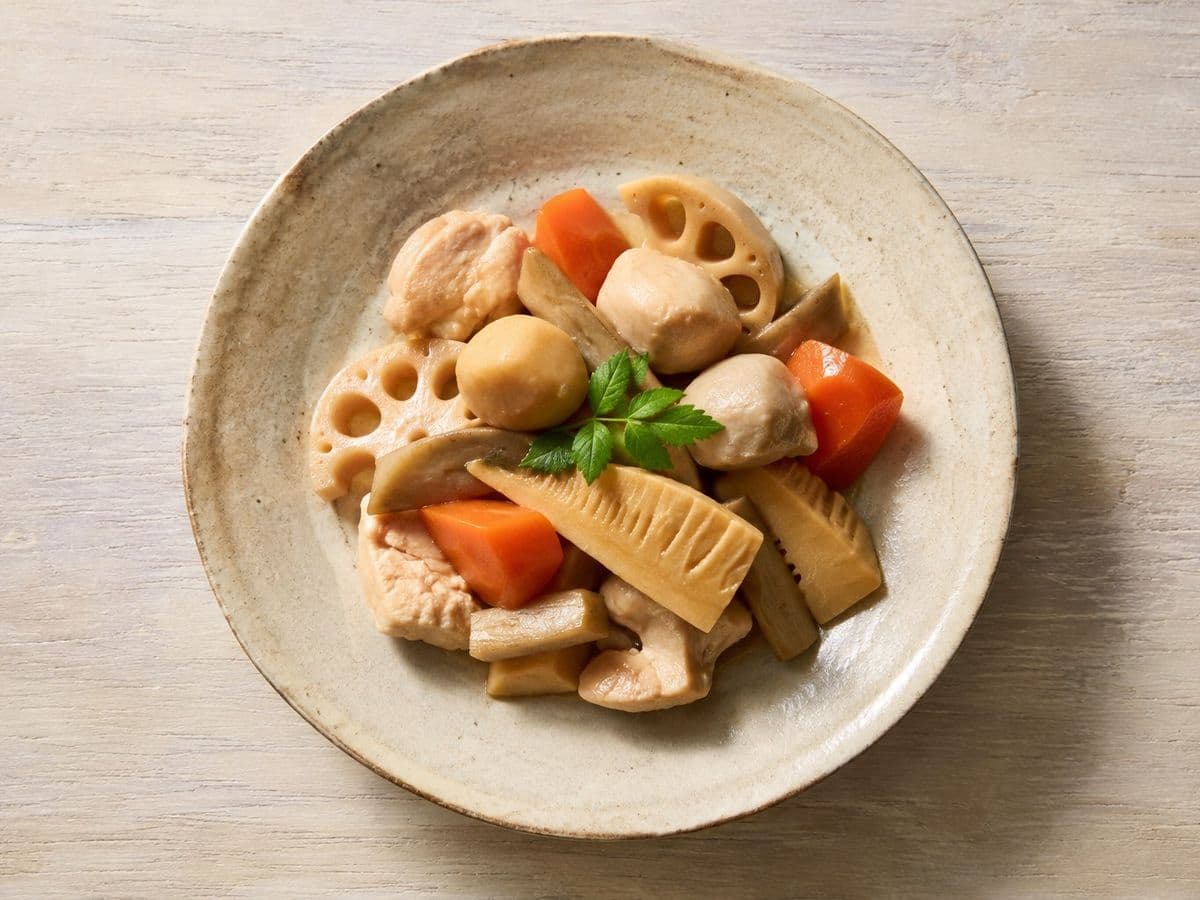
285 kcal a serving, against 405 for the traditional version. That is 120 kcal off, or 30%, with 24.9g of protein. Serves 6. .
What the traditional version is
Chicken thigh, lotus root, carrot, burdock, taro and bamboo shoot are cut into small, irregular chunks for even stewing. They're stir-fried in oil, then simmered in dashi with rehydrated shiitake, soy sauce, mirin and sugar. When the liquid reduces, you're left with a glossy, savoury bowlful where everything tastes of everything else.
What changed, and what each change costs
Chicken thigh swapped for chicken breast
Chicken breast's lean, packing more protein for less fat. It's not as juicy as thigh and it has a shorter window between 'perfectly cooked' and 'cat food', but you can't argue with the numbers.
What it costs you. You lose the forgiving tenderness of thigh, and a little of the savoury richness. Breast does the job, but don't expect the 'melt' you get in festival versions.
Oil cut by two-thirds
The original starts by sautéing everything in a proper slick of oil. You only need enough to stop things sticking, so I use 10g and call it a day.
What it costs you. Less gloss and richness. The veg won't get that subtle, fried edge, and the chicken doesn't brown much. You won't cry, but you will notice if you love slicked roots.
Sugar halved
Chikuzenni's sweet, but half the sugar gives you all the shine you need. It's still balanced with soy and mirin, just not pudding-sweet.
What it costs you. The glaze is a little less sticky, and the broth is more savoury. If your memories of New Year involve a near-jammy stew, you'll clock the change.
No change to vegetables, dashi, soy or mirin
If I cut the vegetables, it's not chikuzenni, it's a bowl of regret. Dashi, soy and mirin are doing most of the work and don't need mucking about.
What it costs you. No cost at all. If you want to upend tradition, go cook something else.
What goes in it
The ingredients, without the quantities. The weights are what the figures below are computed from, and they are in the book.
- Chicken breast
- Lotus root
- Carrot
- Burdock root
- Taro
- Bamboo shoot
- Dried shiitake mushrooms
- Vegetable oil
- Dashi stock
- Light soy sauce
- Mirin
- Sugar
How it starts
- Soak the shiitake in warm water for 30 minutes, then squeeze them dry and slice thickly.
- Slice the chicken into chunky, uneven pieces - you want each bite to have a bit of chew.
- Heat the oil in a large saucepan over medium-high heat.
The rest of the method, and every weight, is in Authentic-ish Japanese.
The numbers
| Per serving | Traditional | Lightened |
|---|---|---|
| Calories | 405 | 285 |
| Protein | 20.1g | 24.9g |
| Fat | 19.8g | 5.3g |
| Saturated fat | 4.6g | 1g |
| Carbohydrate | 37g | 34.3g |
| Protein per 100 kcal | 5g | 8.7g |
Every figure is computed from the recipe's own weighed ingredient list against public food composition databases. The appendix in Authentic-ish Japanese prints the exact database row used for each ingredient, so any number here can be checked. How every number is computed sets out the method.
Allergens. fish, gluten, soybeans.
The method is in the book
This isn't your grandmother's chikuzenni, but it's not a betrayal either. Chicken breast keeps it lighter, but you pay for it with a pinch of dryness. Most people won't spot the sugar cut unless they grew up on the stuff. It's still a proper, comforting stew full of veg that tastes like it's supposed to. Use a heavy hand with the mirin if you must, but I reckon this version does the job without feeling half-built. If you want the oil-slicked, melt-in-the-mouth classic, you know what to do: add back the fat and eat with wild abandon.
The quantities and the method for this dish are in Authentic-ish Japanese, along with 48 more. Buy the paperback
More from Authentic-ish Japanese
- Nikujaga, 378 kcal a serving, 13% off
- Buta no Kakuni, 461 kcal a serving, 38% off
- Saba no Misoni, 646 kcal a serving, 11% off
- Oden, 356 kcal a serving, 16% off
- Sukiyaki, 494 kcal a serving, 24% off
- Shabu Shabu, 518 kcal a serving, 30% off
Every Japanese dish and its calories · Every dish in the series