Korean · Authentic-ish Korean
Bibimbap
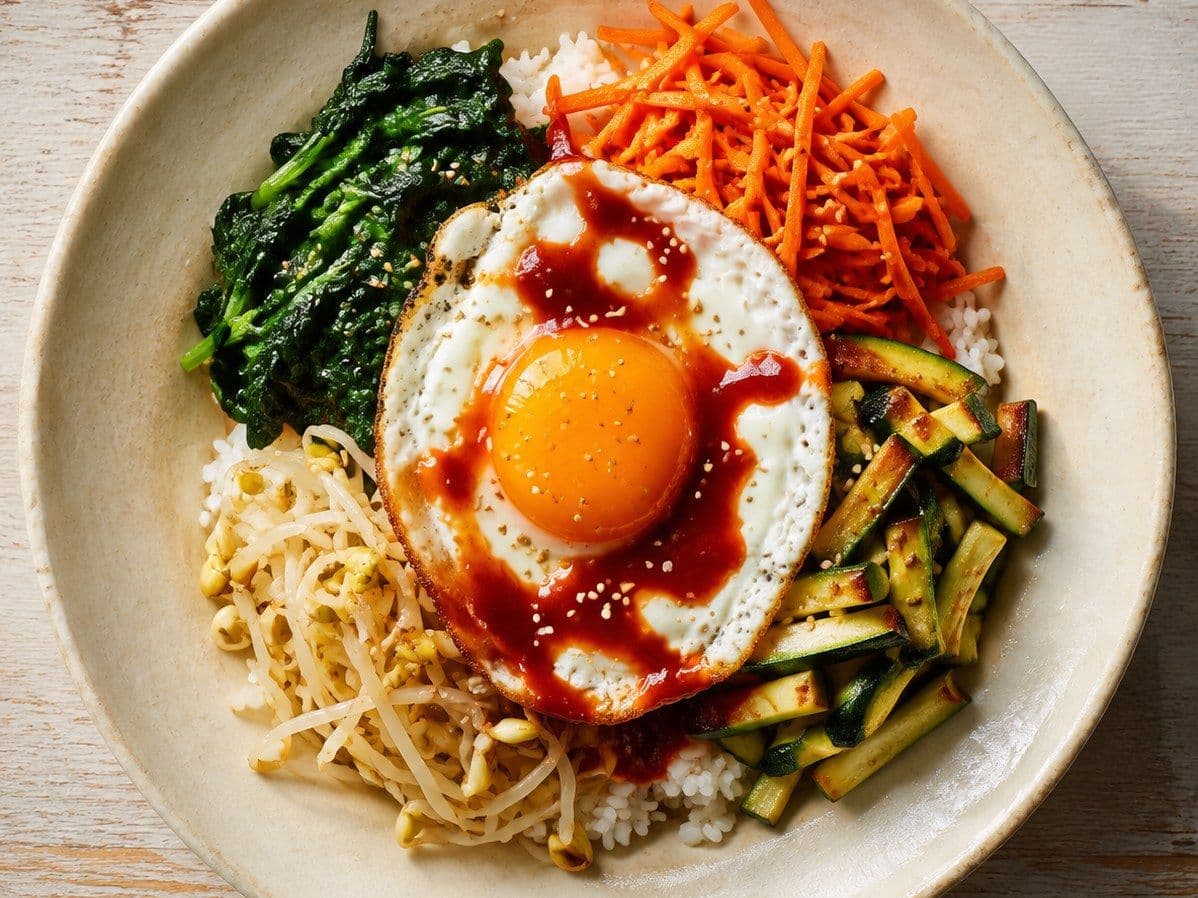
492 kcal a serving, against 622 for the traditional version. That is 130 kcal off, or 21%, with 29.8g of protein. Serves 4. 45 minutes active.
What the traditional version is
Short-grain rice topped with shredded beef (sirloin or mince), spinach, carrots, courgette, shiitake mushrooms, and soybean sprouts.
What changed, and what each change costs
Drop the sesame oil from 30g to 8g, spread between all toppings
Sesame oil is the first thing that makes bibimbap taste like bibimbap, but it's also the heaviest hitter for fat.
What it costs you. You don't get that glossy, nutty finish coating each strand of veg. The bowl smells right, but it doesn't linger in the same way. If you love it, add another drop yourself and move on.
Beef swapped from 200g sirloin to 200g beef-sirloin, but trimmed of all visible fat
Sirloin is already fairly lean, but trimming off the fat and slicing it thin means you get plenty of bite for less.
What it costs you. You lose some juiciness and that little bit of beefy richness. It still works, but don't expect the feeling you get from a bit of well-marbled steak.
Fried egg swapped for poached egg
Poaching means less oil, same golden yolk.
What it costs you. The edges aren't crispy but you still get a runny yolk to mix in. If you want both, fry it in a dry nonstick pan or just go for it with a splash of oil.
Sugar halved in both the beef and sauce
The marinade and sauce both take a bit of sugar.
What it costs you. You lose a bit of that sticky gloss on the meat and the sauce bites back a touch more. If you want your sauce sweeter, just add a pinch at the table.
Rice down from 320g to 240g (raw weight), and all white rice: no brown swap
It's traditional to pile on the rice.
What it costs you. Smaller blanket of rice, more veg and protein in every spoonful. You don't get the proper sticky rice crust if you go stone-bowl, but with less rice it's a fair trade.
What goes in it
The ingredients, without the quantities. The weights are what the figures below are computed from, and they are in the book.
- Short-grain rice
- Beef sirloin
- Light soy sauce
- Caster sugar
- Garlic
- Toasted sesame oil
- Spinach
- Carrot
- Courgette
- Dried shiitake
- Soybean sprouts
- Salt
- 4 medium eggs
- Gochujang
- Vinegar
How it starts
- Cook the short-grain rice as you usually do - rinse well, add water, and steam until sticky and glossy.
- Rehydrate the shiitake mushrooms in hot water for at least 20 minutes, then slice.
- Trim spinach roots and blanch the leaves for 20 seconds in boiling water, then plunge into cold water.
The rest of the method, and every weight, is in Authentic-ish Korean.
The numbers
| Per serving | Traditional | Lightened |
|---|---|---|
| Calories | 622 | 492 |
| Protein | 31.2g | 29.8g |
| Fat | 17.4g | 11.8g |
| Saturated fat | 3.8g | 3g |
| Carbohydrate | 86.8g | 68.7g |
| Protein per 100 kcal | 5g | 6g |
Every figure is computed from the recipe's own weighed ingredient list against public food composition databases. The appendix in Authentic-ish Korean prints the exact database row used for each ingredient, so any number here can be checked. How every number is computed sets out the method.
Allergens. eggs, gluten, sesame, soybeans, sulphites.
The method is in the book
Bibimbap is the second-most Instagrammed dish in Korean food, right after kimchi. With the oil and rice trimmed, it's not quite Seoul's finest, but you're not eating this for a food memory - you're eating it for lunch that actually fills you up. The veg and beef hold their own, and the sauce still whacks you round the head. You'll miss the extra sesame gloss, but not enough to put the oil back. If you want to eat bibimbap all week, this is your ticket.
The quantities and the method for this dish are in Authentic-ish Korean, along with 51 more. Buy the paperback
More from Authentic-ish Korean
- Kimbap, 435 kcal a serving, 33% off
- Kimchi Bokkeumbap, 610 kcal a serving, 33% off
- Bulgogi Deopbap, 313 kcal a serving, 31% off
- Dak Juk, 261 kcal a serving, 39% off
- Ssambap, 489 kcal a serving, 42% off
- Yubu Chobap, 425 kcal a serving, 20% off
Every Korean dish and its calories · Every dish in the series