Korean · Authentic-ish Korean
Bulgogi Deopbap
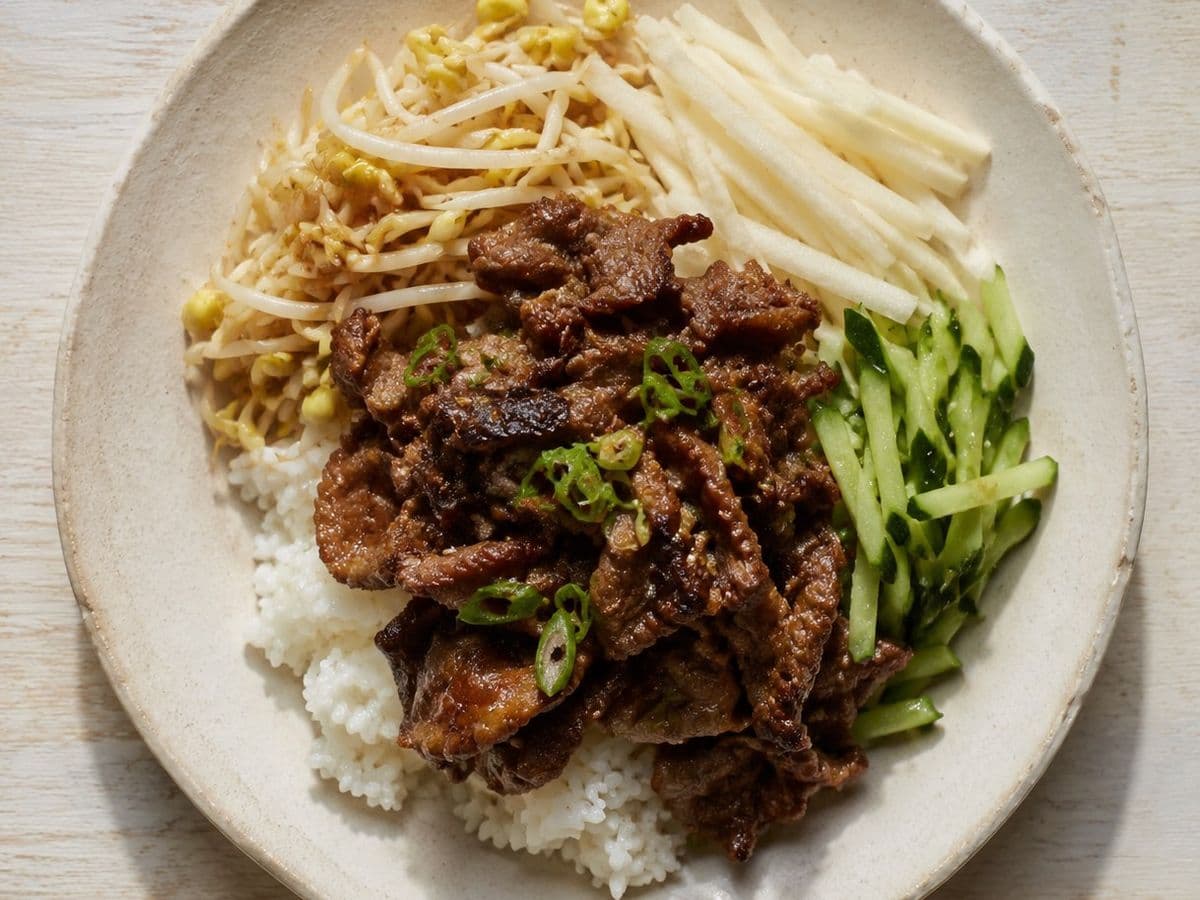
313 kcal a serving, against 455 for the traditional version. That is 142 kcal off, or 31%, with 26.4g of protein. Serves 4. 30 minutes.
What the traditional version is
The original is simple: a bowl of steamed short-grain white rice, topped with a mound of grilled bulgogi beef (usually sirloin or ribeye, marinated in soy, sugar, garlic, sesame, and pear), and finished with extra sauce and a scatter of sliced spring onions or sesame seeds. No salad, no fuss. Sometimes a runny fried egg or a spoon of kimchi lands on top, but the main event is the beef over rice, glossy and rich.
What changed, and what each change costs
Rice down from 260g uncooked to 120g
If you want the rice to soak up sauce but not take over, you've got to rein it in. The original piles on plenty of rice; I halve it, so each bowl still gets a decent hit but you don't end up eating one part beef to four parts starch.
What it costs you. It's less belly-filling and you'll notice if you grew up on carb mountains. But the beef and sauce come through more, and your plate tilts towards actual flavour instead of just padding.
Spring onions and fresh veg up from 40g to 110g
A pile of sliced spring onion is classic, but nobody's ever said no to a few quick veg. I throw in cucumber and a handful of beansprouts for crunch and to make the bowl look less beige.
What it costs you. You gain crunch and a fresher finish, but it's no longer the full comfort-bowl. Strict traditionalists might call it bulgogi rice salad and ask where the egg went.
Sauce split - use less in the marinade, keep more for spooning over at the end
Most bulgogi recipes use all the marinade on the beef, so the rice just soaks up what drips off. I hold back a bit of the sauce and reduce it down, then spoon it over so every bite gets hit with the salty-sweet edge.
What it costs you. It loses some of the deep, built-in sweetness, but you get cleaner beef and a sharper, punchier sauce at the end. If you want extra gloss, don't be shy with an extra teaspoon of sesame oil.
What goes in it
The ingredients, without the quantities. The weights are what the figures below are computed from, and they are in the book.
- Korean short-grain rice
- Beef sirloin
- Light soy sauce
- Caster sugar
- Toasted sesame oil
- Garlic
- Spring onions
- Cucumber
- Beansprouts
- Asian pear
- Black pepper
- Sesame seeds
How it starts
- Rinse the rice well in cold water until it runs mostly clear.
- While the rice cooks, prep the veg: slice the spring onions thin, and cut the cucumber into matchsticks.
- Mix the beef with half the soy sauce, sugar, pear, garlic, half the sesame oil, pepper and a pinch of salt.
The rest of the method, and every weight, is in Authentic-ish Korean.
The numbers
| Per serving | Traditional | Lightened |
|---|---|---|
| Calories | 455 | 313 |
| Protein | 28.1g | 26.4g |
| Fat | 8.8g | 7.1g |
| Saturated fat | 2.1g | 1.8g |
| Carbohydrate | 63.6g | 35g |
| Protein per 100 kcal | 6.2g | 8.4g |
Every figure is computed from the recipe's own weighed ingredient list against public food composition databases. The appendix in Authentic-ish Korean prints the exact database row used for each ingredient, so any number here can be checked. How every number is computed sets out the method.
Allergens. gluten, sesame, soybeans.
The method is in the book
You'll notice the missing rice straight away - your jaw gets more work, and the bowl feels a bit less filling than the bulgogi rice you get at your local Korean spot. But it's a better deal for anyone who wants plenty of beef and not a heap of starch underneath. Some purists might miss the egg or the deluxe sauce glaze, but the swap pays off if you want more flavour from your beef and less of a mid-afternoon nap. If you want the proper comfort kick, double the rice for one meal and don't apologise.
The quantities and the method for this dish are in Authentic-ish Korean, along with 51 more. Buy the paperback
More from Authentic-ish Korean
- Bibimbap, 492 kcal a serving, 21% off
- Kimbap, 435 kcal a serving, 33% off
- Kimchi Bokkeumbap, 610 kcal a serving, 33% off
- Dak Juk, 261 kcal a serving, 39% off
- Ssambap, 489 kcal a serving, 42% off
- Yubu Chobap, 425 kcal a serving, 20% off
Every Korean dish and its calories · Every dish in the series