Korean · Authentic-ish Korean
Kimchi Bokkeumbap
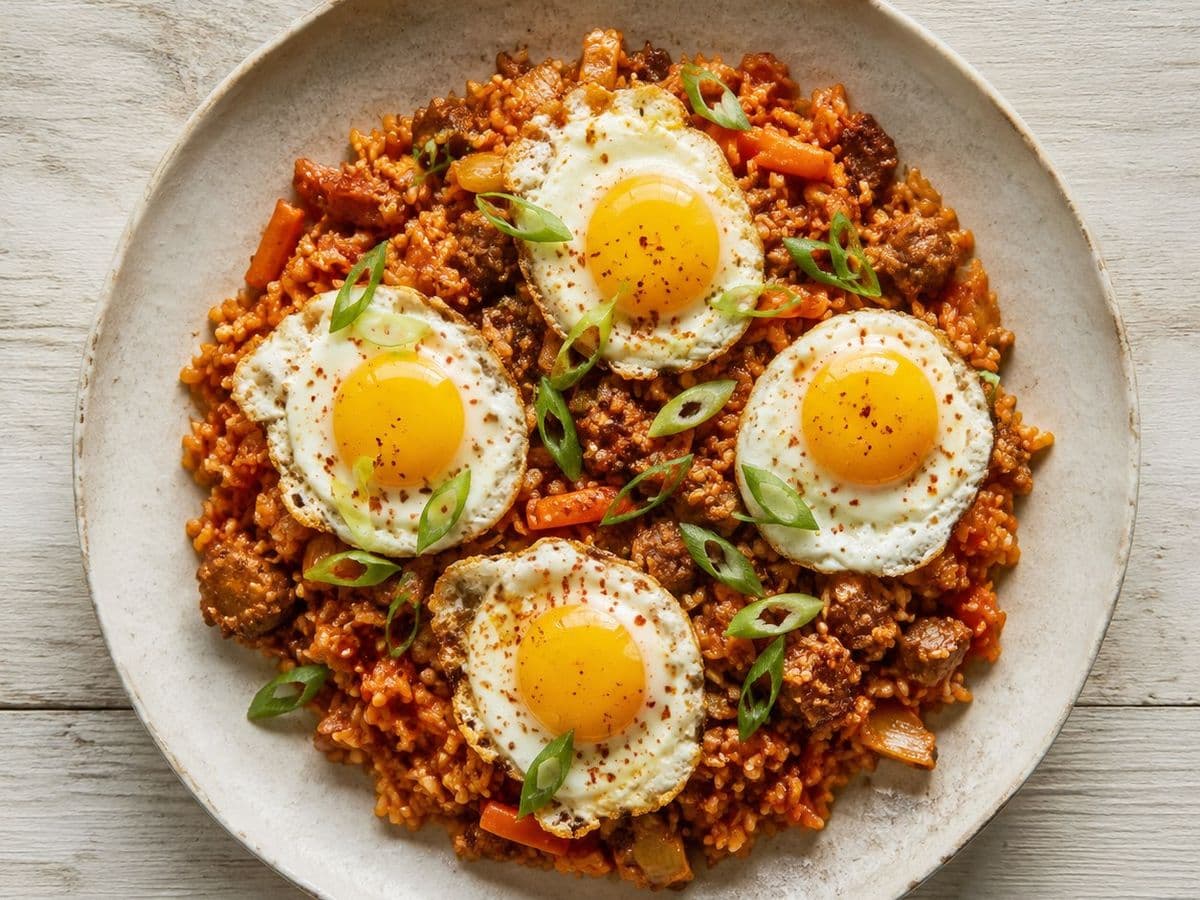
610 kcal a serving, against 917 for the traditional version. That is 307 kcal off, or 33%, with 25.6g of protein. Serves 4. 20 minutes prep, 10 minutes cooking.
What the traditional version is
Kimchi fried rice, usually day-old short-grain rice fried hard in a hot pan with plenty of diced pork belly, chopped kimchi (with some kimchi juice), gochujang, and a hefty splash of oil. Often finished with toasted sesame oil, garnished with a scattering of spring onions and sesame seeds, and crowned with a crispy fried egg.
What changed, and what each change costs
Pork belly swapped for lean pork shoulder, 200g
Pork belly is delicious, no question, but most of it is fat that's doing no work apart from keeping you full until lunchtime. Lean shoulder still tastes porky and holds together in the pan.
What it costs you. The pork is chewier and you won't get little golden shards of rendered fat through the rice. If you're desperate for the full effect, crisp up a tiny piece of pork belly for garnish and keep the rest lean.
Oil cut down from 40g to 10g
Between pork belly and oil, the original rice can get greasy. If you cook fast and keep things moving, a tablespoon's enough to stop the rice sticking. It also keeps the vegetables from turning to mush.
What it costs you. You'll miss the crunch you'd get from frying in a puddle, and the sesame oil finish is more subtle. If you want some of that luxury, add the sesame oil right at the end off the heat.
Eggs poached instead of fried
A fried egg is classic, but the oil adds up. Poaching the eggs gives you a soft yolk to mix through the rice without another drop of fat.
What it costs you. You're losing the crispy fringe and that glorious golden halo. If you're in a mood for rebellion, fry the eggs in a non-stick pan with just a slick of oil and call it a compromise.
More vegetables added - extra carrot and onion
Bulking up with veg means you can dial back the rice and still get a full plate. More bite, a bit sweeter, and it fills you up.
What it costs you. The rice is less dominant. Not everyone wants more carrot in their fried rice, but I think it tastes brighter for it.
Rice cut from 600g to 400g cooked
Short-grain rice is half the fun but it's where most of the calories hide. Cut it, boost the pork and veg, and you'll still end up with a rice bowl worth eating.
What it costs you. You'll never convince a purist this is proper fried rice, but you'll finish the bowl not wishing you'd worn looser trousers.
What goes in it
The ingredients, without the quantities. The weights are what the figures below are computed from, and they are in the book.
- Short-grain rice
- Pork shoulder
- Baechu kimchi
- Onion
- Carrot
- Gochujang
- Light soy sauce
- Vegetable oil
- Toasted sesame oil
- Spring onions
- Sesame seeds
- 4 eggs
How it starts
- Bring a saucepan of water to a gentle simmer for the eggs.
- Meanwhile, dice the pork shoulder into small cubes.
- Heat the vegetable oil in a large non-stick frying pan over high heat.
The rest of the method, and every weight, is in Authentic-ish Korean.
The numbers
| Per serving | Traditional | Lightened |
|---|---|---|
| Calories | 917 | 610 |
| Protein | 28.5g | 25.6g |
| Fat | 29.6g | 14.1g |
| Saturated fat | 7.3g | 3.7g |
| Carbohydrate | 130.8g | 92.6g |
| Protein per 100 kcal | 3.1g | 4.2g |
Every figure is computed from the recipe's own weighed ingredient list against public food composition databases. The appendix in Authentic-ish Korean prints the exact database row used for each ingredient, so any number here can be checked. How every number is computed sets out the method.
Allergens. eggs, sesame, soybeans, gluten.
The method is in the book
Fried rice is always about making the best of what you've got, and this version tries to keep some of that energy while letting you eat it more often. Pork belly is the first thing you'll miss, because nothing else bastes the rice with quite the same love, but swapping it for shoulder isn't a tragedy - it's just a bit less decadent. More veg and less oil mean you can eat a bigger bowl, and poached eggs do a fine job of giving you a rich yolk without extra faff. If you've got a hangover, please look away and make the proper version. Otherwise, this one's got your back.
The quantities and the method for this dish are in Authentic-ish Korean, along with 51 more. Buy the paperback
More from Authentic-ish Korean
- Bibimbap, 492 kcal a serving, 21% off
- Kimbap, 435 kcal a serving, 33% off
- Bulgogi Deopbap, 313 kcal a serving, 31% off
- Dak Juk, 261 kcal a serving, 39% off
- Ssambap, 489 kcal a serving, 42% off
- Yubu Chobap, 425 kcal a serving, 20% off
Every Korean dish and its calories · Every dish in the series