Korean · Authentic-ish Korean
Ssambap
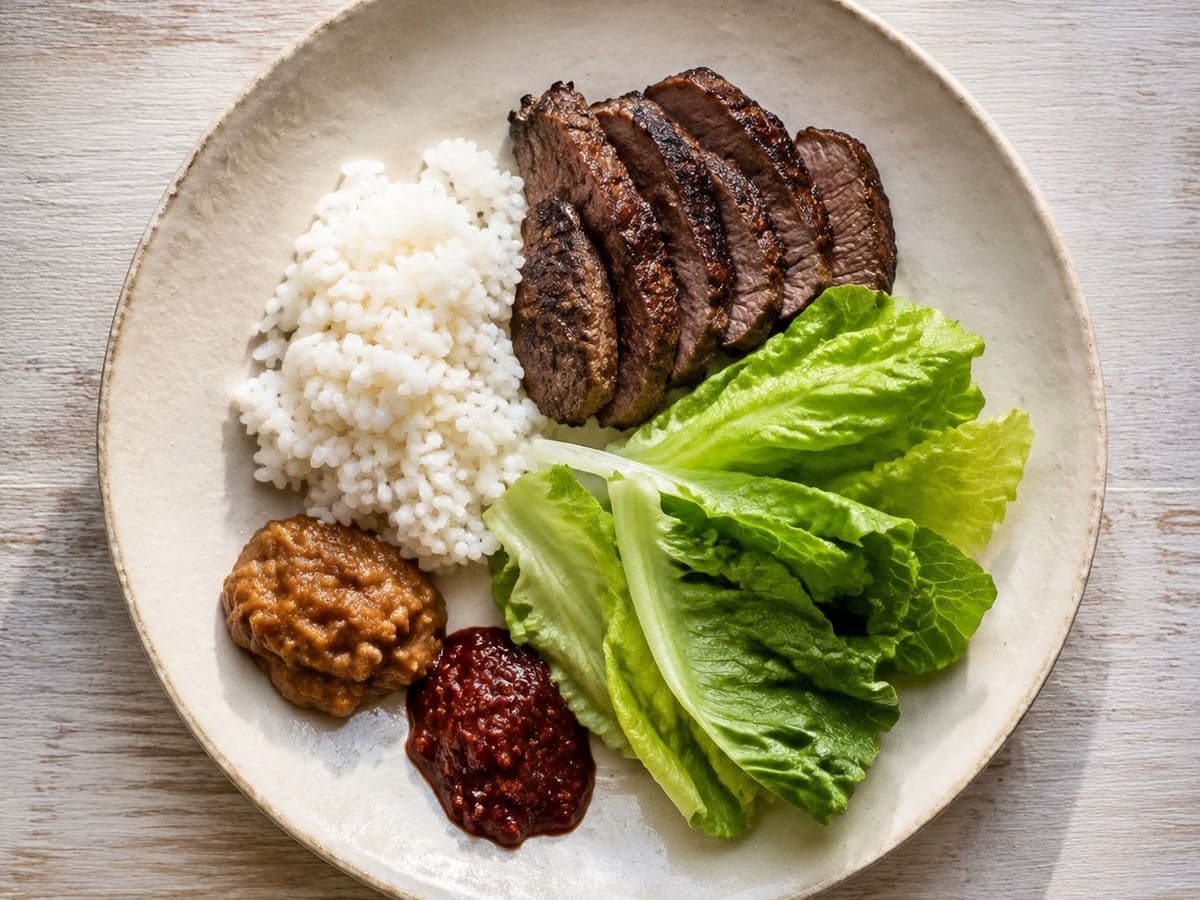
489 kcal a serving, against 846 for the traditional version. That is 357 kcal off, or 42%, with 30.7g of protein. Serves 4. 45 minutes.
What the traditional version is
Ssambap means "wrapped rice" and that's exactly what it is. Bowls of warm short-grain rice, thick slices of grilled pork belly or beef cooked over charcoal, a bowl of ssamjang (doenjang, gochujang, sesame oil, sugar, garlic), and a stack of fresh lettuce and perilla leaves. Each person makes their bundle and eats it in two bites, hoping not to spill sauce down their shirt.
What changed, and what each change costs
Pork belly out, lean beef sirloin in
Pork belly is delicious and the fat does plenty of favours for both flavour and texture, but it's carrying a lot of weight with it. Sirloin is the second best choice: still tender, still takes on a good char, and it's much leaner.
What it costs you. You lose some of the sticky, juicy kick that the fat brings. If you slice the beef thin and don't overcook it, you still get a quick, meaty bite. If you can't bear to lose the pork, use lean pork loin instead and accept the trade.
Rice dropped from 480g down to 300g cooked
Rice is half the joy but it's also most of the starch. You still need some to give the ssambap structure and soak up the sauce, but you don't need a mound per person.
What it costs you. It's less filling and you'll notice the wraps feel a bit lighter. If you want to fill up, focus on the meat and the veg instead of reaching for a second bowl of rice.
Ssamjang cuts sesame oil from 32g to 10g, and sugar from 24g to 8g
Both are what make the sauce so addictive, but they tip the whole bundle towards heavy. The core of ssamjang is still doenjang and gochujang - that's where most of the flavour comes from - but I still need a smidge of oil and sugar, just not the bucketful.
What it costs you. The sauce will be less glossy and a bit less rich. It isn't the full sticky, clingy goodness but it's still got plenty of punch. If that's a deal-breaker for you, don't mess with the sauce and just eat a few less wraps.
What goes in it
The ingredients, without the quantities. The weights are what the figures below are computed from, and they are in the book.
- Short-grain rice
- Lean beef sirloin
- Cos or gem lettuce
- Garlic
- Toasted sesame oil
- Caster sugar
- Doenjang
- Gochujang
How it starts
- Cook the rice as you like, ideally so it's just-sticky, not full sushi glue.
- Slice the beef as thin as you can without losing a finger.
- For the ssamjang, mix the doenjang, gochujang, sesame oil and sugar in a small bowl.
The rest of the method, and every weight, is in Authentic-ish Korean.
The numbers
| Per serving | Traditional | Lightened |
|---|---|---|
| Calories | 846 | 489 |
| Protein | 30.5g | 30.7g |
| Fat | 29.6g | 7.1g |
| Saturated fat | 8.9g | 2.1g |
| Carbohydrate | 111.9g | 72.1g |
| Protein per 100 kcal | 3.6g | 6.3g |
Every figure is computed from the recipe's own weighed ingredient list against public food composition databases. The appendix in Authentic-ish Korean prints the exact database row used for each ingredient, so any number here can be checked. How every number is computed sets out the method.
Allergens. gluten, sesame, soybeans.
The method is in the book
Ssambap isn't a dish you can eat politely but it's one of the most fun to share. The beef swap keeps it meaty, and the trimmed-down sauce is still satisfying, though I'd challenge anyone to say it measures up to good pork belly for pleasure. If your mates are the type to pout over missing fat, don't invite them for this one - or let them bring their own pork. For the rest of us, it's a tidy way to eat a pile of greens and call it dinner.
The quantities and the method for this dish are in Authentic-ish Korean, along with 51 more. Buy the paperback
More from Authentic-ish Korean
- Bibimbap, 492 kcal a serving, 21% off
- Kimbap, 435 kcal a serving, 33% off
- Kimchi Bokkeumbap, 610 kcal a serving, 33% off
- Bulgogi Deopbap, 313 kcal a serving, 31% off
- Dak Juk, 261 kcal a serving, 39% off
- Yubu Chobap, 425 kcal a serving, 20% off
Every Korean dish and its calories · Every dish in the series