Korean · Authentic-ish Korean
Kimbap
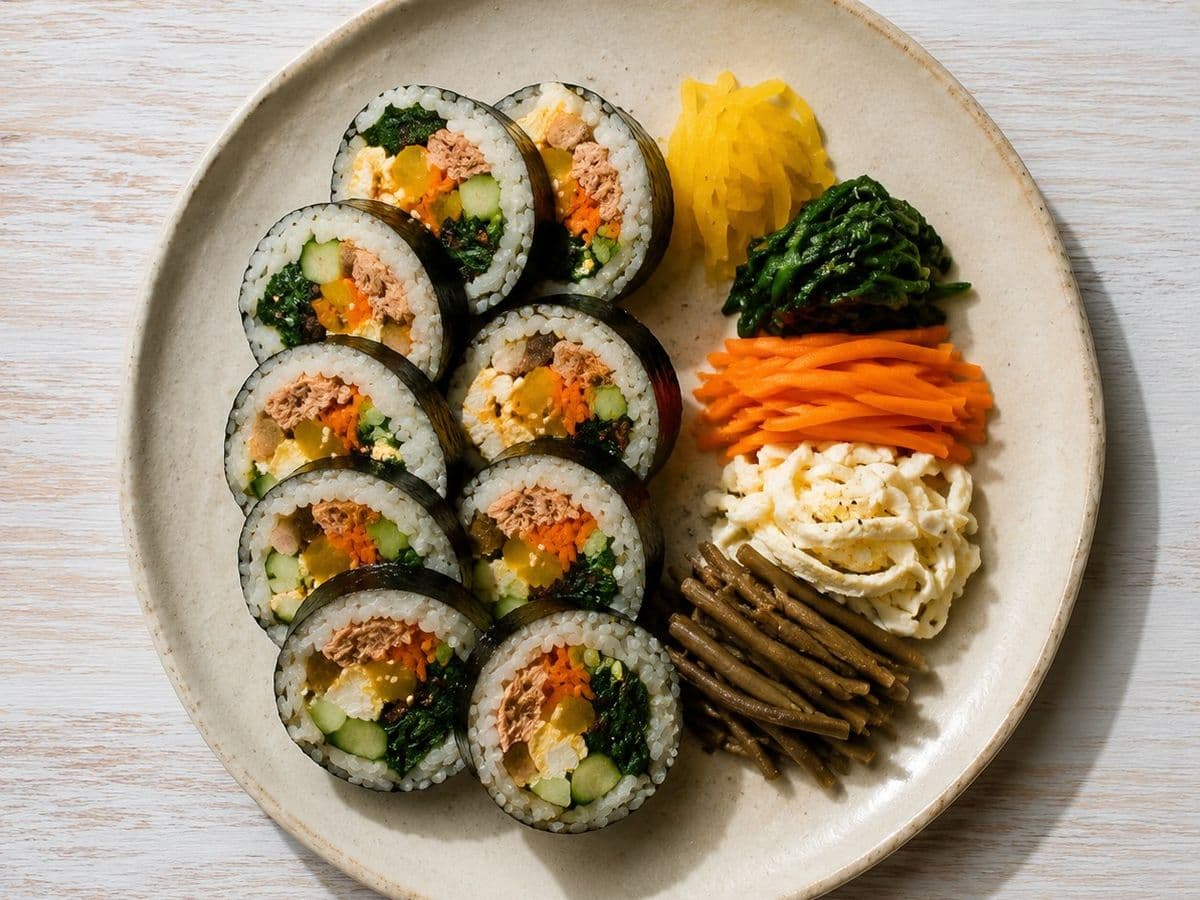
435 kcal a serving, against 654 for the traditional version. That is 219 kcal off, or 33%, with 18.2g of protein. Serves 4. 50 minutes active, plus cooling.
What the traditional version is
Kimbap is made by spreading seasoned short-grain rice over sheets of dried laver, topping with strips of ham, fried egg, pickled radish, carrot, spinach and sometimes cucumber, then rolling it tight and slicing.
What changed, and what each change costs
Lean beef replaces ham, and egg white stands in for some of the whole egg
The usual ham is well-salted and gives a big whack of fat for not much protein. Swapping in lean beef, seared quick, gives more bite per bite, keeps you fuller, and doesn't drown out the veg.
What it costs you. You do lose that instant salty hit from the ham, and the beef's a touch less forgiving if you overcook it. Use a pinch more salt on the beef and you'll get most of the savour back. The egg layer is a bit paler but still does the job.
Less rice, more veg, and much less sesame oil on the rice
Let's be honest: most kimbap is about 75% rice by weight, with veg and protein as decoration. It tastes lush but if you want lunch that doesn't send you to sleep, you need the veg doing some heavy lifting.
What it costs you. Rice is the first casualty. The roll feels drier, and the veg might try to wander out when you slice it. Brush the outside with a hint of oil to keep the sheets supple. If you absolutely need that restaurant shine, double the oil and call it a weekend treat.
Cucumber is swapped for blanched broccoli stems
Cucumber is classic, but it's mostly water and doesn't bring much to the party. Broccoli stems hold a crunch even after a day in the fridge and add a bit of actual substance.
What it costs you. You'll get some odd looks from purists, but the crunch is hardly a crime. Broccoli doesn't leak water the way cucumber does, so the roll stays neat for longer.
What goes in it
The ingredients, without the quantities. The weights are what the figures below are computed from, and they are in the book.
- Short-grain rice
- Vegetable oil
- Toasted sesame oil
- Beef sirloin
- Egg
- Egg white
- Spinach
- Carrot
- Broccoli
- Korean radish
- Dried laver
- Salt
- Caster sugar
How it starts
- Cook the rice and let it cool until just warm.
- Beat the eggs and extra whites with a pinch of salt.
- Slice the beef into slim strips, salt lightly, then sear in a hot frying pan with a drizzle of veg oil until just browned.
The rest of the method, and every weight, is in Authentic-ish Korean.
The numbers
| Per serving | Traditional | Lightened |
|---|---|---|
| Calories | 654 | 435 |
| Protein | 18.5g | 18.2g |
| Fat | 16g | 8.1g |
| Saturated fat | 3.1g | 1.8g |
| Carbohydrate | 106.2g | 70.5g |
| Protein per 100 kcal | 2.8g | 4.2g |
Every figure is computed from the recipe's own weighed ingredient list against public food composition databases. The appendix in Authentic-ish Korean prints the exact database row used for each ingredient, so any number here can be checked. How every number is computed sets out the method.
Allergens. eggs, sesame.
The method is in the book
The honest truth: classic kimbap is a rice delivery system. This version reverses the maths - less rice, more crunch, more protein. The rich hit of ham and sesame oil isn't front and centre, but it'll actually fill you up. If you want the absolute original for picnic day, throw in a slab of ham and double the oil and don't look back. But if you're hungry at work and need a packed lunch that stops you raiding the biscuit tin at 3, this is the way.
The quantities and the method for this dish are in Authentic-ish Korean, along with 51 more. Buy the paperback
More from Authentic-ish Korean
- Bibimbap, 492 kcal a serving, 21% off
- Kimchi Bokkeumbap, 610 kcal a serving, 33% off
- Bulgogi Deopbap, 313 kcal a serving, 31% off
- Dak Juk, 261 kcal a serving, 39% off
- Ssambap, 489 kcal a serving, 42% off
- Yubu Chobap, 425 kcal a serving, 20% off
Every Korean dish and its calories · Every dish in the series