Korean · Authentic-ish Korean
Japchae
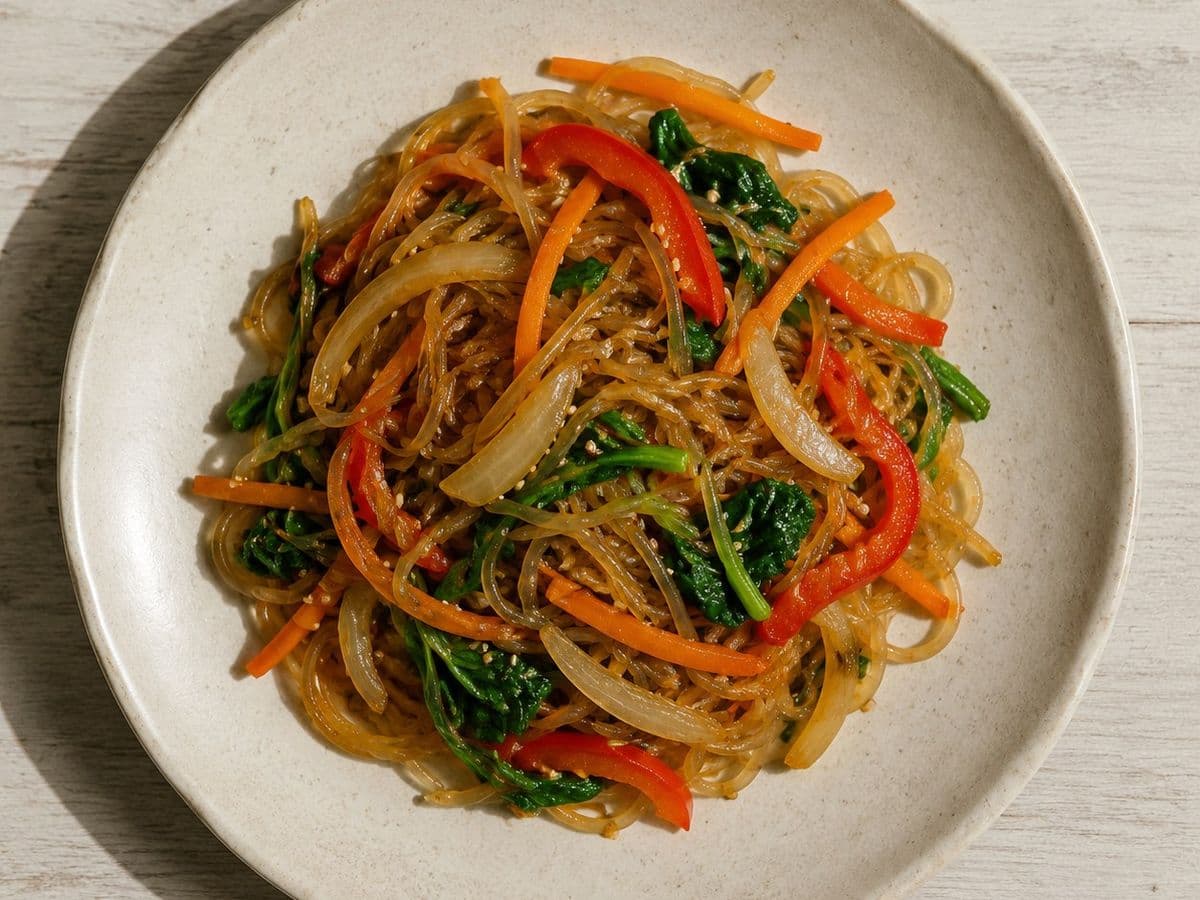
309 kcal a serving, against 404 for the traditional version. That is 95 kcal off, or 24%, with 15.6g of protein. Serves 6. 50 minutes.
What the traditional version is
Japchae is sweet potato glass noodles stir-fried with beef, spinach, carrots, shiitake mushrooms, onion and pepper, each fried separately in a fair pool of sesame oil or veg oil. The noodles are tossed in soy sauce, sugar and more sesame oil, then everything's mixed with beef and veg. It's glossy and aromatic, with a subtle hit of sweetness, a savoury backbone and that signature chew.
What changed, and what each change costs
Cut sesame oil from 40g to 15g, and vegetable oil from 20g to 5g
The gloss comes from every ingredient meeting the frying pan with plenty of oil. This is tasty but not really needed. You need a bit of sesame oil for the aroma and the classic flavour, but you can steam or dry-fry most of the vegetables without missing much.
What it costs you. You lose that restaurant look - it won't glisten so much on the plate - but the flavour's still right and you'll avoid that post-party feeling where you want a nap.
Beef upped from 200g to 300g, and switched to the leanest sirloin
Japchae always includes beef, but it's mostly for flavour and chew. Using more lean beef boosts the substance and protein for each serving - it's the first change I'd make for a weeknight dinner.
What it costs you. There's a bit less fat softening the beef, so watch it doesn't dry out on the pan. Otherwise, you just get more actual beef per mouthful.
Spinach doubled from 200g to 400g, mushrooms-shiitake from 100g to 200g
More veg brings bulk and makes up for missing some of the oil. Spinach and shiitake know how to take on sauces without feeling like filler.
What it costs you. You'll notice the dish is more substantial and much greener; it's not the dainty plate at a banquet, more like a dinner that'll keep you fuelled until tomorrow.
Cut sugar from 25g to 8g
Sugar is a big part of classic japchae, giving that gentle sweetness. You don't need much - the soy sauce, garlic and sesame oil are more important.
What it costs you. It's a touch less sweet. If you want that party feeling, serve it with a side dish that brings a little extra sugar, or sneak a pinch back in.
Noodles cut from 350g to 250g
Sweet potato noodles are pure starch. Dropping the amount just means you get a higher mix of beef and vegetables to noodles - you'll still get your fix, but it no longer eats like a side of pasta. The portion stays hearty.
What it costs you. You can't really pile it in quite the same way, but if you're honest, that's not always a bad thing. The plate looks like a proper main, not an endless noodle buffet.
What goes in it
The ingredients, without the quantities. The weights are what the figures below are computed from, and they are in the book.
- Sweet potato glass noodles
- Beef sirloin
- Spinach
- Shiitake mushrooms
- Onion
- Carrot
- Red pepper
- Toasted sesame oil
- Vegetable oil
- Light soy sauce
- Caster sugar
- Garlic
- Sesame seeds
How it starts
- Boil the glass noodles as per the packet, usually 6-7 minutes.
- Toss the cooked noodles with half the sesame oil and half the soy sauce.
- Steam or microwave the spinach until just wilted, squeeze out any excess water, then chop roughly.
The rest of the method, and every weight, is in Authentic-ish Korean.
The numbers
| Per serving | Traditional | Lightened |
|---|---|---|
| Calories | 404 | 309 |
| Protein | 10.6g | 15.6g |
| Fat | 12.4g | 6.6g |
| Saturated fat | 2g | 1.3g |
| Carbohydrate | 63.1g | 48.3g |
| Protein per 100 kcal | 2.6g | 5g |
Every figure is computed from the recipe's own weighed ingredient list against public food composition databases. The appendix in Authentic-ish Korean prints the exact database row used for each ingredient, so any number here can be checked. How every number is computed sets out the method.
Allergens. gluten, sesame, soybeans.
The method is in the book
Japchae at a banquet is all shine and no restraint. This isn't that - there's less gloss, more veg, and enough beef that you don't have to hunt for it. The classic's still the king if you want to impress the in-laws, but for a plate you'll actually want on a Tuesday, this is the upgrade that gets you fed and keeps you upright. The noddles are lighter, but you can eat a full serving and still feel like moving afterwards.
The quantities and the method for this dish are in Authentic-ish Korean, along with 51 more. Buy the paperback
More from Authentic-ish Korean
- Naengmyeon, 424 kcal a serving, 39% off
- Bibim Naengmyeon, 610 kcal a serving, 1% off
- Kalguksu, 411 kcal a serving, -12% off
- Jjamppong, 474 kcal a serving, 21% off
- Makguksu, 470 kcal a serving, 5% off
- Baechu Kimchi, 83 kcal a serving, 22% off
Every Korean dish and its calories · Every dish in the series