Korean · Authentic-ish Korean
Kalguksu
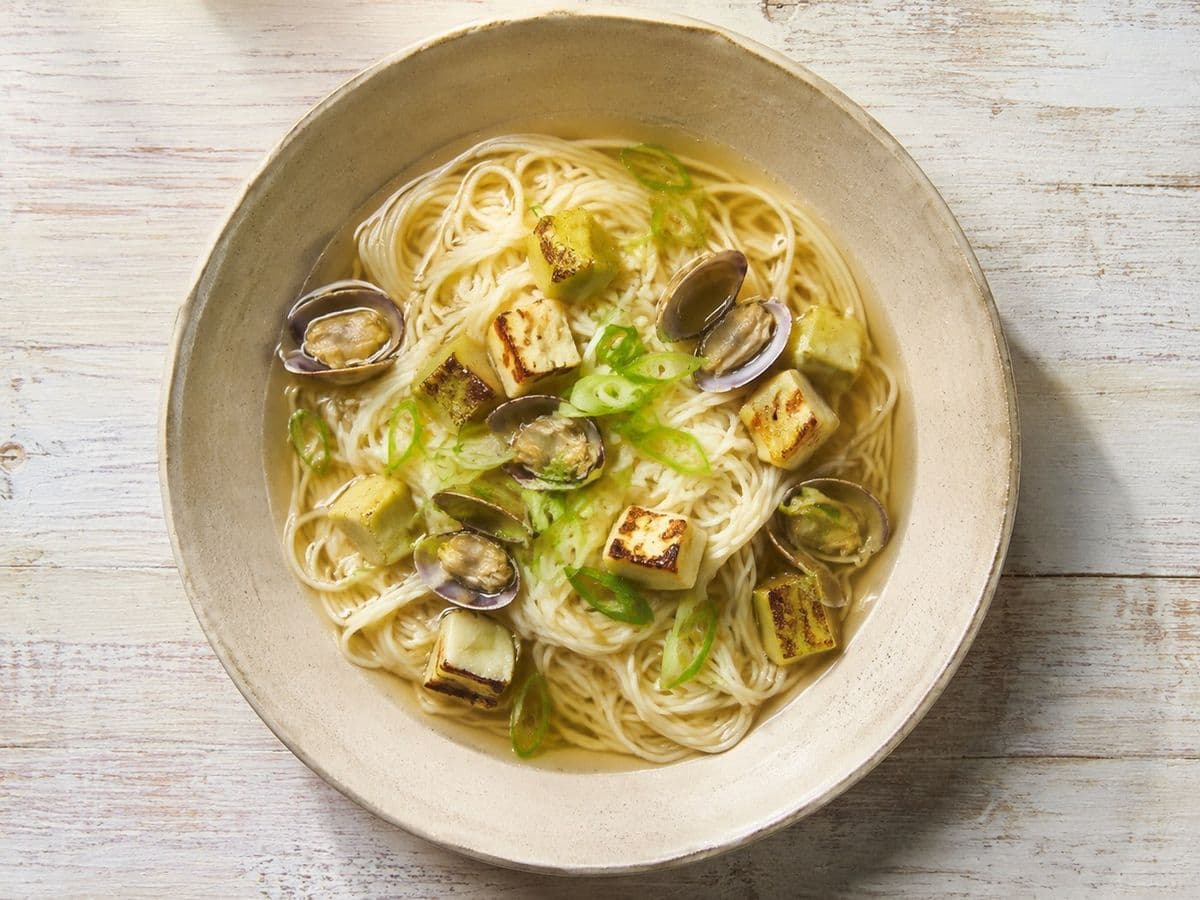
411 kcal a serving, against 367 for the traditional version. That is -44 kcal off, or -12%, with 29.7g of protein. Serves 4. 60 minutes active.
What the traditional version is
Kalguksu translates to 'knife noodles' - made by rolling out simple wheat dough, cutting it by hand into thick, chewy ribbons, and serving them in a clear, savoury stock of dried anchovies, kelp and occasionally chicken. The broth is finished with a heap of julienned courgette, spring onions, garlic and sometimes a swirl of sesame oil or a dab of gochugaru paste. Everything is simple and straight to the point.
What changed, and what each change costs
Hand-cut noodles replaced with 240g dried somen noodles
Handmade noodles are great, but they're mostly flour and water and don't offer much for their effort except that homey, soft chew. Dried somen are thinner and hold up just fine, with less flour per bowl and more room for veg or lean protein. I've used somen for the figures - you can use kalguksu noodles if you're feeling energetic, but don't pretend they're changing your life.
What it costs you. You lose a bit of the soft, almost dumpling-like bite you get with fresh knife-cut noodles. If you really miss it, roll out some dough at the weekend and freeze in batches. The broth doesn't care what's floating in it, as long as it's not overcooked.
Upped the veg - 250g courgette, 90g spring onion, 20g garlic
The broth is already light, so you need to pad it out with something that isn't noodle. More courgette keeps the bowl feeling full, and all that spring onion means you can use less soy sauce and still get a savoury hit.
What it costs you. This isn't a hardship, unless you actively dislike green things. Your bowl looks more like a late summer allotment than a noodle shop. Not a bad trade.
To bump up the protein, added 320g firm tofu, cubed
This is the only real way to move the needle on what's in that bowl. Tofu is mild enough not to get in the way of a clean anchovy broth, and it'll keep the meal filling longer. Chicken's fair game, but tofu plays nicer if you're sharing.
What it costs you. Tofu's subtle, so it won't win any fans from noodle purists, but it stops you prowling the snack cupboard an hour later. If you're desperate for tradition, skip it and just have a very light supper.
What goes in it
The ingredients, without the quantities. The weights are what the figures below are computed from, and they are in the book.
- No shame: dried somen do the job
- Dried anchovies
- Dried kelp
- Courgette
- Spring onions
- Garlic
- Toasted sesame oil
- Gochugaru
- Light soy sauce
- Firm tofu
How it starts
- Start with the broth.
- Fish out the anchovies and kelp.
- While the broth is simmering, slice the courgette into matchsticks, trim and slice the spring onions, and mince the garlic.
The rest of the method, and every weight, is in Authentic-ish Korean.
The numbers
| Per serving | Traditional | Lightened |
|---|---|---|
| Calories | 367 | 411 |
| Protein | 17g | 29.7g |
| Fat | 3.4g | 10.1g |
| Saturated fat | 0.6g | 1.6g |
| Carbohydrate | 66.2g | 53.3g |
| Protein per 100 kcal | 4.6g | 7.2g |
Every figure is computed from the recipe's own weighed ingredient list against public food composition databases. The appendix in Authentic-ish Korean prints the exact database row used for each ingredient, so any number here can be checked. How every number is computed sets out the method.
Allergens. gluten, fish, soybeans, sesame.
The method is in the book
Kalguksu in its classic form is as honest as a bowl of soup gets - if you want to keep it rustic, roll your own noodles and be proud. The version here is faster, easier, and doesn't leave you with flour on every surface. Tofu bulks it out without bullying the other flavours. It isn't the thing you get in a countryside noodle shack after hiking all day, but it's a decent lunch that won't leave you hungry by four. You'll only miss the handmade noodles if you already own a pasta roller.
The quantities and the method for this dish are in Authentic-ish Korean, along with 51 more. Buy the paperback
More from Authentic-ish Korean
- Japchae, 309 kcal a serving, 24% off
- Naengmyeon, 424 kcal a serving, 39% off
- Bibim Naengmyeon, 610 kcal a serving, 1% off
- Jjamppong, 474 kcal a serving, 21% off
- Makguksu, 470 kcal a serving, 5% off
- Baechu Kimchi, 83 kcal a serving, 22% off
Every Korean dish and its calories · Every dish in the series