Korean · Authentic-ish Korean
Jjamppong
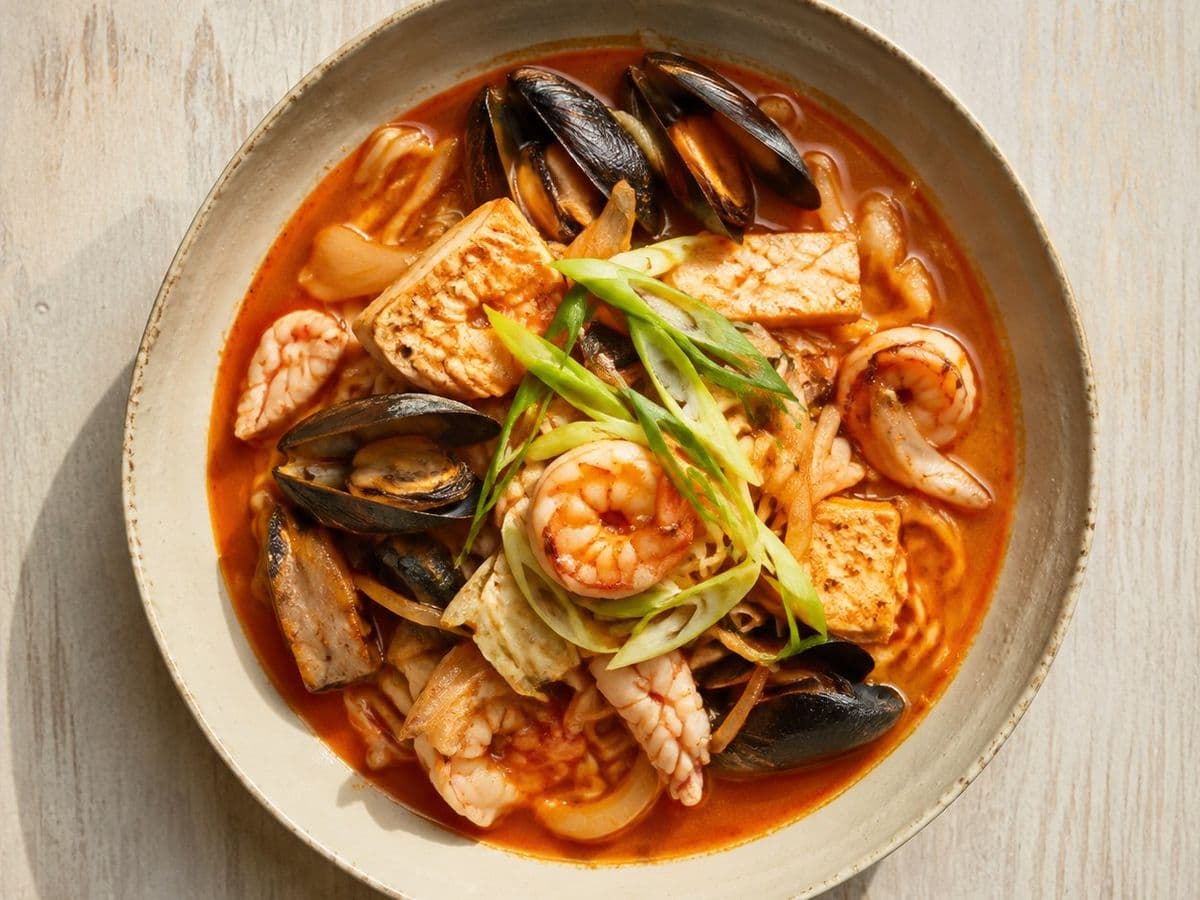
474 kcal a serving, against 603 for the traditional version. That is 129 kcal off, or 21%, with 32.5g of protein. Serves 4. 40 minutes.
What the traditional version is
The original starts with a proper fry-up: onions, cabbage, garlic, ginger and gochugaru sizzling in plenty of vegetable oil until fragrant. In go raw prawns, mussels, and squid, cooked just until opaque. Seafood stock or water is added, plus soy sauce and a quick dash of rice wine. Dried wheat noodles go in last. It lands as a lava-red soup, flecked with bits of seafood, slippery veg, and a thick layer of spicy oil on top.
What changed, and what each change costs
Drop the oil from 70g to 12g, and toss in a spoon of gochugaru with a splash of water to fake a chilli oil
Most of the fat lands from the oil at the start and finish. For heat, a little chilli in water brings just as much punch without the heavy, oily layer on top.
What it costs you. You miss out on that thick, spicy sheen and the slightly richer body. The result is a cleaner broth where you taste more actual seafood, but there's no getting away from the fact it isn't as lush. If you miss the oil, drizzle a little toasted sesame oil at the end and call it a treat.
Switch to 5% fat version of wheat noodles (320g to 250g) and throw in sliced firm tofu for protein
Noodles are the first thing to vanish a bowl's good intentions. Shave the portion down and bring in firm tofu, which lifts the protein without shouting over the seafood.
What it costs you. Noodles are the soul of the soup, so cutting back means a little less slurp and comfort. The tofu makes up for it in protein, but fans of endless noodles will notice the difference. I've yet to see anyone leave hungry.
More veg: double the cabbage, bump up the red peppers and onions
Extra veg bulks out the bowl, so you're still eating a mound of food, and it soaks up the broth's chilli and seafood flavour.
What it costs you. You get more sweetness from the onions and crunch from the cabbage, which I think actually works in your favour. No real penalty here unless your idea of a good time is picking out every vegetable.
What goes in it
The ingredients, without the quantities. The weights are what the figures below are computed from, and they are in the book.
- Vegetable oil
- Onion
- White cabbage
- Garlic
- Fresh ginger
- Gochugaru
- Fish sauce
- Light soy sauce
- Dry white wine
- Raw prawns
- Squid
- Mussels
- Firm tofu
- Wheat noodles
- Spring onions
- Red pepper
- Salt
- Water
How it starts
- Scrub the mussels and pull away any beards.
- Heat the oil in a big saucepan over medium heat.
- Sprinkle in the gochugaru and give it just 30 seconds to bloom, then splash in a bit of water so the chilli doesn't burn.
The rest of the method, and every weight, is in Authentic-ish Korean.
The numbers
| Per serving | Traditional | Lightened |
|---|---|---|
| Calories | 603 | 474 |
| Protein | 28.4g | 32.5g |
| Fat | 20.2g | 8.3g |
| Saturated fat | 2.8g | 1.3g |
| Carbohydrate | 74.9g | 67.5g |
| Protein per 100 kcal | 4.7g | 6.9g |
Every figure is computed from the recipe's own weighed ingredient list against public food composition databases. The appendix in Authentic-ish Korean prints the exact database row used for each ingredient, so any number here can be checked. How every number is computed sets out the method.
Allergens. crustaceans, fish, gluten, molluscs, soybeans, sulphites.
The method is in the book
The first spoonful will tell you this isn't the full-fat classic, but it's still a punchy, honest bowl. The seafood is fresher, the broth is less heavy, and you can taste the actual sweetness of the veg. Yes, the oily sheen is dialled down and noodle fiends may miss the mound, but the soup's heat is very much alive and you'll walk away feeling lighter than usual. Not quite Seoul at midnight, but it still fills a hungry hole after a long day.
The quantities and the method for this dish are in Authentic-ish Korean, along with 51 more. Buy the paperback
More from Authentic-ish Korean
- Japchae, 309 kcal a serving, 24% off
- Naengmyeon, 424 kcal a serving, 39% off
- Bibim Naengmyeon, 610 kcal a serving, 1% off
- Kalguksu, 411 kcal a serving, -12% off
- Makguksu, 470 kcal a serving, 5% off
- Baechu Kimchi, 83 kcal a serving, 22% off
Every Korean dish and its calories · Every dish in the series