Korean · Authentic-ish Korean
Bibim Naengmyeon
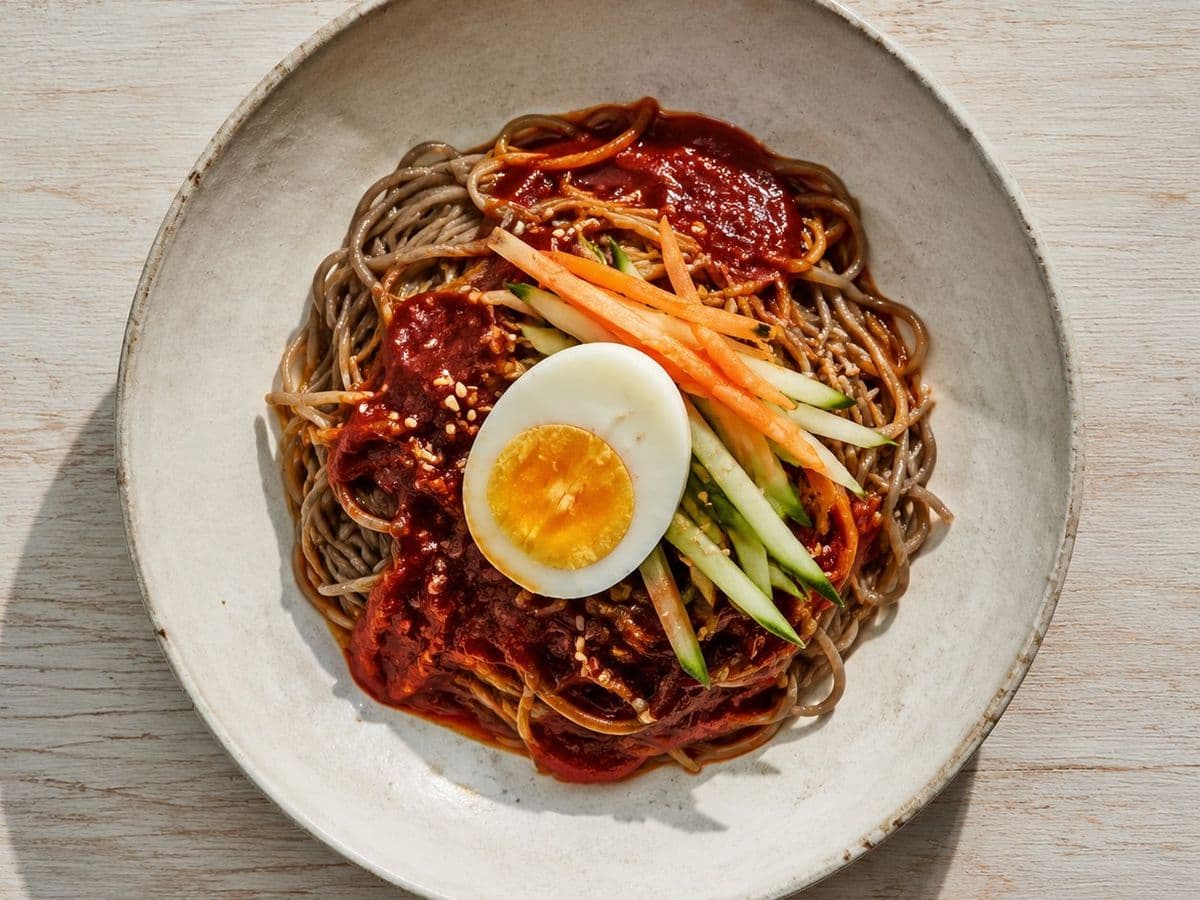
610 kcal a serving, against 618 for the traditional version. That is 8 kcal off, or 1%, with 46.8g of protein. Serves 2. 30 minutes active, chilling optional.
What the traditional version is
Chewy, cold buckwheat noodles, rinsed with ice, then dressed in a thick gochujang sauce built from gochujang, sugar, vinegar, garlic and a squirt of sesame oil.
What changed, and what each change costs
Cut sugar from 30g to 10g and swap 10g of the sesame oil for water
It's meant to be sweet, but you don't need 30 grams to get the idea. Less sugar keeps the sauce sharp and lets the spice punch harder.
What it costs you. This does change the dish: less gloss and less rounded sweetness, especially if you grew up with the real thing. But the noodles still get that wallop of heat and acid, and you don't feel like you've eaten pudding for lunch.
Swap brisket for leaner beef and double the portion, plus add egg white to the sauce
Beef brisket is classic, but it's not the leanest option.
What it costs you. You do miss out on brisket's sticky, shreddy bits. And no, egg white in the sauce isn't approved by any Korean grandma. But the dish fills you up and still tastes sharp, cold and lively.
Drop the Asian pear
It's delicious, but less common outside a Korean shop and if you're watching the sugar, it's the first thing to go.
What it costs you. It isn't as refreshing: the pear gives bursts of sweet juice that nothing else quite matches. But if you're desperate, a wedge of crisp apple or even a grape or two does the trick - or just leave it and know you'll live.
What goes in it
The ingredients, without the quantities. The weights are what the figures below are computed from, and they are in the book.
- Buckwheat noodles
- Beef sirloin
- 1 medium egg
- From one large egg
- Cucumber
- Korean radish
- Garlic
- Gochujang
- Gochugaru
- Caster sugar
- Rice vinegar
- Toasted sesame oil
- Water
How it starts
- Boil the noodles as the packet says - usually 3 to 4 minutes - then drain.
- Boil the egg for 8 minutes, then cool in cold water and peel, slicing it in half lengthwise.
- Mix the gochujang, gochugaru, sugar, rice vinegar, sesame oil, water and minced garlic in a jug.
The rest of the method, and every weight, is in Authentic-ish Korean.
The numbers
| Per serving | Traditional | Lightened |
|---|---|---|
| Calories | 618 | 610 |
| Protein | 31.1g | 46.8g |
| Fat | 13.2g | 10.5g |
| Saturated fat | 3.4g | 3g |
| Carbohydrate | 99.6g | 86.1g |
| Protein per 100 kcal | 5g | 7.7g |
Every figure is computed from the recipe's own weighed ingredient list against public food composition databases. The appendix in Authentic-ish Korean prints the exact database row used for each ingredient, so any number here can be checked. How every number is computed sets out the method.
Allergens. eggs, gluten, sesame, soybeans, sulphites.
The method is in the book
Bibim naengmyeon is supposed to wake you up, not knock you out with sugar. The original is more velvety, and yes, the sticky brisket is hard to beat. But doubling the beef and sneaking in egg white turns this into proper food, not a pit stop between snacks. If you want it as a side dish, go full sugar and brisket and don't count. If you want lunch that leaves you standing, do it this way. What you've got is just lunch. Rebellion is a different dish and you know where to find it.
The quantities and the method for this dish are in Authentic-ish Korean, along with 51 more. Buy the paperback
More from Authentic-ish Korean
- Japchae, 309 kcal a serving, 24% off
- Naengmyeon, 424 kcal a serving, 39% off
- Kalguksu, 411 kcal a serving, -12% off
- Jjamppong, 474 kcal a serving, 21% off
- Makguksu, 470 kcal a serving, 5% off
- Baechu Kimchi, 83 kcal a serving, 22% off
Every Korean dish and its calories · Every dish in the series