Korean · Authentic-ish Korean
Haemul Pajeon
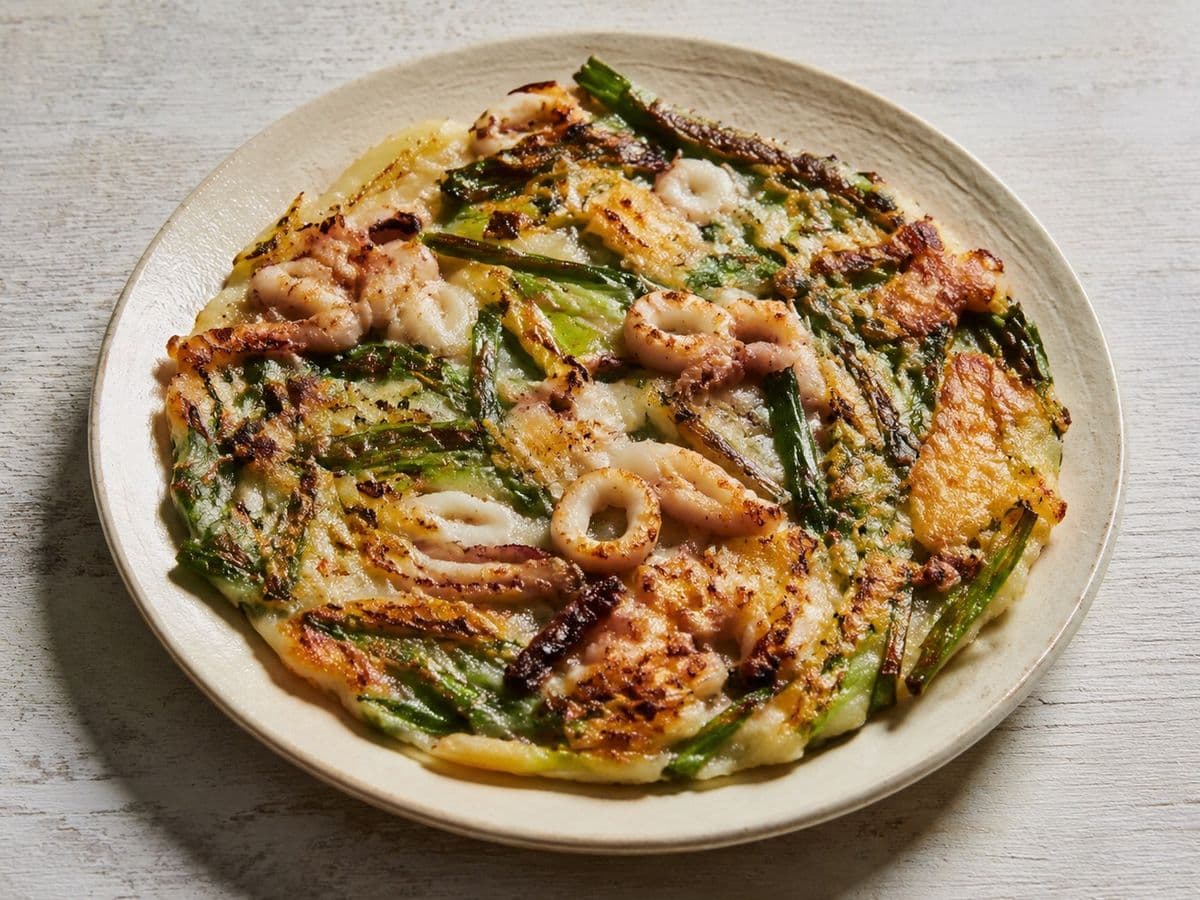
362 kcal a serving, against 406 for the traditional version. That is 44 kcal off, or 11%, with 26g of protein. Serves 4. 25 minutes.
What the traditional version is
Thick batter made from plain flour, potato starch, water and an egg, ladled into a frying pan swimming in hot oil. Long spring onions, squid, prawns and sometimes mussels are scattered on top and pressed in, then more batter over the lot. It's pan-fried till crackling gold, flipped, then sliced up and eaten with a soy dipping sauce.
What changed, and what each change costs
Swap out 100g of plain flour for gram flour
Gram (chickpea) flour packs in much more protein than plain flour, and it brings a slight earthiness that works with seafood. The batter still holds together, though it loses that pure, white colour and feels a bit denser.
What it costs you. The texture isn't quite as light, and the edge never gets the same crunch you get from full wheat flour and all that oil. It does fill you up for longer, though, and you get a faint whiff of pakora.
Double the egg (now 2 eggs, 100g) and cut oil for frying to 30g
The extra egg binds the batter better, letting you get away with less oil in the pan and keeping things together. Less oil means fewer golden, crackly bits, but the eggs stop it tasting like a sad, dry vegetable frittata.
What it costs you. You lose half the lacy edges and a good deal of crispness. It isn't a proper pajeon - it's a thick seafood omelette in a pancake's coat. You'll be scraping for crunchy corners, but you won't be looking for a snack straight after. If you miss the fry-up hit, save this for a day when you can go all in with oil.
Drop the mussels and double the prawns (200g)
The mussels are mostly for show (and for shellfish fans, fair enough), but doubling the prawns jacks up the protein and keeps the sea flavour strong. Prawns are more protein-dense than mussels, too.
What it costs you. You lose a bit of variety in every bite - no sweet, pillowy mussel to break up the squid and prawn parade. But it tastes more direct, and unless you're a mussel obsessive, you won't miss them.
What goes in it
The ingredients, without the quantities. The weights are what the figures below are computed from, and they are in the book.
- Plain flour
- Chickpea flour
- Potato
- Water
- Egg
- Raw prawns
- Squid
- Spring onions
- Vegetable oil
- Salt
- Light soy sauce
How it starts
- Mix the plain flour, gram flour and salt in a bowl.
- Lay most of the spring onions into the batter, saving a few to scatter on top.
- Heat half the oil in a big non-stick frying pan over medium-high heat.
The rest of the method, and every weight, is in Authentic-ish Korean.
The numbers
| Per serving | Traditional | Lightened |
|---|---|---|
| Calories | 406 | 362 |
| Protein | 19.4g | 26g |
| Fat | 17.8g | 12.4g |
| Saturated fat | 2.6g | 2.1g |
| Carbohydrate | 41.2g | 35.7g |
| Protein per 100 kcal | 4.8g | 7.2g |
Every figure is computed from the recipe's own weighed ingredient list against public food composition databases. The appendix in Authentic-ish Korean prints the exact database row used for each ingredient, so any number here can be checked. How every number is computed sets out the method.
Allergens. gluten, eggs, crustaceans, molluscs, soybeans.
The method is in the book
Haemul pajeon in a Korean restaurant is all about the edges - oily, crunchy, so hot you scald your tongue. This isn't that, but it's honest: you get a proper hit of seafood, plenty of egg and spring onion, and it's still fun to dunk into salty soy. You don't get the street stall crunch, but you do get lunch that won't haunt you all day. If you want the real thing for a party or a bad day, bring back the oil and don't say I didn't warn you.
The quantities and the method for this dish are in Authentic-ish Korean, along with 51 more. Buy the paperback
More from Authentic-ish Korean
- Bindaetteok, 391 kcal a serving, 31% off
- Mandu, 302 kcal a serving, 19% off
- Tteokbokki, 322 kcal a serving, 40% off
- Gamja Jeon, 184 kcal a serving, 28% off
- Baechu Kimchi, 83 kcal a serving, 22% off
- Kongnamul Muchim, 95 kcal a serving, 23% off
Every Korean dish and its calories · Every dish in the series