Korean · Authentic-ish Korean
Bindaetteok
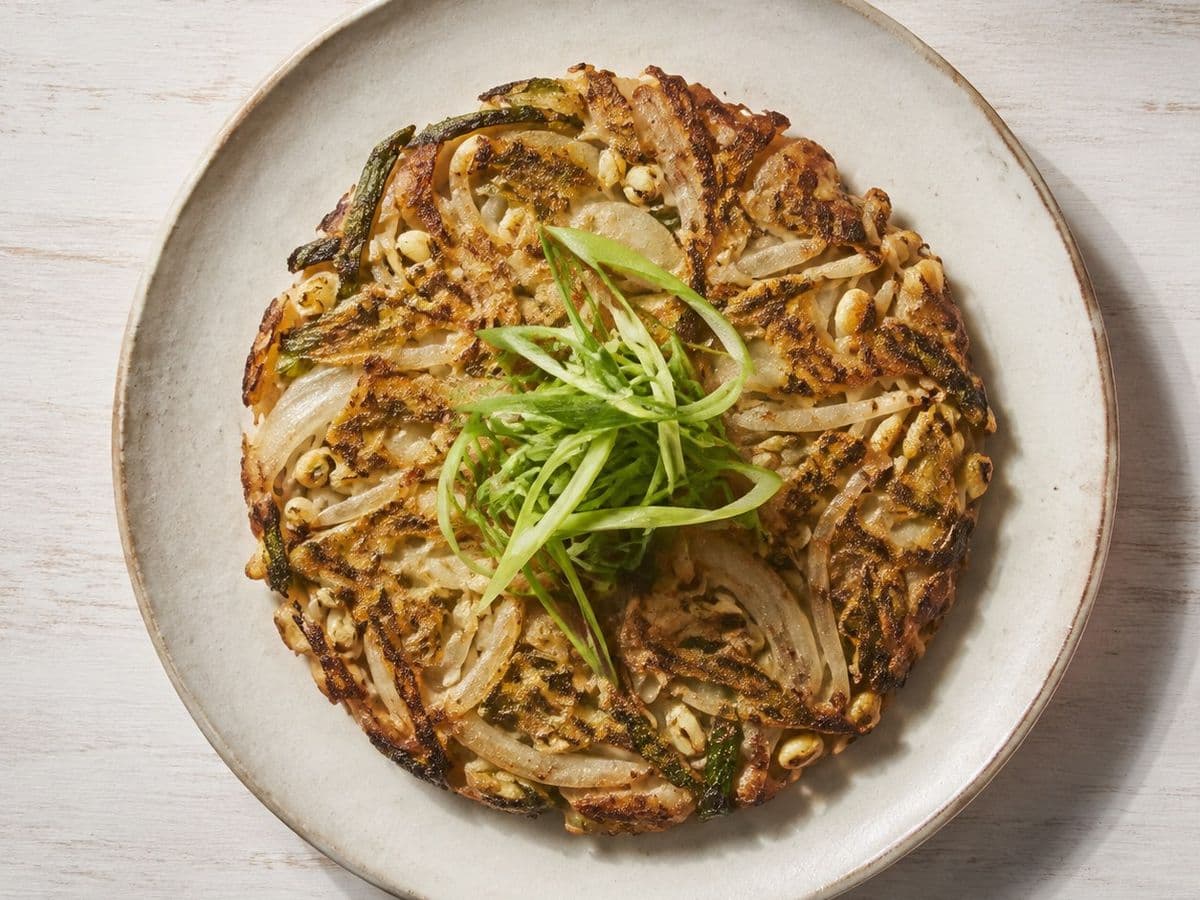
391 kcal a serving, against 564 for the traditional version. That is 173 kcal off, or 31%, with 28.9g of protein. Serves 4. 30 minutes active, plus overnight soak.
What the traditional version is
Classic bindaetteok calls for dried mung beans soaked overnight, whizzed to a coarse batter, usually with a good handful of pork belly or shoulder, kimchi, and crunchy bits like beansprouts and spring onions. The batter is ladled into a frying pan swimming in oil, pressed flat and fried until both sides are brown, crackling at the rim and soft in the centre. Served with a soy dipping sauce, and usually washed down with makgeolli if you're doing it right.
What changed, and what each change costs
Pork shoulder replaced with skinless chicken breast, up to 160g
Pork belly's classic and gives the pancakes real richness, but it drags the protein-to-fat ratio into the basement. Swapping in extra-lean chicken breast lets you pile in more meat for the same calories.
What it costs you. This costs you that juicy, savoury kick you get from pork fat. The chicken keeps the protein high and the texture solid but doesn't bring much flavour on its own. If you want more oomph, sneak in a splash of extra soy or chop a couple of kimchi pieces extra small for the mix.
Frying oil down from 90g to 24g
The old way practically shallow-fries these - that's why the crust is so cracking. If you brush the pan and use just enough oil for a decent sear, you'll lose a load of fat without needing to buy a new frying pan.
What it costs you. You won't get that thick, shattering crust. What you do get is a golden, crisp outside with just enough bite. Eat them right away, as they lose crispness faster than the full-fat job.
Dipping sauce uses reduced-salt soy sauce instead
Soy sauce is half the dipping joy, but the sodium can run high. Go for reduced-salt without losing the flavour, and your blood pressure will thank you.
What it costs you. If you're honest, you might not notice the swap unless you drink the sauce. If you're fussy, use the classic stuff and call it a treat.
Optional kimchi left out
Kimchi is brilliant in these but not essential. If you do add it, use it as part of your veg count, not extra.
What it costs you. You lose a bit of funk and acidity. I prefer mine plain with a good dipping sauce, but no judgement.
What goes in it
The ingredients, without the quantities. The weights are what the figures below are computed from, and they are in the book.
- Moong dal
- Chicken breast
- Beansprouts
- Spring onions
- Onion
- Garlic
- Vegetable oil
- Reduced-salt soy sauce
- Vinegar
- Red chilli
How it starts
- Soak the mung beans in plenty of cold water overnight.
- In a big bowl, mix the mung bean batter with the diced chicken, beansprouts, sliced spring onions, chopped onion and garlic.
- Heat a large frying pan over medium-high.
The rest of the method, and every weight, is in Authentic-ish Korean.
The numbers
| Per serving | Traditional | Lightened |
|---|---|---|
| Calories | 564 | 391 |
| Protein | 25.1g | 28.9g |
| Fat | 29g | 8g |
| Saturated fat | 5.1g | 1.3g |
| Carbohydrate | 53g | 52.9g |
| Protein per 100 kcal | 4.4g | 7.4g |
Every figure is computed from the recipe's own weighed ingredient list against public food composition databases. The appendix in Authentic-ish Korean prints the exact database row used for each ingredient, so any number here can be checked. How every number is computed sets out the method.
Allergens. gluten, soybeans, sulphites.
The method is in the book
If you want the real bindaetteok experience, there's no escaping the pork and enough oil to lube a bike chain. What you get here is still hearty and satisfying, just less greasy. The chicken's not as tasty as pork belly and the crust's a bit thinner, but you don't need three napkins. If you're desperate for that proper market smell, cook one batch the old way and have these for your second helping.
The quantities and the method for this dish are in Authentic-ish Korean, along with 51 more. Buy the paperback
More from Authentic-ish Korean
- Haemul Pajeon, 362 kcal a serving, 11% off
- Mandu, 302 kcal a serving, 19% off
- Tteokbokki, 322 kcal a serving, 40% off
- Gamja Jeon, 184 kcal a serving, 28% off
- Baechu Kimchi, 83 kcal a serving, 22% off
- Kongnamul Muchim, 95 kcal a serving, 23% off
Every Korean dish and its calories · Every dish in the series